








As the global economy braces for the "Great Wealth Transfer"—a staggering $124 trillion expected to pass from older generations to heirs and charitable causes by 2048—the conversation surrounding inheritance has moved from the private confines of estate attorney offices to the family dining table. But how are those who have successfully built significant wealth actually handling the transition?
To find out, we reached out to a cohort of real-life millionaires. These are not necessarily the ultra-wealthy titans of industry, but rather "everyday" millionaires: teachers, project managers, and entrepreneurs from Shoshoni, Wyoming, to San Diego, California. They are the backbone of the American dream, having reached their status through diligence, saving, and living within their means.
To gain unfiltered insight, we established the "Millionaires Panel," a group of 30 individuals previously featured in our My First $1 Million series. By keeping their identities anonymous, we encouraged a level of candor rarely found in public discourse. Their response was immediate and overwhelming: a 100% participation rate in our inaugural survey.
The Core Conflict: Transparency vs. Privacy
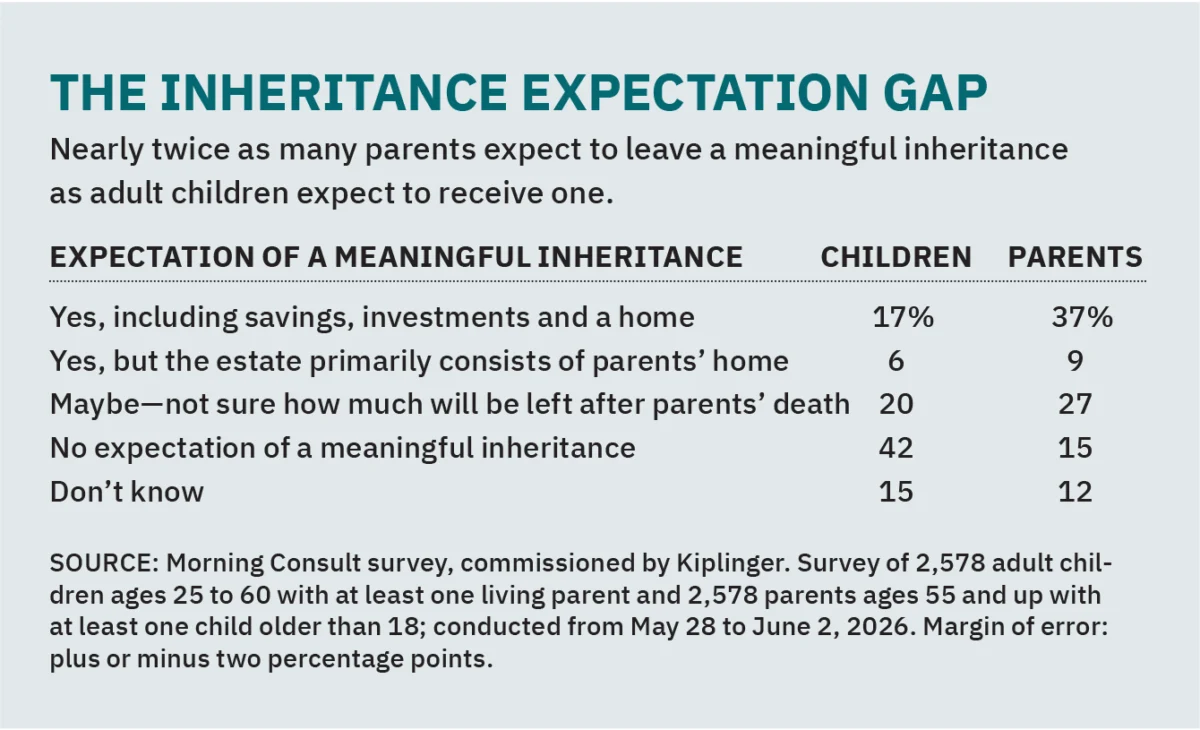
The primary tension in family wealth planning is the "money taboo." According to Kiplinger’s Trillion Dollar Talk survey, conducted by Morning Consult, more than half of parents over the age of 55 rarely or never discuss financial matters with their children.
However, this trend shifts dramatically at higher income brackets. While only 45% of the general population reports discussing money with their children, that figure jumps to 56% among those earning over $100,000 annually. Among these higher earners, only 11% report never discussing finances, compared to 18% of the general public.
Our Millionaires Panel suggests that the key to bridging this gap lies in early financial literacy and intentional communication. One panelist developed a "Family Wealth Mission Statement," a document designed to codify the family’s values. "Communication is vital," he noted. "It prepares the next generation to be good stewards in preserving, growing, and passing on this gift and legacy."
Others use transparency as a tool to manage expectations. By being open about how their retirement spending impacts the residual estate, parents are finding that their children become more supportive, rather than expectant, of a windfall.
The Chronology of Estate Planning
For many, the process of wealth transfer follows a distinct lifecycle. It often begins in the early years with lessons on budgeting and saving, moves into the "mid-life" phase of establishing legal trusts and tax-efficient vehicles, and culminates in the "legacy phase," where values are communicated alongside assets.
- Phase I: The Foundation (Years 0–25): Focus on financial literacy. Our panelists emphasized teaching children the value of a dollar before introducing them to the concept of a multi-generational estate.
- Phase II: The Strategic Shift (Years 25–50): As children enter adulthood, panelists begin the "uncomfortable" conversations. This is when the Family Wealth Mission Statements are typically introduced.
- Phase III: The Execution (Years 50+): The final stage involves formalizing inheritance structures. This is where the decisions on 50/50 splits or capped inheritances are finalized and communicated.
Supporting Data: The Anatomy of the Decision
The decisions made by our panelists are rarely arbitrary; they are the result of balancing personal philosophy with economic reality.
- The Equality Doctrine: The majority of our panel defaults to an equal distribution of assets. The rationale is social harmony. "There should be no favorites," one respondent stated. "Love all that are close to you equally. Don’t create a rift or friction after you pass."
- The "Need vs. Fairness" Dilemma: One panelist shared a powerful anecdote about his mother, who deviated from a standard split. She left her liquid assets to the child who was "underemployed and living paycheck-to-paycheck" while dividing physical assets equally. This was not viewed as "playing favorites" by the family, but rather as an exercise in practical empathy.
- The Motivational Ceiling: A significant portion of the panel expressed concern regarding the "trust fund baby" syndrome. Taking a page from Bill Gates—who famously plans to leave only a fraction of his wealth to his children—many panelists are capping inheritances. One participant explicitly stated she would cap her children’s inheritance at $4 million each—the state tax exclusion limit in Illinois—to ensure they remain driven to succeed on their own merits.
Official Responses and Expert Perspectives
Financial advisors have long argued that the failure to communicate is the primary reason family wealth dissipates within three generations. The "Millionaires Panel" reflects a growing movement toward proactive disclosure.
According to our panelist data, the fear of "demotivation" is the number one reason parents withhold details about the size of an inheritance. Yet, the consensus among those who have disclosed the numbers is that it actually serves as a forcing function for maturity. By setting clear boundaries, parents are empowering their children to build careers independent of the looming shadow of an inheritance.
One panelist, whose children are in their early twenties, put it bluntly: "They know what they are getting. Because they know, they aren’t waiting for a rescue. They are busy building their own lives."
Implications for the Future
The implications of these findings for the broader population are profound. As the Great Wealth Transfer accelerates, the families that thrive will be those that view their wealth not just as a financial asset to be divided, but as a cultural legacy to be managed.
The movement toward "Financial Transparency" is not merely a trend; it is an essential evolution in estate planning. The "uncomfortable details" of inheritance—taxes, medical expenses, caregiving costs, and unequal distributions—are becoming part of a necessary dialogue.
Key Takeaways for Families:
- Define Your Values: Before deciding on the "how" of distribution, define the "why." What do you want your wealth to represent?
- Start Early: Financial literacy is the bedrock of inheritance. If your children do not understand how money is managed, the size of their inheritance will not matter.
- Communication is the Best Insurance: A transparent conversation about why you are splitting an estate in a certain way—even if it is unequal—can prevent years of family litigation and resentment.
- Consider the "Motivation Factor": Don’t be afraid to set caps or conditions. Wealth can be a tool for empowerment or a crutch for stagnation; the difference is often how it is presented to the beneficiary.
Looking Ahead: The Caregiver Conundrum
As we continue to analyze the data from our Millionaires Panel, one recurring, thorny issue stands out: caregiving. How does an aging parent balance the desire for an "equal" split with the reality that one child may have sacrificed their own career and time to provide hands-on care for their parents?
In our next report, we will dive into the ethics and strategies of "caregiver compensation" in estate planning. We will explore how families are navigating the difficult intersection of love, duty, and financial fairness, and whether the "equal split" is becoming an outdated relic in the face of complex family caregiving realities.
Disclaimer: This article presents the views of contributing advisers and is intended for informational purposes only. It does not constitute legal, tax, or financial advice. Readers are encouraged to consult with qualified professionals regarding their specific estate planning needs. You can verify the credentials of any financial adviser through the SEC or FINRA.