







The landscape of digital commerce has undergone a seismic shift. In 2025, TikTok Shop—the integrated e-commerce engine powering the social media giant—surged to a staggering $64.3 billion in gross merchandise value (GMV), nearly doubling its output from the previous year. Of that total, the U.S. market accounted for $15.1 billion, fueled by a specific, high-conversion content format: the short, unscripted, face-to-camera testimonial.
Historically, capturing this lightning in a bottle required a high-touch production workflow: a charismatic presenter, a high-end smartphone, professional-grade lighting, and hours of retakes to ensure the pitch was perfect. Today, that barrier to entry has evaporated. A new generation of creators is bypassing the camera entirely, leveraging a suite of AI-powered tools to manufacture persuasive video marketing at scale.
The Mechanics of Modern Influence: A Step-by-Step Workflow
For those looking to enter the e-commerce fray, the path from concept to conversion has been streamlined into a five-step, accessible pipeline that requires zero traditional video production experience.
Step 1: Curating the Source Material
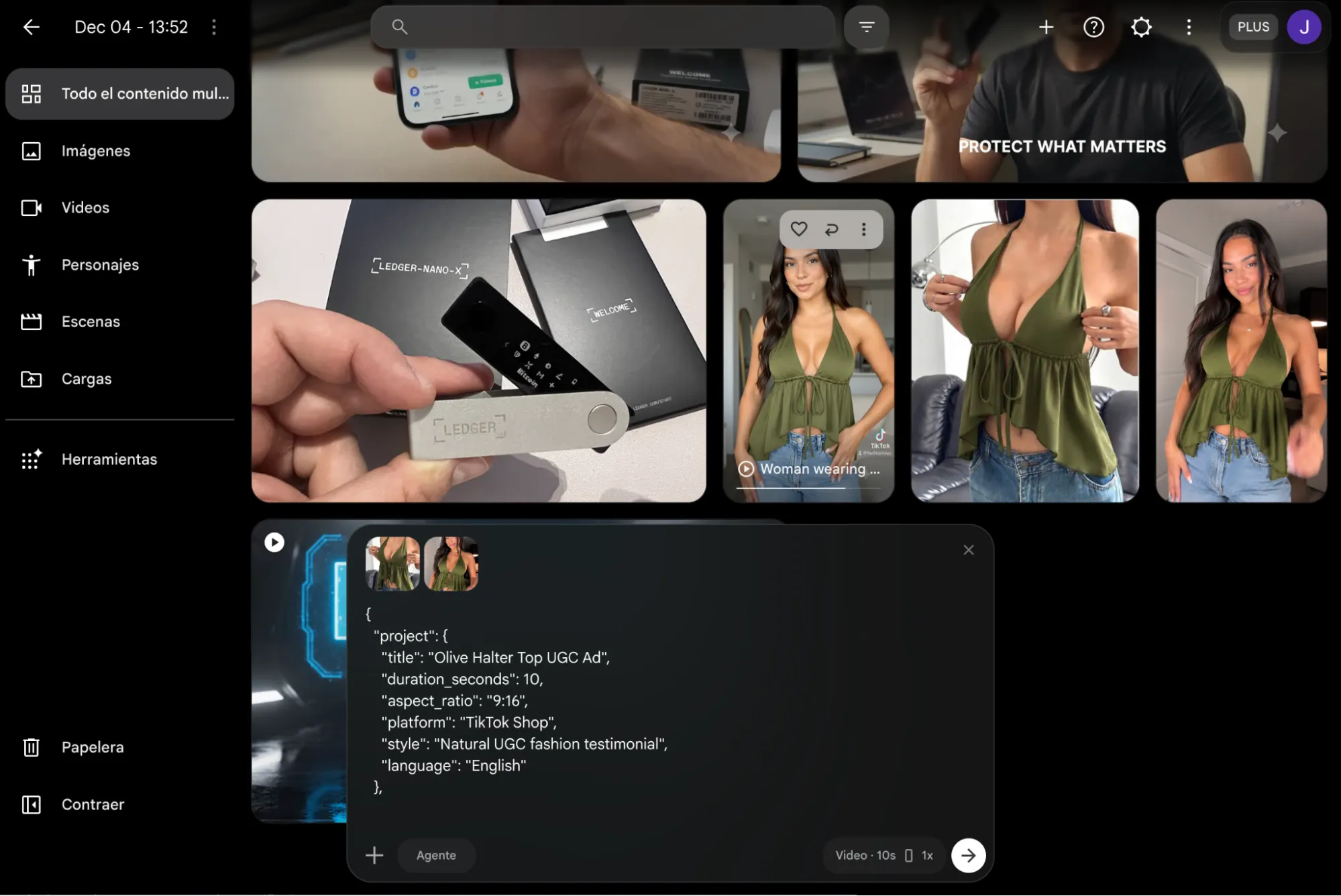
Success begins with product selection. Aspiring marketers often begin by auditing the “hottest” items currently trending on TikTok Shop to identify products with high organic velocity. Once a product is chosen, the process starts with a clean, high-resolution product photograph. The key here is clarity: the source image must be cropped to isolate the product, stripping away backgrounds, models, or distracting watermarks. AI models rely on this "source of truth" to maintain fidelity; the cleaner the reference, the more authentic the final output.

Step 2: Digital Personification
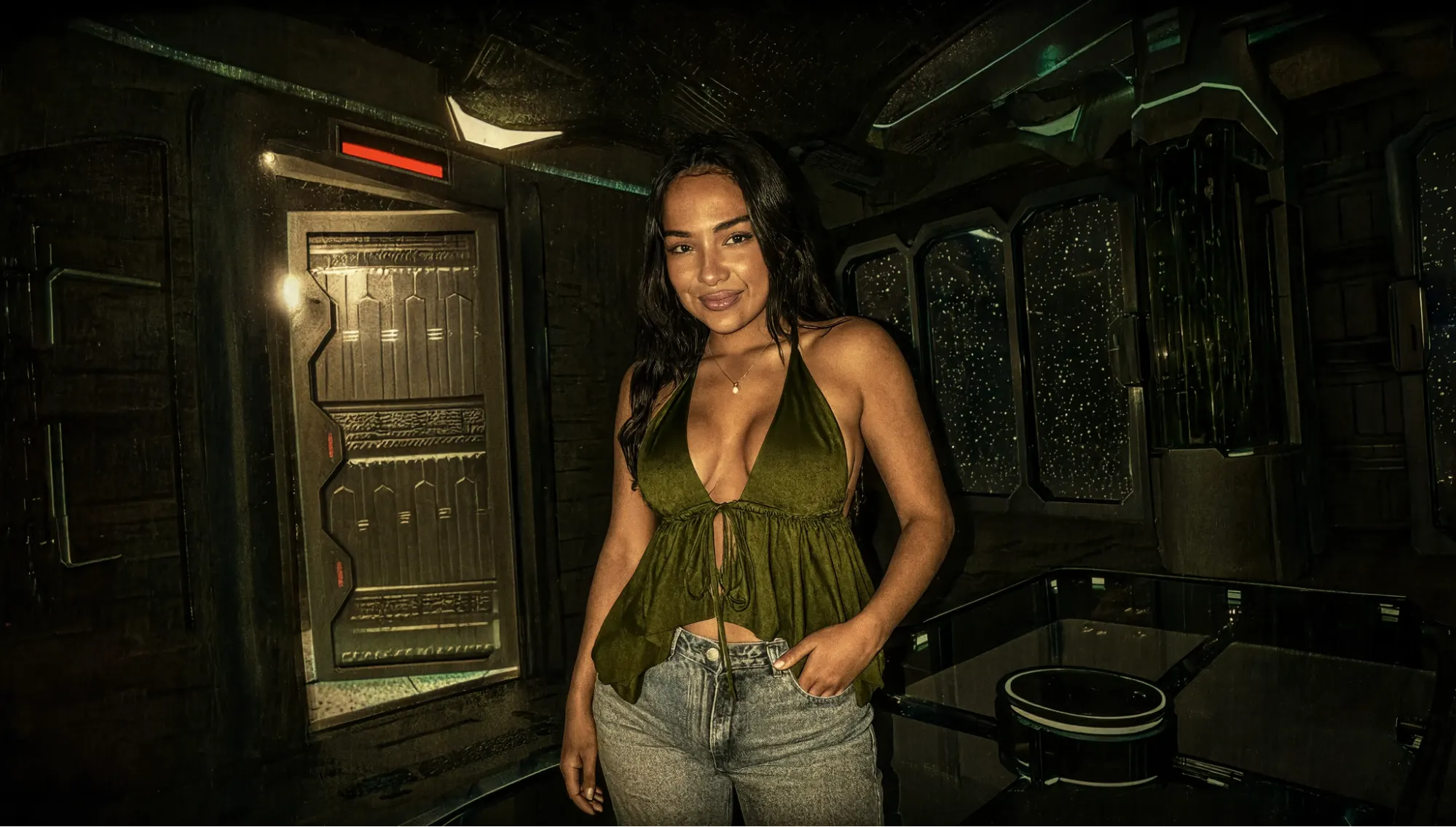
For apparel and accessories, a human element is essential. Using advanced tools like GPT Image 2—which currently leads the field in photorealism—creators can generate hyper-realistic models wearing or holding the product. By providing a specific prompt regarding the model’s demographic, environment, and interaction with the product, users can create custom ad imagery. Whether it’s a “latina woman in her late 20s in a bright apartment” or a product staged in a futuristic setting, the AI ensures the product’s texture, stitching, and proportions remain unaltered, preserving brand integrity.
Step 3: Architecting the Sales Script
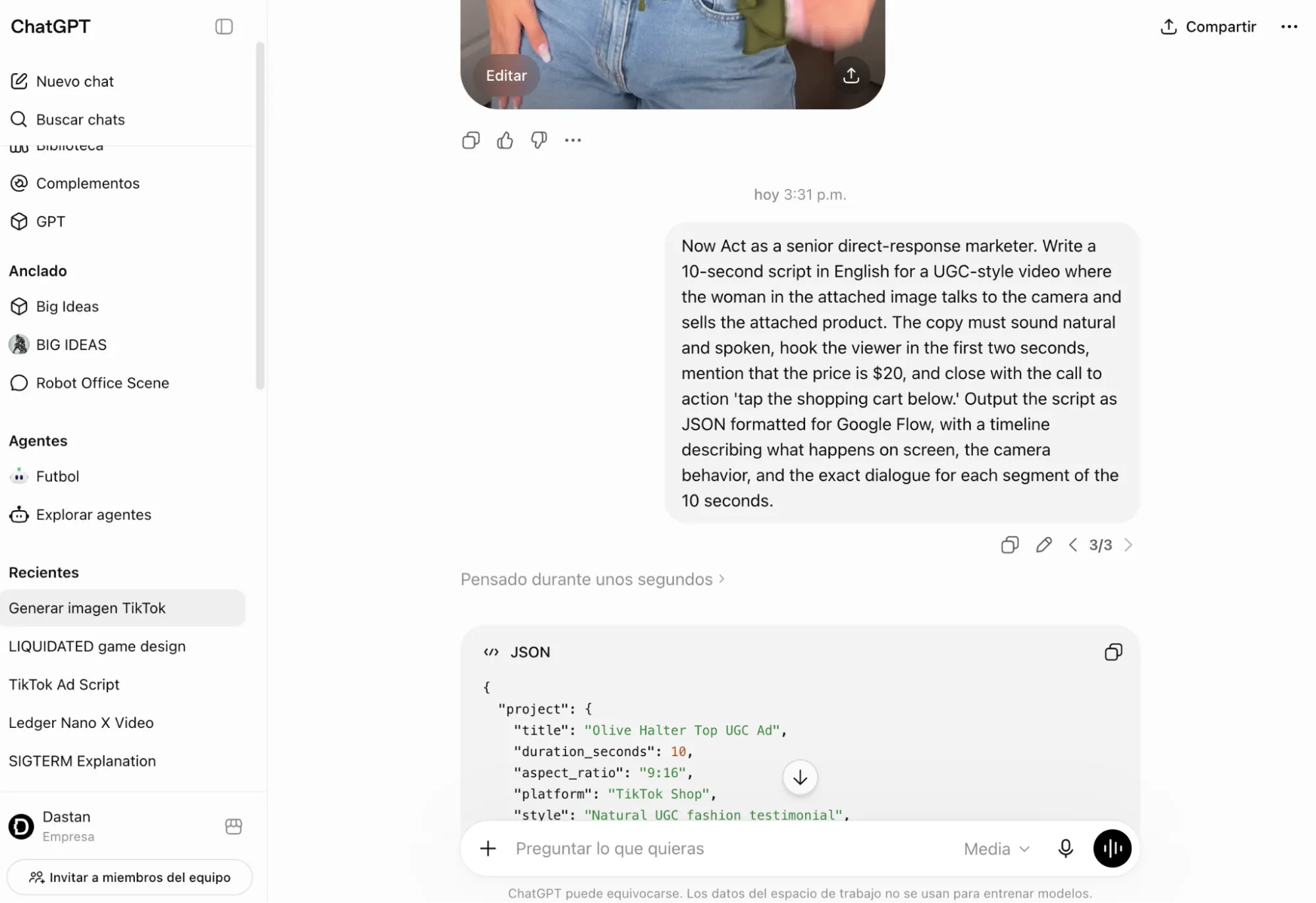
Rather than drafting ad copy manually, savvy marketers now leverage LLMs to act as "senior direct-response marketers." By requesting scripts in a structured JSON format, creators can dictate the pacing of a 10-second spot. This structure—which outlines camera behavior, dialogue, and beats—allows video models to interpret the script with surgical precision. By tailoring the call-to-action (CTA) to the platform—such as "tap the shopping cart" for TikTok or "link in bio" for Instagram—the script becomes a precision-engineered conversion tool.
Step 4: Video Generation and Synthesis
With the script and image assets finalized, creators move to platforms like Google Flow, utilizing models such as Gemini Omni. These tools can ingest reference images and JSON-formatted scripts to generate clips with native audio. While video generation is inherently creative and often requires multiple iterations to achieve the desired result, the cost efficiency is unmatched. For those wary of paid tiers, some platforms offer limited free credits, while others provide access through integrated creative suites in apps like YouTube Create.
Step 5: Post-Production and Polish
The final step involves refining the synthetic footage in editors like CapCut. Here, creators trim anomalies—such as repetitive gestures or excessive phrasing—and overlay animated, word-by-word captions that have become synonymous with high-engagement social media content. This final polish transforms raw AI output into a professional-grade advertisement ready for the algorithm.
A Chronology of the Synthetic Shift
- Early 2024: The "UGC (User Generated Content) Boom" reaches its peak, with brands spending heavily on human influencers to film authentic-looking product reviews.
- Late 2024: Generative AI models begin to achieve "human-parity" in static image generation, leading early adopters to test AI-modeled product photography.
- May 2026: Google introduces Gemini Omni at I/O 2026, marking the democratization of high-fidelity, native-audio AI video generation.
- Mid-2026 to Present: The "AI-Influencer" workflow becomes a standard operational procedure for small-to-medium enterprise (SME) merchants on TikTok Shop and YouTube Shopping.
Supporting Data: The Scale of the Opportunity
The growth of TikTok Shop is not merely a trend; it is a fundamental redirection of consumer spending. The $64.3 billion GMV figure for 2025 represents a robust compound annual growth rate that has caught the attention of traditional retailers. However, the data also provides a reality check. According to Camille Moore, president of the marketing agency Third Eye Insights, the marketplace is becoming hyper-saturated. While the tools to create ads are now nearly free, the competition is fierce: out of 803,500 active U.S. stores on TikTok Shop last year, more than 50% recorded zero sales.
Regulatory Landscape and Official Disclosure
As synthetic media permeates the advertising sector, regulatory scrutiny has tightened. Both TikTok and YouTube have established clear mandates for AI-generated promotional content:
- TikTok: Advertisers are required to use the “This ad contains AI-generated content” label. Failure to disclose the use of AI in non-Spark ads can result in account sanctions or the removal of content.
- YouTube: Creators must select "Yes" under the "AI use" disclosure field if their video contains realistic, AI-generated content. Additionally, any paid sponsorships or affiliate relationships must be disclosed via the platform’s standard paid-promotion settings.
- X (formerly Twitter): While the platform does not explicitly ban AI-generated ads, its Authenticity policy strictly prohibits synthetic media used for deceptive purposes or to cause public harm.
The Broader Implications: Efficiency vs. Saturation
The ability to generate professional-grade marketing assets without a studio, a crew, or a product sample is a double-edged sword. On one hand, it lowers the barrier to entry for entrepreneurs, allowing them to test product-market fit with minimal capital risk. On the other, it threatens to flood the feed with "perfect" but potentially unoriginal content, potentially leading to consumer fatigue.
As the technology matures, we are likely to see a shift toward more advanced workflows—using tools like ElevenLabs for consistent brand voices, or ComfyUI for granular motion control. However, the core takeaway remains: the future of e-commerce is not necessarily about who has the biggest budget, but who can best leverage the intersection of creative strategy and synthetic automation. The tools are available, the platforms are ready, but in the crowded digital bazaar of 2026, the challenge is no longer how to make an ad, but how to make one that people actually want to watch.