








The landscape of American finance is undergoing its most significant structural shift in decades. After years of trailing behind global peers in payment velocity, the United States is witnessing a rapid acceleration in the adoption of real-time gross settlement (RTGS) systems. At the heart of this transformation is FedNow, the Federal Reserve’s instant payments service, which recently reported a staggering 85% increase in settled payment volume for the second quarter of 2024 compared to the first. This surge signals a critical turning point for the central bank’s initiative to modernize the nation’s aging financial plumbing.
Main Facts: The Scaling of a National Utility
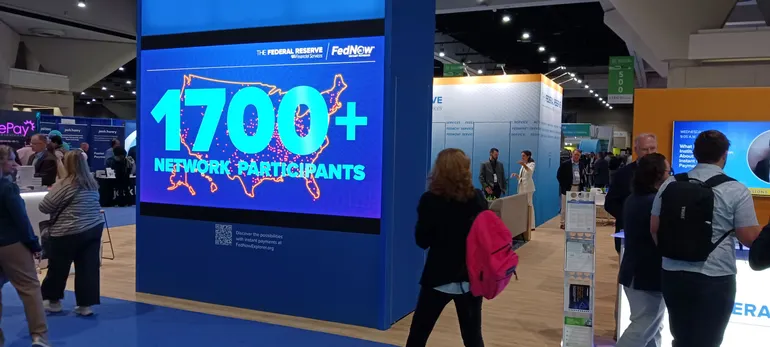
The latest data from the Federal Reserve paints a picture of a system transitioning from a nascent pilot to a foundational piece of economic infrastructure. As of mid-2024, approximately 1,800 banks and credit unions have integrated the FedNow service into their operations. This represents a significant milestone, as the network now includes seven of the ten largest financial institutions in the country.
According to Nick Stanescu, Chief FedNow Executive, the service currently reaches approximately half of all U.S. savings and checking accounts. While the initial phase of the rollout focused on establishing the technical rails, the current phase is characterized by a "network effect," where the increasing number of participants makes the system exponentially more valuable to businesses and consumers alike.
The primary appeal of FedNow lies in its 24/7/365 availability and near-instant settlement. Unlike traditional Automated Clearing House (ACH) transfers, which can take several days to clear, or wire transfers, which are often expensive and restricted to business hours, FedNow allows funds to move from one account to another in seconds. This capability is being leveraged for a variety of high-impact use cases, including:
- Insurance Payouts: Allowing disaster victims to receive emergency funds immediately.
- Real Estate Transactions: Eliminating the "waiting game" for escrow and closing funds.
- Earned Wage Access: Enabling workers to receive their pay as they earn it, rather than waiting for a bi-weekly cycle.
- Consumer Purchases: Facilitating high-value transactions like car sales without the need for cashier’s checks.
Chronology: From Concept to Critical Mass
The journey toward a government-backed instant payment system has been a multi-year endeavor marked by rigorous industry consultation and technical development.
2015–2019: The Foundation
The Federal Reserve established the Faster Payments Task Force to identify gaps in the U.S. payment ecosystem. The task force concluded that while the private sector was developing solutions, a central bank-operated service was necessary to ensure ubiquitous access, particularly for smaller community banks and credit unions.
2019–2022: Development and "Wooing"
The Fed officially announced the development of FedNow in 2019. For the next three years, the central bank engaged in a massive outreach campaign to "woo" financial institutions. This was a delicate period, as the Fed had to balance its role as a regulator with its role as a service provider competing—and collaborating—with the private sector’s RTP network.
July 2023: The Launch
FedNow officially went live in July 2023 with 35 early-adopter institutions and the U.S. Department of the Treasury’s Bureau of the Fiscal Service. The launch was viewed as a "soft start," focusing on stability and security over raw volume.
2024: The Velocity Phase
By the end of the first quarter of 2024, the system began to see exponential growth. The 85% jump in transaction volume in Q2 2024 suggests that the "receive-only" phase for many banks is ending, and they are now actively marketing instant payment capabilities to their end users.
Supporting Data: Comparing the Competitive Landscape
While FedNow’s growth is impressive, it operates in a dual-track market alongside the Clearing House’s RTP (Real-Time Payments) network, which launched in 2017. A comparison of the two systems reveals the current state of the market:
| Metric | FedNow (Q2 2024) | RTP (The Clearing House) |
|---|---|---|
| Participants | ~1,800 | ~1,280 |
| Transaction Volume | 85% growth (QoQ) | 142 million transactions |
| Value Settled | Not publicly disclosed | $576 Billion |
| Account Reach | ~50% of U.S. accounts | 70% (up to 90% via intermediaries) |
| Target Audience | Ubiquitous (Strong focus on SMBs/Credit Unions) | Large commercial banks and major retail banks |
One of the most significant data points involves the "Send" vs. "Receive" disparity. Joining the network to receive payments is relatively low-risk and technically simpler for banks. However, authorizing the sending of payments involves complex liquidity management and fraud prevention measures. Currently, only about 12% of RTP participants are authorized to send payments. While the Fed has declined to provide specific "send" numbers for FedNow, industry experts suggest the ratio is likely similar, representing a major hurdle for full ubiquity.
Furthermore, the U.S. still has a long way to go to reach the 7,000 to 8,000 financial institutions the Fed initially targeted. With only about 20% of the nation’s 9,000 banks and credit unions signed up, the "long tail" of small community institutions remains the next great frontier for the service.
Official Responses: Industry Voices and Central Bank Perspectives
The surge in adoption has drawn praise from trade groups and industry analysts, though tempered by calls for continued innovation.
Reed Luhtanen, Executive Director of the Faster Payments Council, emphasized the demand-driven nature of this growth. "This underscores the fact that businesses and consumers are demanding instant payments and financial institutions are responding to that demand," Luhtanen stated. He anticipates that the rate of adoption will continue to accelerate as more "send" use cases become mainstream.
Bridget Hall, leader for real-time payments in the Americas for ACI Worldwide, noted that the U.S. is finally shedding its reputation as a global laggard. Historically, countries like India (via UPI) and Brazil (via Pix) have far outpaced the U.S. in real-time adoption. "We used to talk about the U.S. being behind… and I think we can solidly say that we’re not behind anymore," Hall said. "We have established instant payment schemes in the U.S."
However, Hall also pointed out the technical gaps that remain. She noted that "request-for-pay" (RfP) features—where a business can send an electronic request for an instant payment that the consumer can approve with one click—are still underutilized. Expanding these features is considered essential for moving FedNow from a niche tool to a daily consumer habit.
Implications: The Road to Cross-Border and Government Integration
The growth of FedNow carries profound implications for the future of the U.S. economy, touching on everything from monetary policy to social safety nets.
The Federal Government as a Catalyst
The role of the federal government in driving adoption cannot be overstated. The Treasury Department’s early adoption and FEMA’s use of FedNow for disaster relief serve as powerful proof-of-concepts. However, industry experts like Jim Angel, a Georgetown University professor and former member of the Fed’s Faster Payments Task Force, suggest the government could do more.
Angel proposed that if the Social Security Administration were to offer faster benefits via FedNow compared to the traditional ACH system, "laggard banks would be under strong commercial pressure from their customers to sign up." Such a move would effectively mandate participation through market forces, ensuring that even the smallest rural banks join the network to satisfy their elderly constituents.
Breaking the "Receive-Only" Barrier
The current challenge for the Fed is moving institutions from passive "receive-only" status to active "send" status. This requires banks to invest in real-time fraud monitoring and to maintain higher levels of liquidity, as payments are settled instantly and irrevocably. Until the "send" functionality is as ubiquitous as "receive," the system cannot truly replace traditional methods for P2P (peer-to-peer) or B2B (business-to-business) transactions.
The Cross-Border Frontier
Perhaps the most ambitious implication of FedNow’s growth is the potential for international expansion. In April 2024, the Federal Reserve proposed amendments to Regulation J, which governs fund transfers. The proposal seeks to allow financial institutions to use intermediaries to send payments.
This change is widely seen as a precursor to cross-border instant payments. By allowing U.S. banks to connect with international intermediaries, FedNow could eventually link with other national systems like the Eurozone’s TIPS or India’s UPI. If successful, this would revolutionize the remittance market, making international money transfers as fast and cheap as sending a domestic text message.
Conclusion
The 85% jump in FedNow payment volume is more than just a statistical anomaly; it is evidence of a paradigm shift in how money moves in the United States. While the U.S. still faces challenges in reaching full bank participation and balancing the "send/receive" ratio, the momentum is undeniable. As the Federal Reserve continues to refine Regulation J and federal agencies expand their use cases, FedNow is poised to move from a secondary payment rail to the primary heartbeat of the American financial system. The "instant" era has arrived, and for the 1,800 institutions already on board, there is no looking back.