









In an era where financial fluidity dictates everything from the roof over one’s head to the interest rate on a car loan, the credit score has emerged as the most critical three-digit number in an American consumer’s life. Often misunderstood as a static grade, a credit score is, in reality, a dynamic reflection of financial behavior. As Credit Awareness Month highlights the importance of fiscal literacy, a deep dive into the mechanics of credit reveals that improving one’s standing is less about "quick fixes" and more about the disciplined application of specific financial principles.
This report explores the fundamental pillars of credit improvement, the statistical weight of financial habits, and the long-term implications of maintaining a robust credit profile in an increasingly complex economic landscape.
Main Facts: The Five Pillars of Credit Health
The path to a higher credit score is paved with five primary behavioral adjustments. According to industry standards and consumer protection advocates, these pillars form the bedrock of a healthy financial reputation:
- Payment Punctuality: The single most influential factor in credit scoring models.
- Utilization Management: The ratio of debt-to-limit on revolving accounts.
- Strategic Inquiry Limitation: Minimizing "hard hits" on a credit report.
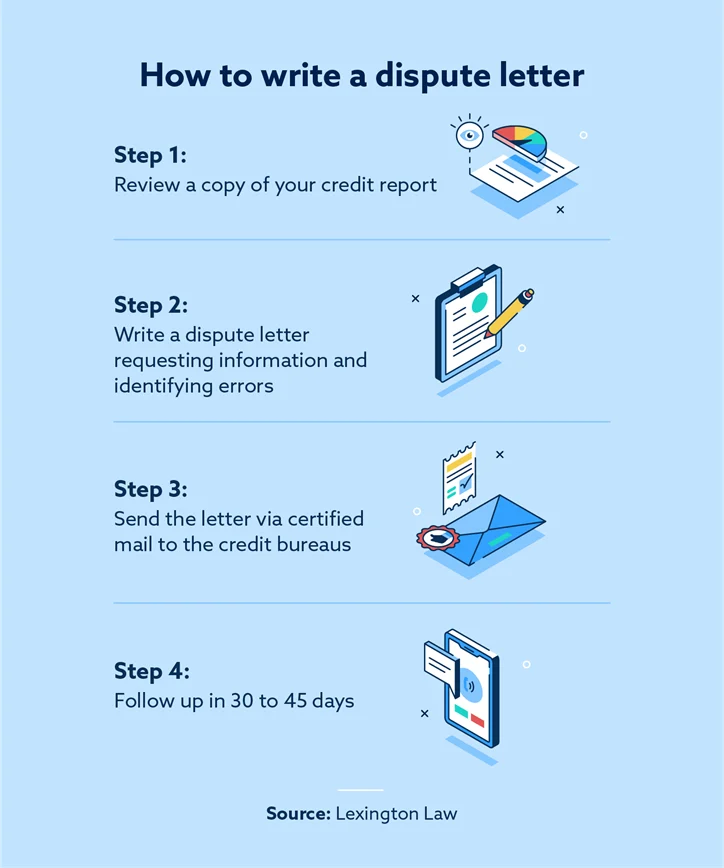
- Vigilant Monitoring: The regular review of credit reports for inaccuracies.
- Behavioral Consistency: The understanding that credit repair is a marathon, not a sprint.
While these points seem straightforward, the nuances of how they are calculated and reported can mean the difference between a "Fair" score and an "Excellent" one.
The Chronology of Credit Building: A Strategic Roadmap
Improving a credit score is a chronological process that requires both immediate corrective actions and long-term maintenance.
Phase I: Stabilizing the Foundation (Months 1-3)
The initial phase focuses on "stopping the bleed." For consumers with sub-prime scores, the first step is ensuring that no further negative marks are added. This involves auditing all monthly obligations—utilities, credit cards, student loans, and mortgages—and synchronizing them with automated payment systems.
Phase II: The De-leveraging Period (Months 4-12)
Once payments are stabilized, the focus shifts to credit utilization. Financial experts suggest that consumers who keep their utilization below 30% see significant score increases, but those who drop below 10% often enter the highest tier of creditworthiness. This period often involves aggressive "debt avalanches" (paying off high-interest debt first) or "debt snowballs" (paying off small balances for psychological wins).
Phase III: Mature Management (Year 1 and Beyond)
Long-term credit health is defined by the age of accounts. The longer an account remains open and in good standing, the more it bolsters the "Length of Credit History" category, which accounts for 15% of a FICO score. During this phase, the strategy is often one of "calculated inactivity"—avoiding the temptation to close old accounts or open unnecessary new ones.
Supporting Data: The Mathematical Weight of Financial Habits
To understand why certain habits are prioritized, one must look at the FICO (Fair Isaac Corporation) scoring model, which is used by 90% of top lenders. The model breaks down as follows:
- Payment History (35%): This is the "heavy lifter." A single 30-day late payment can cause a score to drop by as much as 100 points for someone with previously pristine credit.
- Amounts Owed (30%): Also known as credit utilization. Lenders view high utilization as a sign of financial distress, even if the consumer is making minimum payments.
- Length of Credit History (15%): This rewards "seasoned" borrowers. It considers the age of the oldest account, the newest account, and the average age of all accounts.
- Credit Mix (10%): Lenders like to see that a borrower can handle different types of credit, such as "revolving" (credit cards) and "installment" (auto loans or mortgages).
- New Credit (10%): Each "hard inquiry"—which occurs when a lender pulls a report for a lending decision—can shave 5 to 10 points off a score temporarily.
The Financial Cost of a Low Score
The implications of these percentages are best illustrated through interest rate differentials. On a 30-year fixed-rate mortgage of $300,000, a borrower with a "Very Good" score (760+) might receive an interest rate significantly lower than someone with a "Fair" score (620). Over the life of the loan, the individual with the lower score could end up paying over $100,000 more in interest alone.

Official Responses and Regulatory Protections
The credit reporting industry is not without its flaws. Studies by the Federal Trade Commission (FTC) have previously indicated that one in four consumers identified errors on their credit reports that could affect their scores.
The Role of the Fair Credit Reporting Act (FCRA)
The FCRA is the primary federal law governing the accuracy, fairness, and privacy of information in the files of consumer reporting agencies. It grants consumers the right to:
- Be told if information in their file has been used against them.
- Access their files (via AnnualCreditReport.com).
- Dispute incomplete or inaccurate information.
Expert Perspectives from Lexington Law
Legal professionals specializing in credit, such as those at Lexington Law, emphasize that the credit system is often opaque. "Improving your credit is not about quick fixes; it’s about understanding how your financial behavior shapes your future," the firm notes. They highlight that while consumers can manage credit on their own, the complexity of federal consumer protection laws often warrants a more rigorous review of credit profiles to ensure that the reported data is 100% accurate and substantiated.
Implications: Credit as a Tool for Social Mobility
The implications of credit health extend far beyond the ability to buy a luxury car. In the modern economy, credit awareness is a prerequisite for social mobility and wealth accumulation.
1. Housing and Stability
In many competitive urban markets, landlords use credit scores as a primary screening tool. A low score doesn’t just mean a higher interest rate on a mortgage; it can mean an outright rejection for a rental apartment, forcing families into less stable or more expensive housing situations.
2. Employment and Security Clearances
While employers cannot see a candidate’s actual credit score, they can (with permission) see a modified version of the credit report. For roles involving financial responsibility or government security clearances, a history of late payments or high debt can be viewed as a "character flaw" or a security risk, potentially barring qualified candidates from high-paying careers.
3. Insurance and Utility Premiums
In many states, insurance companies use "credit-based insurance scores" to determine premiums for auto and homeowners’ insurance. Statistically, individuals with lower credit scores are filed as higher-risk, leading to higher monthly premiums. Similarly, utility companies may require substantial cash deposits from customers with poor credit history.
4. Generational Wealth
Credit is a primary lever for wealth building. Access to low-interest capital allows individuals to invest in real estate or start businesses. When one generation maintains high credit, they can co-sign for the next, lowering the barrier to entry for student loans or first-time home purchases, thereby facilitating the transfer of generational wealth.
Conclusion: The Path to Financial Confidence
As Credit Awareness Month serves as a reminder, the journey toward a better credit score is a blend of mathematical strategy and psychological discipline. By focusing on the five pillars—paying on time, managing utilization, limiting inquiries, auditing reports, and maintaining consistency—consumers can transition from being victims of their financial history to architects of their financial future.
While the system can be daunting, the tools for improvement are accessible. Whether through self-education, automated financial tools, or professional credit assistance, the goal remains the same: a transparent, accurate, and robust credit profile that opens doors rather than closing them. In the words of financial advocates, "Understanding your credit is more than a financial task; it affects opportunities throughout your life."