








By Dan Ennis
Published September 15, 2026
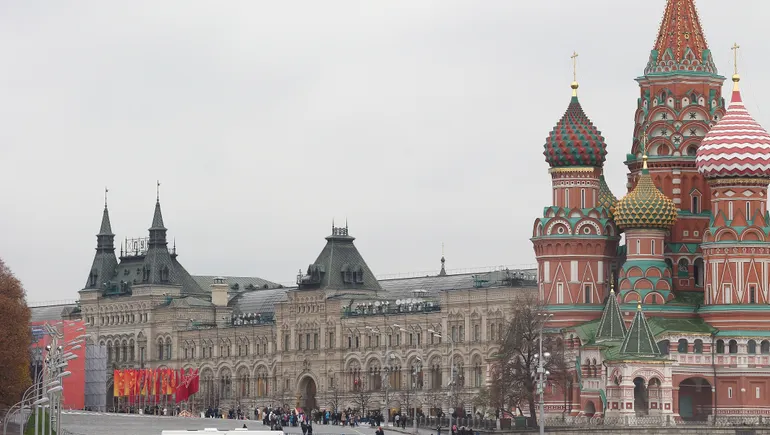
In a decisive escalation of its ongoing "Operation Economic Outcast," the U.S. Department of the Treasury announced on Monday the imposition of fresh, stringent sanctions against VTB Bank, Russia’s second-largest financial institution. The move, which marks a significant tightening of the regulatory net surrounding Moscow’s state-backed lenders, is specifically designed to dismantle a network of correspondent banking relationships that the Treasury alleges VTB established with sanctioned Iranian financial entities.
This action represents a pivotal moment in the U.S. government’s broader strategy to choke off financial lifelines to the Iranian regime. By targeting the conduit through which funds move between two heavily sanctioned nations, the Treasury is signaling a shift from blanket punitive measures to precise, tactical disruptions of international money laundering networks.
The Core Mandate: Curbing the Tehran-Moscow Financial Axis
The primary impetus for these new sanctions is the discovery that VTB Bank has been facilitating cross-border transactions for Iranian banks that were already designated as illicit by the U.S. government. Under the framework of current international financial law, correspondent banking—the relationship where one bank holds deposits owned by another bank to facilitate payments—is a critical component of global trade. By leveraging its position, VTB allegedly allowed Iranian entities to bypass traditional international payment systems, thereby insulating them from existing U.S. sanctions.
Treasury Secretary Scott Bessent, in a formal statement released Monday, emphasized the gravity of the administration’s stance. "Treasury will continue to target and disrupt those who provide material, technological, or financial support that allows the Iranian regime to sustain its terrorist enterprise," Bessent stated. "Treasury will not tolerate any support to the regime and will continue to identify, expose, and isolate Iran’s enablers."
The announcement was not entirely unexpected. Just four days prior, Secretary Bessent had teased the impending action during a press briefing, noting that the Treasury was preparing to sanction a "large bank" as part of a multi-pronged offensive against global actors facilitating state-sponsored aggression.
A Chronology of Escalation: From Ukraine to the Middle East
The path to these latest sanctions is paved with a history of mounting tensions between VTB Bank and Western regulatory bodies. To understand the significance of this week’s announcement, one must look at the progression of the bank’s standing in the international financial community over the past four years.
2022: The Initial Break
VTB Bank was among the first major Russian financial institutions to feel the weight of Western sanctions following Russia’s full-scale invasion of Ukraine in February 2022. At that time, the U.S. froze all VTB assets within its jurisdiction, effectively severing the bank’s ability to conduct transactions in U.S. dollars. This was intended to paralyze the Russian economy by cutting off its primary instruments for international commerce.
2023–2024: Criminal Charges and Legal Warfare
As the sanctions persisted, the situation spiraled into legal battles. The U.S. Department of Justice (DOJ) indicted VTB CEO Andrey Kostin on multiple counts, including violations of the International Emergency Economic Powers Act (IEEPA), conspiracy to commit international money laundering, and conspiracy to violate U.S. sanctions. These charges transformed VTB from a regulated entity into a target of criminal prosecution.
The tension peaked in 2024 when VTB filed a lawsuit against JPMorgan Chase in a Russian court. VTB sought to reclaim millions in assets that had been frozen by JPMorgan, which acted as a correspondent bank for VTB before the 2022 sanctions. JPMorgan responded with a counter-suit, arguing that VTB was in direct violation of a 2008 contractual agreement stipulating that all legal disputes must be adjudicated in New York courts. The resulting legal chaos culminated in a Russian court ordering the seizure of nearly $440 million in JPMorgan funds—a move that triggered international alarm—before the court eventually backed off from collecting certain asset classes.

2026: The "Operation Economic Outcast" Era
The current sanctions are the latest chapter in "Operation Economic Outcast." This initiative has seen the Treasury expand its scope beyond Russia to include intermediaries in other jurisdictions. Last month, the Treasury sanctioned Dubai-based branches of Egypt’s Banque Misr, followed by punitive measures against Turkey-based Golden Global Yatirim Bankasi Anonim Sirketi. These actions underscore a trend: the U.S. is increasingly focused on the regional banks that facilitate "sanctions-dodging" for Russia and Iran.
Supporting Data: The Mechanics of the Sanctions
The mechanics of the new sanctions are designed to be "chilling" to any other institution considering similar partnerships. By designating VTB’s correspondent relationships as a violation, the Treasury is effectively threatening secondary sanctions on any other entity that continues to facilitate business with these specific nodes in the VTB-Iran network.
The following data points illustrate the scope of the Treasury’s current focus:
- Network Mapping: The Treasury has identified over a dozen specific transaction "corridors" that allowed funds to move from the Iranian banking sector, through VTB, and into the global market.
- Asset Freezes: While VTB is already largely frozen out of the U.S. market, these new sanctions expand the list of "Specially Designated Nationals" (SDNs) within the VTB corporate structure, preventing any U.S. person or entity from engaging in even the most minor business dealings with these individuals.
- The "Secondary" Threat: Perhaps the most potent aspect of the new order is the warning to global banks. The Treasury has explicitly stated that any institution—regardless of its location—that provides material support to these specific VTB-Iranian channels risks losing its own access to the U.S. financial system.
Implications: A Fragmenting Global Financial System
The decision to further isolate a bank of VTB’s size carries profound implications for the global financial order.
For the Russian Banking Sector
The sanctions further entrench the "de-globalization" of the Russian economy. As major lenders like VTB become radioactive to the global banking system, Russia is increasingly forced to rely on domestic or highly restricted "alternative" payment rails. This increases the cost of imports and reduces the efficiency of the Russian state, potentially hindering its ability to finance long-term military or infrastructure goals.

For Global Correspondent Banking
Financial institutions worldwide are now under immense pressure to conduct "enhanced due diligence." Compliance departments at major global banks are currently scrubbing their ledgers for any potential exposure to the entities named in the Treasury’s latest advisory. This will likely lead to a "de-risking" trend, where international banks move to terminate relationships with any entity that has even a tangential connection to Russia or Iran, further narrowing the channels for legitimate trade and diplomacy.
For U.S.-Iran Relations
By framing these sanctions as part of a campaign to disrupt a "terrorist enterprise," the Treasury is aligning financial policy with national security strategy. The move suggests that the current U.S. administration views the financial cooperation between Moscow and Tehran as a unified threat. This may close the door on any potential back-channel financial negotiations in the near term, setting the stage for a period of protracted economic containment.
Conclusion: A High-Stakes Game of Cat and Mouse
The sanctions against VTB Bank are a testament to the evolving nature of modern warfare, where the front lines are found in balance sheets, wire transfer logs, and international legal filings. As VTB and its leadership navigate the dual pressures of U.S. criminal indictments and sweeping economic isolation, the global financial community watches closely.
The success of "Operation Economic Outcast" depends on the Treasury’s ability to not only identify these illicit channels but to maintain the political and economic will to enforce them across borders. For now, the message from Washington is clear: the cost of acting as a financial intermediary for the Iranian regime has been raised to a level that few, if any, reputable institutions can afford to pay. Whether this will force a change in the strategic calculus of Moscow or Tehran remains the central, unanswered question of this unfolding crisis.