








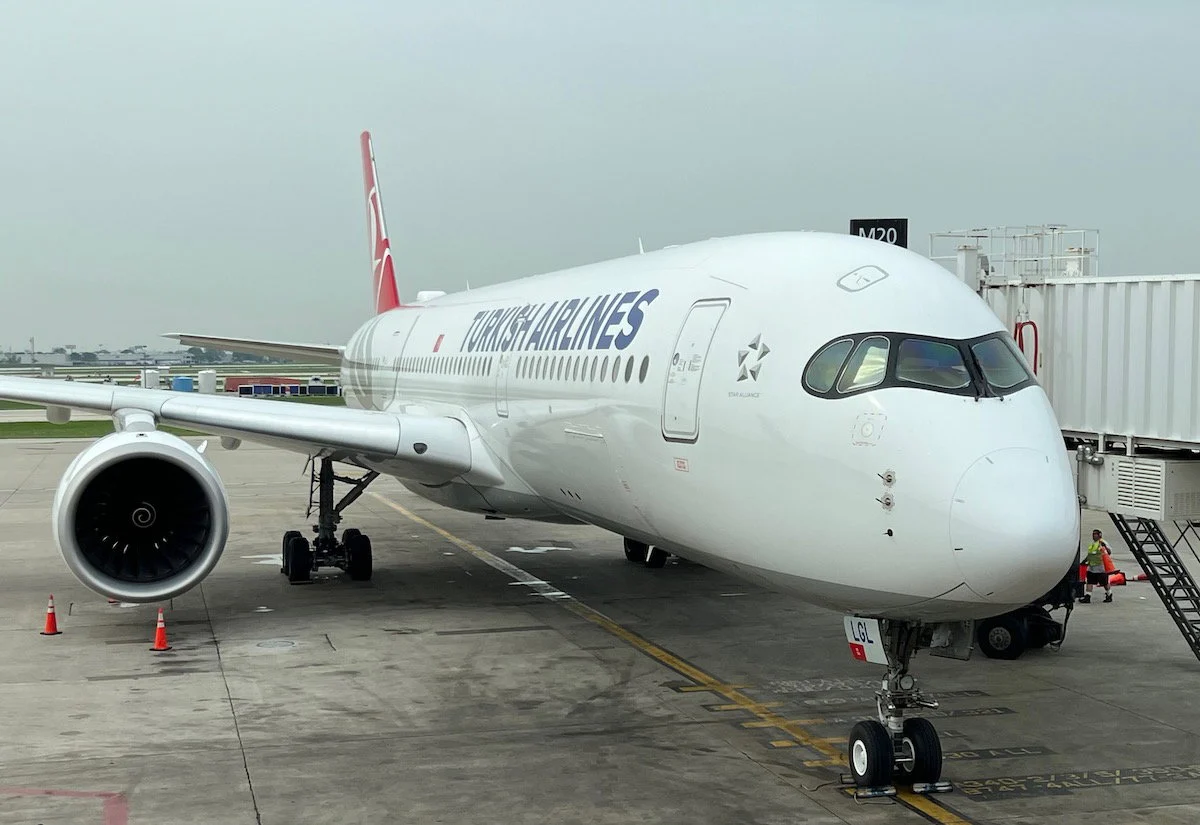
In the high-stakes environment of international aviation, communication is the bedrock of safety. For pilots and air traffic controllers (ATC), the margin for error is razor-thin. However, a recent incident at Newark Liberty International Airport (EWR) has reignited a long-standing debate regarding the lack of standardized, unambiguous phraseology in United States airspace. On September 15, 2026, a Turkish Airlines Airbus A350-900, operating as flight TK30, inadvertently entered an active runway without explicit authorization, highlighting a systemic vulnerability in how instructions are relayed in one of the world’s busiest terminal environments.
The Incident: A Breakdown in Communication
The incident occurred during the quiet, early-morning hours, a time when operational tempo is lower but fatigue-related errors can sometimes manifest. Flight TK30, bound for Istanbul (IST), was taxiing toward Runway 4L at Newark. While the airport was not congested, the interaction between the Newark tower controller and the flight deck of the A350 became a case study in the dangers of conversational, rather than standardized, ATC instruction.
The sequence of events began with routine taxi procedures. After the crew requested taxi instructions, the controller directed the flight to proceed via Taxiway B. The crew acknowledged the instruction, and the aircraft began its movement toward the runway hold-short line. As the aircraft neared the runway, the controller prompted the flight crew to advise when they were ready for departure. The pilots responded affirmatively, signaling their readiness to depart.
Approximately 50 seconds passed, during which the aircraft remained short of the runway entrance. The controller, perhaps noting the delay or attempting to expedite the departure, queried, "Turkish 4YT heavy, are you able to continue for the runway?" The pilot responded with a standard "Affirmative." The controller then issued the directive: "Okay, continue for the runway."
Following this, the Turkish Airlines crew proceeded onto the runway surface. Shortly thereafter, when the controller attempted to check in with the flight, the pilots requested a 30-second delay to address a minor technical issue. It was at this moment that the ambiguity of the prior exchange became apparent. The controller, seemingly startled, asked the crew if they were aware they were currently sitting on Runway 4L. Upon confirmation, the controller informed the flight crew that they had not been cleared for the runway and would be required to contact the tower via telephone to discuss a potential pilot deviation—a formal process that often leads to FAA investigations.
Chronology of the Event
The timeline of the incursion illustrates how quickly a misunderstanding can escalate:
- Initial Taxi Clearance: The aircraft is cleared to taxi via Taxiway B, expecting departure on Runway 4L.
- Readiness Confirmation: The flight crew reports they are ready for departure, following an inquiry from the tower.
- The "Continue" Instruction: A 50-second pause ensues. The controller asks if the flight can "continue for the runway."
- The Incursion: Interpreting the instruction as a clearance to move into position, the crew taxis onto the runway.
- The Technical Pause: The crew informs ATC they require 30 seconds for a minor technical matter.
- Correction and Protocol: The controller clarifies that no clearance was given and initiates the mandatory post-incident reporting process.
The Global Disconnect: Why Phraseology Matters
The Newark incident is not an isolated event. Earlier this year, a similar situation occurred at Houston George Bush Intercontinental Airport (IAH) involving a Qatar Airways Cargo Boeing 777, where language confusion led to an unauthorized runway entry. These incidents bring the "US-centric" style of ATC communication into sharp focus.
Internationally, the International Civil Aviation Organization (ICAO) sets the standard for aviation phraseology. These standards are designed to be concise, predictable, and devoid of conversational filler. In many countries, an instruction to "continue" would never be used in a context that could be mistaken for a takeoff or line-up clearance. The goal is to eliminate the "guesswork" that pilots—who often operate in multiple jurisdictions—must perform when they switch from international norms to the more colloquial style often found in the United States.
While the FAA mandates the use of specific terminology, the reality on the ground often involves a more relaxed, conversational tone. For a flight crew whose primary language may not be English, or who are conditioned by thousands of hours of ICAO-standard radio work, the shift to conversational US English can lead to dangerous assumptions.
Supporting Data and Safety Implications
According to recent aviation safety reports, "runway incursions" remain a top-tier concern for the Federal Aviation Administration. An incursion occurs when an aircraft, vehicle, or person enters the protected area of a runway without authorization.
The primary danger in these scenarios is the potential for a collision with an aircraft landing or departing. In the case of TK30, the lack of traffic at that hour mitigated the risk, but the potential for catastrophe remains unchanged. When a controller uses a phrase like "continue for the runway," a pilot under pressure to adhere to a schedule might hear "you are cleared to enter the runway."
Studies in aviation human factors have repeatedly shown that pilots and controllers operate under "expectation bias." If a pilot is ready to depart and is told to "continue toward the runway," their brain is already primed to take the next step: entering the runway. If the controller does not explicitly say "hold short of runway 4L," the instruction is left to interpretation—the cardinal sin of aviation safety.
Official Responses and Industry Outlook
The FAA has not yet released the full investigative report on the TK30 incident, but standard procedure dictates that the pilots involved will be subject to a review. Typically, these reviews involve a transcript analysis, flight data recorder review, and an interview with the flight crew.
Industry experts argue that while the pilots are ultimately responsible for the aircraft, the burden of clarity rests with the provider of the service: the air traffic controller. The aviation industry is increasingly calling for the FAA to adopt a more rigorous adherence to standardized phraseology, similar to the strict protocols enforced in the European Union or under ICAO mandates.
Critics of the current US system suggest that the "colloquialism" of American ATC is a legacy issue, a holdover from a time when US airspace was less complex and dominated by domestic carriers. Today, with global fleets and non-native English-speaking crews, the argument for a universal, simplified, and non-negotiable set of phrases is stronger than ever.
Implications for Future Aviation Safety
The incident at Newark serves as a sobering reminder that even with sophisticated GPS, advanced cockpit automation, and high-tech runway lighting systems, the human element remains the most volatile variable in aviation.
To prevent future occurrences, the following recommendations are frequently cited by safety boards and pilot unions:
- Mandatory Phraseology Training: Controllers should be held to strict, ICAO-compliant phraseology, reducing the use of conversational "filler" words.
- Instructional Clarity: Instructions regarding runway entry must be binary—either a clear "cleared to line up" or an explicit "hold short." There should be no middle ground.
- Cross-Cultural Audits: Regular reviews of radio communications involving international carriers to identify recurring patterns of confusion.
Ultimately, the Turkish Airlines incident at Newark is a symptom of a larger, systemic issue. As aviation becomes more integrated, the "local dialect" of US air traffic control may no longer be compatible with the safety requirements of a globalized industry. If the goal is to drive the number of runway incursions toward zero, the industry must prioritize absolute clarity over conversational convenience. Until then, pilots and controllers alike will continue to operate in a gray area where a single, poorly chosen word can turn a routine departure into a high-stakes safety investigation.