








For decades, the icon of country music, Dolly Parton, built more than just a legendary career; she constructed an empire. From her sprawling music catalog and iconic theme parks to her extensive charitable endeavors and influence on global pop culture, Parton’s life work was a beacon of success. Yet, as her life drew to a close on August 25, 2025, the music icon—who had long expressed a desire to avoid leaving her loved ones with a "mess"—found her legacy at the center of a public courtroom struggle.
Parton, who had no children and was widowed following the passing of her husband of over 50 years, Carl Dean, earlier in 2025, had taken deliberate steps to manage her affairs. Despite her proactive use of trusts, business entities, and seasoned financial managers to bypass the public scrutiny of probate court, her estate has become the site of a high-profile legal dispute. This conflict serves as a stark reminder that even with the most sophisticated planning, the intersection of immense wealth, familial dynamics, and the desire for control can create a volatile environment.
The Conflict: Control vs. Continuity
The current legal turmoil centers on an allegation of coercion and threats against the very brand Parton spent a lifetime cultivating. According to court filings reported by The New York Times and other national outlets, Parton’s longtime manager has filed a lawsuit against her nephew and former head of security, Bryan Seaver.
The manager’s complaint alleges that Seaver attempted to leverage his position to extract payments, purportedly threatening to "destroy the entire brand" if his demands were not met. These allegations, which also include claims of intimidation toward staff and business partners, have cast a shadow over the immediate aftermath of the singer’s passing.
The legal action has triggered a request for a restraining order, marking a dramatic shift from the public image of a close-knit, harmonious Tennessee family. However, the narrative is contested. Seaver has publicly denied all allegations, asserting that his communications were taken out of context and misrepresented to paint him as an antagonist to the estate’s mission. Meanwhile, Frieda Parton, the singer’s sister, has publicly stated that the family is not engaged in a unified fight over the estate, suggesting the conflict is localized rather than a systemic family schism.
The Reality of Inheritance: Data and Trends
While the headlines regarding the Parton estate are magnified by the sheer size of a $450 million empire, the root causes of the dispute are familiar to many American families. Arguments over control, perceptions of unfair distribution, and the sudden discovery of unexpected provisions in estate paperwork are the primary drivers of probate litigation.
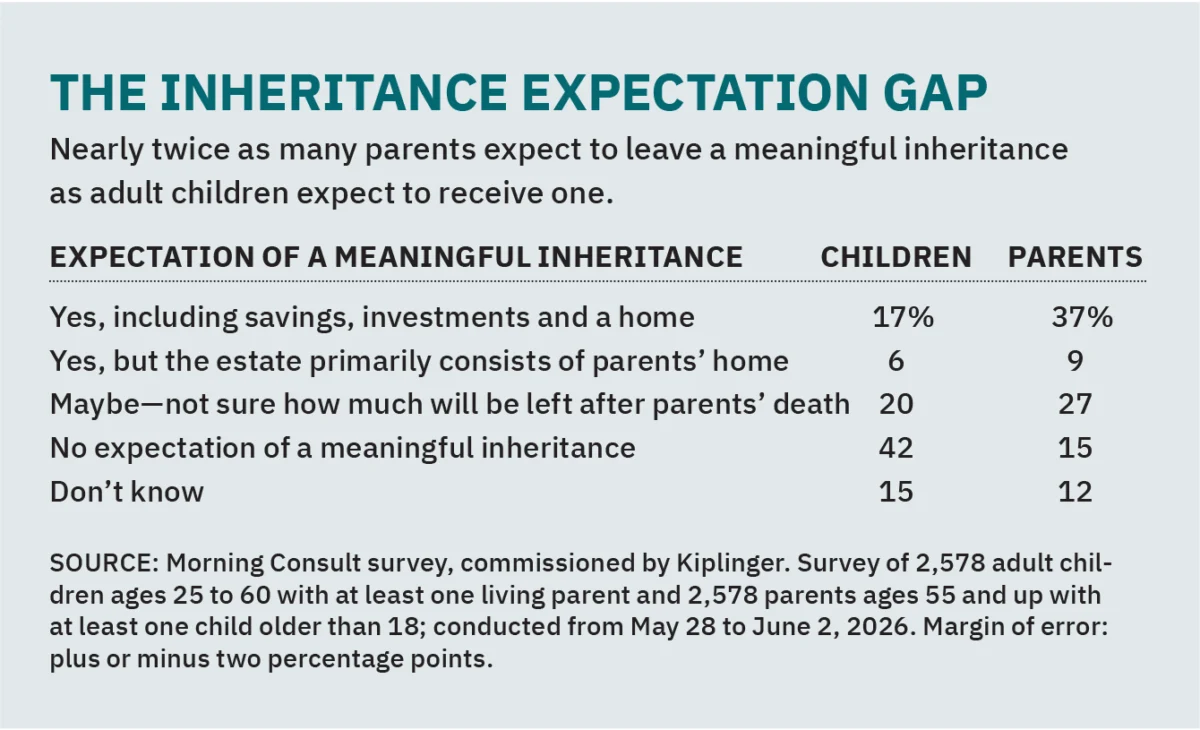
A recent survey conducted by Kiplinger-Morning Consult underscores a troubling trend in the United States: a significant generational divide in financial preparedness. The data reveals that two in five American families have never had a formal conversation regarding inheritance. Furthermore, 30% of parents admitted to having no formal estate plan in place at all, leaving their heirs in a position of potential vulnerability.

Ron Gura, CEO of Empathy, a company specializing in the logistics of loss, notes that this lack of communication is often the precursor to litigation. "The emotional burden of losing a loved one is compounded exponentially when the deceased leaves behind a vacuum of information," Gura explains. "When heirs are forced to interpret intent rather than follow a roadmap, disputes regarding ‘fairness’ are almost inevitable."
Understanding the "Fairness" Fallacy
One of the most frequent misconceptions in estate planning is the idea that "equal" and "fair" are synonymous. Attorneys often see families fractured because a parent divided assets equally without accounting for the varying roles their children played in their lives or the businesses they operated.
Phil Reed, an estate and asset protection attorney at Reed Law, PLC, emphasizes that the primary goal of any estate plan should be clear communication. "Fairness is a subjective concept," Reed notes. "The primary thing to keep in mind when deciding how to divide your estate is communicating the reasons for your decisions while you are still alive. Having these reasons memorialized in your estate plan ensures that when the time comes, your heirs understand the ‘why’ behind the ‘what.’"
The Toolbox of Asset Protection
Parton’s strategy—utilizing trusts and corporate entities—is a gold standard for individuals with complex assets, but it is not infallible. For the average individual, the following strategies are essential to mitigating the risk of post-death litigation:
1. The Necessity of Written Intent
An outdated or half-finished estate plan is often worse than no plan at all. Professionals recommend a review every three to five years, or immediately following significant life events such as a divorce, the birth of a grandchild, or the sale of a major business asset.
2. The Trust Advantage
Unlike a will, which must enter the public record of probate court, a funded living trust offers a degree of privacy and efficiency. By transferring assets into a trust, a person can bypass the time-consuming and expensive probate process. This allows a trustee to execute the instructions of the deceased privately, ensuring that business operations—like those associated with a major brand—continue without the threat of public court intervention.
3. The Executor: A Critical Choice
Naming an executor is one of the most important decisions an individual can make. An executor must be someone who is organized, capable of navigating legal and financial pressures, and above all, trustworthy. In complex estates, opting for a professional or third-party trustee can sometimes alleviate the pressure on family members, preventing them from having to make difficult decisions that might alienate them from one another.
4. Categorizing Personal Property
Often, it is the small items—jewelry, family heirlooms, or specific memorabilia—that cause the most emotional pain during an estate settlement. Developing a written inventory of "who gets what" can prevent the resentment that builds when siblings are left to divide personal items after a funeral.
5. No-Contest Clauses
A no-contest clause, also known as an in terrorem clause, serves as a legal deterrent against frivolous challenges. By stipulating that any beneficiary who contests the will or trust forfeits their inheritance, the deceased can discourage litigation. However, as Kim Hegwood, owner and managing attorney at Your Legacy Legal Care, points out, these clauses have limitations. "In many states, if a challenger brings a claim in good faith and with probable cause, the court may refuse to enforce the penalty. A no-contest clause is a strong deterrent, but it is not a substitute for a well-crafted, defensible plan."
Implications: The Legacy Beyond the Money
The situation surrounding the late Dolly Parton highlights the painful reality that an estate plan is not just a document for distributing wealth—it is the final chapter of a person’s public and private life. While Parton reportedly took great care to ensure her business interests were protected, the current dispute highlights the difficulty of protecting an estate from the human element: the ambition, grief, and perception of betrayal that can emerge when a central figure is gone.
As the legal proceedings continue, the broader lesson for the public is clear. Probate court is an adversarial arena by design. Once a dispute reaches that stage, the privacy and the specific desires of the deceased are subjected to the scrutiny of the legal system, often resulting in outcomes that differ wildly from what the person intended.
"The kindest thing you can do for the people you love is to make sure they never have to guess what you wanted," Hegwood concludes. "Grief is hard enough without adding a legal fight to the mix. A truly robust estate plan is one that anticipates the potential for human conflict and builds barriers against it, not just with legal language, but with clear, transparent communication."
Ultimately, while no amount of legal documentation can fully insulate a family from the grief of loss, a proactive, clearly articulated, and updated estate plan provides the best chance of ensuring that a legacy is defined by the life lived, rather than the battle fought over the remains. For the Parton family and for millions of others, the path forward is a reminder that estate planning is not a task to be checked off a list, but a continuous act of love and protection for those left behind.