







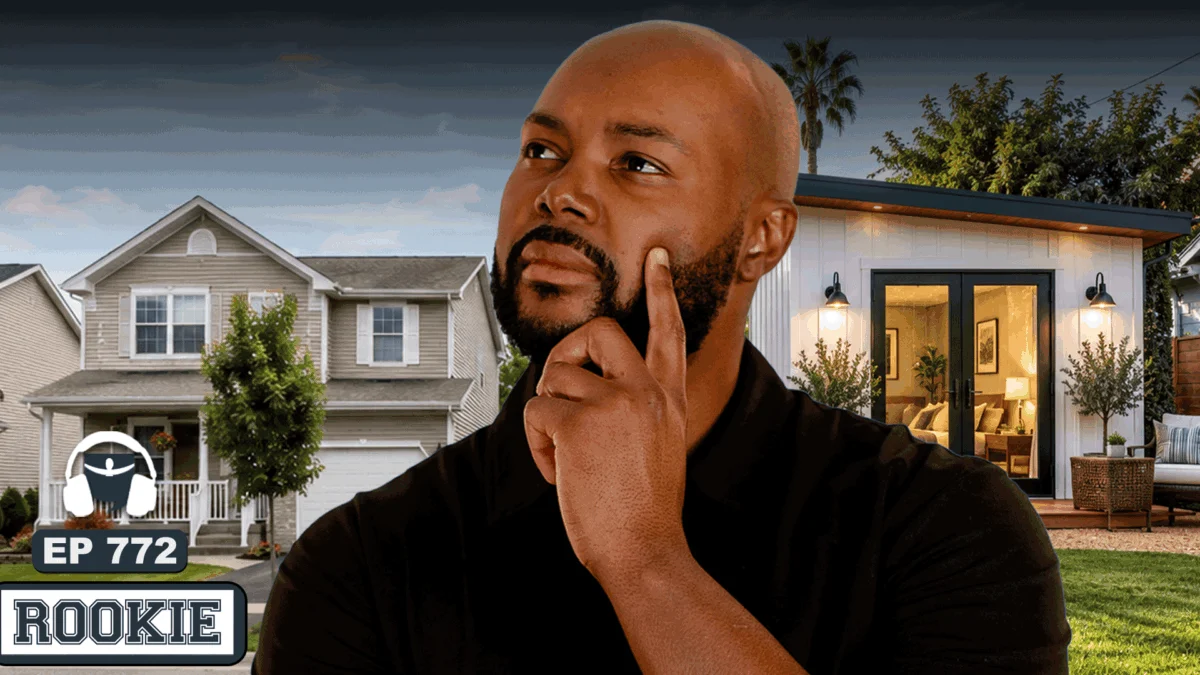
Entering the real estate investing world can feel like standing at an overwhelming crossroads. With countless strategies circulating online—ranging from house hacking and long-term single-family rentals to short-term vacation properties and out-of-state investing—beginners frequently find themselves paralyzed by analysis.
To help rookies clear the mental clutter, real estate experts Ashley Kehr and Tony J. Robinson recently unpacked three distinct community questions on an episode of the Real Estate Rookie Podcast. Sourced directly from the BiggerPockets Forums, these scenarios cover the exact dilemmas facing modern investors: deciding between local appreciation versus out-of-state cash flow, analyzing a first duplex versus a single-family house hack, and weighing a long-term multi-family buy against a profitable short-term vacation rental.
Main Facts: Core Real Estate Dilemmas for Beginners
The fundamental challenge for any novice investor is balancing initial capital, market conditions, and personal lifestyle goals. Based on the expert analysis from the podcast, several primary truths govern first-time real estate decisions:
- The Local vs. Out-of-State Trade-off: Investors in high-cost-of-living (HCOL) areas like Southern California must weigh whether to buy locally for long-term appreciation or look out-of-state for immediate cash flow.
- Property Type Dynamics: Single-family homes generally offer higher historical appreciation and a broader future buyer pool compared to small multi-family properties like duplexes.
- The "Supermax" House Hack: House hacking a duplex while simultaneously renting out individual rooms on your side maximizes rental income and accelerates equity building.
- The Short-Term Rental Tax Loophole: High W-2 earners in upper tax brackets can potentially leverage cost segregation studies and bonus depreciation on short-term rentals to significantly offset their tax liabilities—provided they meet strict material participation rules.
Chronology: Three Investor Scenarios and Expert Solutions
Scenario 1: The Southern California Dilemma—Local Appreciation vs. Out-of-State Cash Flow
Bryan, a prospective investor based in Southern California with a healthy amount of savings, reached out to the BiggerPockets forums with a classic dilemma. As a beginner aiming for long-term wealth building, he questioned whether he should deploy his capital locally—where cash flow is tight and property prices are high—or look out-of-state for better cash flow margins.
Tony J. Robinson advised that if long-term wealth is measured through equity and historical appreciation over a 20- to 30-year horizon, buying in Southern California is far from a bad idea. History suggests that high-demand coastal markets appreciate massively. To solve the cash flow hurdle locally, Tony recommended alternative operational strategies, such as renting by the room, establishing sober or assisted living master-leases, or utilizing mid-term rental strategies to boost income on a traditional asset.
Adding to this, Ashley Kehr emphasized the power of property selection. When pursuing long-term wealth through appreciation, Ashley noted that single-family homes often outperform small multi-family units because they appeal to a vastly larger pool of retail buyers upon exit.
Scenario 2: Analyzing the First House Hack in South Florida
The second inquiry came from a South Florida rookie preparing to purchase their first deal using a conventional loan with a 3.5% to 5% down payment. Torn between a single-family home (renting by the room) and a duplex (living in one unit, renting the other), the investor needed a clear framework for running the numbers.
The experts outlined three golden factors for evaluating a house hack:
- Comparative Living Costs: Do not eliminate personal expenses from the underwriting. Analyze the deal with all operating expenses included, then compare your net out-of-pocket living cost against what you would pay for a comparable apartment in the area. If your living costs drop, you win.
- Mortgage Pay-Down: Recognize that your tenants are actively paying down your principal balance every month, building baseline equity that a traditional renter never captures.
- Market Appreciation: Factor in the long-term growth trajectory of the neighborhood.
Tony introduced the "Supermax" house hacking strategy: purchasing a duplex, living in one unit while renting the other, and also renting out spare bedrooms within your own unit. Furthermore, Tony noted that even if a house hack initially breaks even or shows a slight paper loss compared to your current rent, the net positive of building equity rather than paying a landlord’s mortgage makes it a winning maneuver.
Scenario 3: The Fork in the Road—Duplex vs. Mountain Vacation Home
In the final scenario, Chris—a divorced W-2 employee in his early 40s sitting in the 35% tax bracket with $50,000 for a down payment—faced a major lifestyle and investment decision after 20 years on the sidelines. He was torn between buying a local duplex/triplex for long-term rental income or purchasing a mountain/lake getaway an hour away to operate as a short-term rental (STR) while using it a few weeks a year.
Supporting Data & Strategic Insights
When evaluating Chris’s options, the podcast hosts highlighted critical nuances that every high-income earner must consider:
- Speed to Execution: Tony stressed that after waiting two decades, Chris’s primary objective should be eliminating analysis paralysis. Whichever asset class allows him to execute and secure a property the fastest—establishing a "proof of concept"—carries greater weight than agonizing over marginal performance differences.
- The Tax Advantage of Short-Term Rentals: Ashley pointed out a massive financial lever for high-W-2 earners. Because Chris sits in a high tax bracket, owning a short-term rental opens the door to utilizing the short-term rental tax loophole. By executing a cost segregation study and claiming bonus depreciation, high earners can potentially offset their active W-2 income.
- The Material Participation Hurdle: Tony raised a crucial caveat regarding Chris’s desire to use a property manager for his vacation home. To legally utilize the short-term rental tax loophole, investors must meet IRS "material participation" standards—most commonly the 100-hour test (where the owner works more hours on the property than anyone else, including cleaners and handymen) or the 500-hour test. Hiring a hands-off property management company can make satisfying this requirement exceptionally difficult without active, documented owner involvement.
Official Responses and Expert Takeaways
The overarching consensus from Kehr and Robinson centers on pragmatic risk management and operational clarity.
"The rookie move is not to chase the trend," Tony J. Robinson advised listeners. "It’s to understand the risk, know your numbers, and choose the deal that helps you keep learning without putting your financial life under too much pressure."
Ashley Kehr reinforced this sentiment, reminding investors that no single strategy holds a monopoly on success. Whether an investor chooses a long-term duplex, an appreciation-heavy single-family home, or a managed short-term vacation property, the underlying mathematics and the operator’s compatibility with the business model must align.
Implications for Future Real Estate Investors
For beginners entering today’s dynamic housing market, these case studies offer a clear roadmap:
- Match Strategy to Capital and Lifestyle: High-income earners with tax liabilities should closely investigate short-term rentals and associated tax loopholes, provided they are willing to put in the required hours for material participation. Conversely, capital-conscious rookies seeking low-friction entry points should heavily lean into house hacking.
- Prioritize Execution Over Perfection: Spending years evaluating the "perfect" market or asset class squanders the most valuable asset in real estate: time. Securing a stable, cash-flowing or cost-reducing asset builds immediate experience and long-term momentum.
- Underwrite with Exits in Mind: Always calculate how a property will perform once you move out (in the case of house hacks) or how liquid the asset will be when you decide to sell.
By grounding investment decisions in solid data, realistic expense projections, and localized appreciation trends, rookie investors can successfully transition from the sidelines into active, wealth-building property owners.