







In a high-stakes legal clash that touches upon the foundational pillars of executive authority and administrative independence, the U.S. Department of Justice (DOJ) has launched a forceful appeal to overturn the reinstatement of two National Credit Union Administration (NCUA) board members. The move, filed this past Friday, represents a significant escalation in the ongoing struggle between the executive branch’s power to appoint and remove federal officers and the push for insulating regulatory bodies from political interference.
The dispute centers on the April 2025 termination of Todd Harper and Tanya Otsuka, both Democrats, by President Donald Trump. Following their abrupt removal, Harper and Otsuka successfully sought a district court injunction to reclaim their seats, arguing that their absence left the NCUA board without a functional quorum. The DOJ’s latest filing characterizes the plaintiffs’ legal strategy as an exercise in historical cherry-picking, accusing them of “scouring legislative history, statutes no longer in effect, and the zeitgeist of the 1970s” to fabricate a shield against presidential removal that does not exist in federal law.
Chronology of a Constitutional Collision
The current standoff is the culmination of a year-long administrative and legal tug-of-war. The timeline of the dispute highlights the volatility of federal appointments in the modern political climate:
- April 2025: President Trump fires NCUA board members Todd Harper and Tanya Otsuka. The move sparks immediate outcry, as the removal of two of the three board members effectively cripples the agency’s ability to conduct official business due to a lack of a quorum.
- May 2025: Harper and Otsuka file suit in federal district court, asserting that the NCUA’s structure—modeled in part after the Federal Reserve—implied that its board members were intended to be protected from “at-will” termination.
- July 2025: A district judge rules in favor of the plaintiffs, issuing an injunction that reinstates Harper and Otsuka to their posts. This decision is viewed by many as a victory for the concept of independent agencies.
- Late 2025: The Supreme Court issues split rulings regarding the President’s power to remove members of the Federal Trade Commission (upheld) versus members of the Federal Reserve Board of Governors (denied). These rulings shift the legal landscape, providing the backdrop for the current appellate battle.
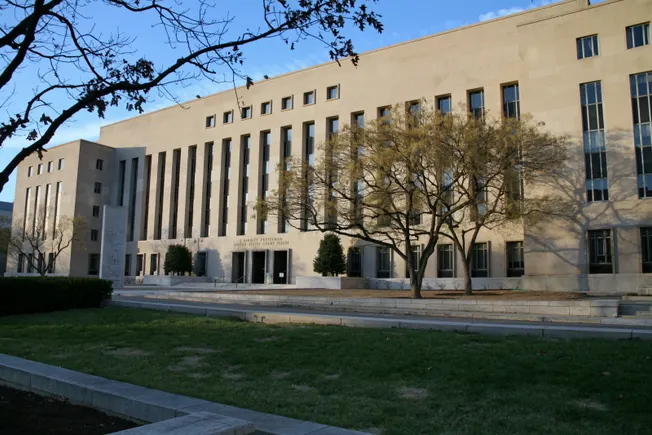
- Friday Filing: The DOJ submits its formal brief to the D.C. Circuit Court of Appeals, demanding the reversal of the district court’s July reinstatement order.
The DOJ’s Historical and Legal Argument
The Department of Justice’s brief is notable for its invocation of constitutional originalism. Rather than relying solely on contemporary statutes, the government has reached back to the 18th and early 20th centuries to justify the President’s prerogative.
Central to the DOJ’s argument is the 1903 Supreme Court case Shurtleff v. U.S. In that ruling, the Court established that when a statute does not explicitly restrict the President’s power of removal, the executive branch maintains the authority to terminate an officer “at will.” By citing Shurtleff, the DOJ aims to shift the burden of proof onto the plaintiffs: if Congress did not explicitly codify removal protections for the NCUA board, then the President’s power is absolute.
The "Federal Reserve" Fallacy
A significant portion of the DOJ’s argument is dedicated to dismantling the plaintiffs’ attempt to draw a parallel between the NCUA and the Federal Reserve. Harper and Otsuka have consistently argued that because the NCUA functions as a financial regulator, it should enjoy the same insulation from political pressure as the Fed.
The DOJ dismissed this analogy as legally insufficient. “While plaintiffs try to analogize themselves to the Federal Reserve Board of Governors, that analogy fails on its own terms,” the DOJ stated. “Congress explicitly provided for statutory restrictions for the Federal Reserve—but did not do so for the NCUA. In all events, the NCUA is not the Federal Reserve.”
The government further emphasized that the “singular tradition” of independence granted to the Federal Reserve does not extend to the entire federal financial regulatory architecture. To underscore this, the DOJ pointed to the Office of the Comptroller of the Currency and the Department of the Treasury, both of which operate under the direct oversight of the Executive branch despite their significant influence over interest rates and monetary policy implementation.
The Madisonian Foundation of Executive Control
To reinforce its position, the DOJ invoked the words of James Madison, a primary architect of the U.S. Constitution. The government cited Madison’s views on the importance of executive accountability, noting that the Constitution requires executive officers to be “dependent upon the President because [they] can be removed by him.”
By framing the NCUA board members as executive officers rather than quasi-judicial or independent policymakers, the DOJ is attempting to force a return to a more traditional view of the unitary executive. The brief argues that the district court erred by prioritizing an abstract desire for agency independence over the concrete reality of constitutional appointment power.
Implications for Regulatory Governance
The outcome of this case carries profound implications for the future of federal administration. If the D.C. Circuit Court of Appeals sides with the DOJ, it will set a precedent that any regulatory body lacking explicit statutory protection is vulnerable to sudden executive overhaul. This could lead to a “spoils system” environment where the political composition of agencies shifts entirely with each new administration, potentially undermining the long-term stability of financial oversight.
Conversely, a win for Harper and Otsuka would solidify the concept of “implied independence.” It would suggest that the nature of an agency’s work—specifically financial regulation—is enough to warrant protection, even in the absence of precise legislative language. This would likely invite further litigation from other agencies seeking to shield their leadership from presidential whims.
The Equitable Question
Beyond the constitutional merits, the DOJ also addressed the procedural mechanics of the district court’s ruling. The government argued that the lower court overstepped its equitable powers. Relying on the logic established in the recent Federal Reserve case, the DOJ contended that courts of equity should be limited to allowing an officer to serve de facto during the pendency of a legal challenge, rather than making a final determination on the validity of a termination.
“A court of equity could issue injunctive relief to allow a plaintiff to remain in office during the pendency of litigation,” the DOJ’s brief argued, “but the court of equity could not finally determine whether a plaintiff was validly removed.”
Conclusion: A Test of Institutional Norms
As the case proceeds to the D.C. Circuit, the legal community remains divided. The tension between the desire for technocratic expertise and the demand for democratic accountability through the President remains unresolved. The NCUA, a body tasked with overseeing the safety and soundness of the nation’s credit unions, now finds itself at the epicenter of a fundamental debate about the scope of the Presidency.
Whether the NCUA board will remain a haven for independent regulators or become a revolving door for political appointees depends on how the court interprets the silence of Congress. For now, the DOJ’s reliance on 19th-century precedent and constitutional originalism signals that the government is prepared to dismantle modern assumptions about agency autonomy in favor of a strictly hierarchical executive structure. The final ruling will undoubtedly serve as a landmark decision in the evolving narrative of the administrative state.