







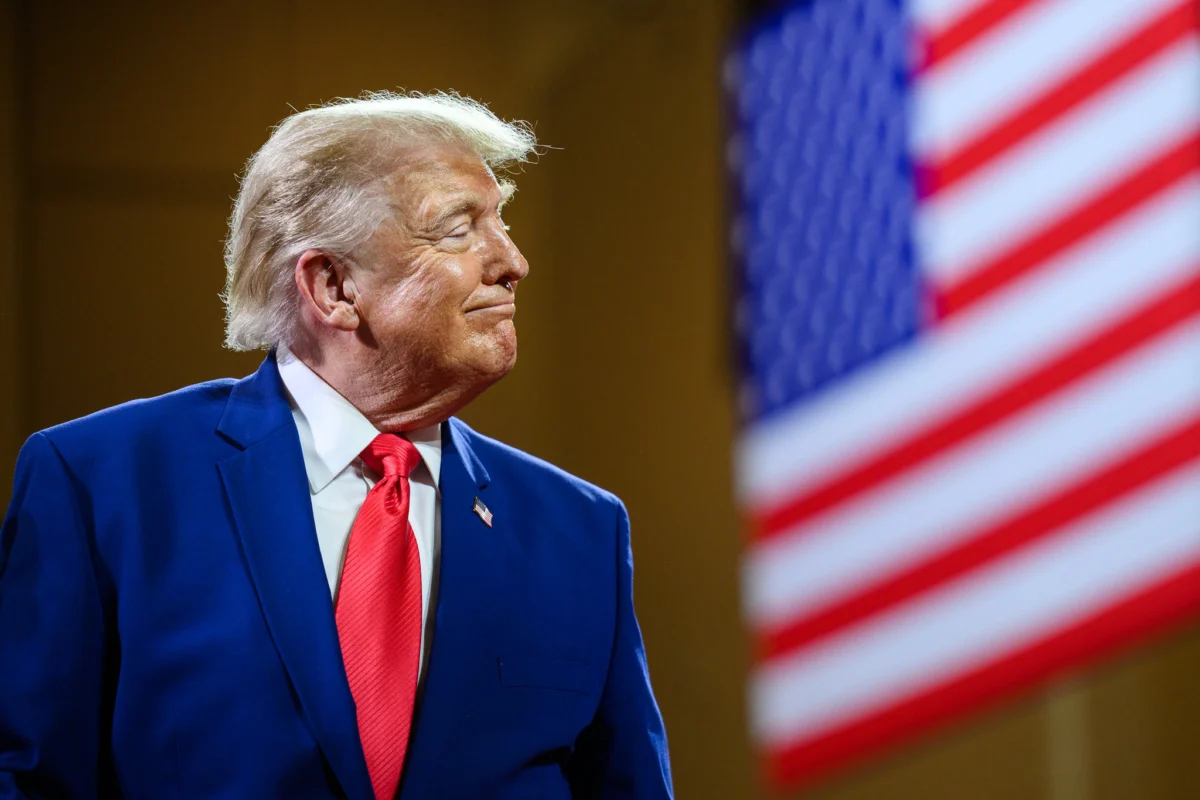
WASHINGTON — In a high-stakes pitch delivered at the Republican National Convention in Dallas, President Donald Trump unveiled a bold and politically charged proposal: a direct $5,000 cash payment for every adult citizen in the United States. The catch? The payout is strictly conditional on the Republican Party maintaining control of both the House of Representatives and the Senate in the upcoming midterm elections.
The announcement, which immediately electrified the convention floor and sent shockwaves through Washington, was later championed by Vice President JD Vance. Speaking on the strategic rationale behind the proposal, Vance argued that the administration’s aggressive new tariff regime is generating unprecedented amounts of federal revenue—funds that, in the administration’s view, should be redistributed directly back to the American people.
However, fiscal analysts, independent economists, and policy institutes have reacted with profound alarm. Behind the populist appeal of a $5,000 check lies a staggering fiscal reality: the proposal carries a price tag exceeding $1 trillion, threatens to violently expand an already bloated federal budget deficit, and could stoke the fires of inflation at a delicate time for the U.S. economy.
1. Main Facts and the Core Proposal
The administration’s proposal, often referred to by supporters as a "citizen dividend" or tariff rebate, is designed as a direct financial transfer to eligible American adults. While the political objective is clear—mobilizing voter turnout and solidifying legislative majorities in the midterms—the economic mechanics of the plan remain remarkably sparse.
- The Payout: $5,000 per adult citizen.
- The Condition: Republicans must retain control of both chambers of Congress in the midterm elections.
- The Total Cost: With approximately 250 million adults currently eligible to vote in the United States, a blanket distribution without income caps would cost an estimated $1.25 trillion.
- The Funding Mechanism: The administration intends to finance the payouts using revenue generated from sweeping import tariffs implemented during Trump’s term.
Despite the administration’s framing of the checks as a direct sharing of tariff spoils, fiscal experts point out a glaring mathematical mismatch between the revenue generated by these trade barriers and the immense cost of a nationwide payout.
2. Chronology of Events
To understand how the $5,000 dividend proposal materialized, it is necessary to trace the escalation of trade policy and political strategy leading up to the Dallas convention:
- Calendar Year 2024: Prior to the implementation of the administration’s latest aggressive trade policies, the federal government collected roughly $79 billion annually in customs duties and traditional tariff streams.
- Calendar Year 2025: Following multiple rounds of sweeping new tariffs enacted by the Trump administration, customs collections surged dramatically, hitting $264 billion for the year.
- Late 2025 to Early 2026: Tariff collections began to experience significant volatility. Revenue dipped—and in some months turned negative—as the federal government was forced to issue massive refunds following judicial challenges that struck down portions of the administration’s tariff authority as unconstitutional or illegal.
- The Republican National Convention (Dallas): President Trump formally announces the $5,000 dividend pledge, conditioning the cash distribution on a successful midterm election outcome for the GOP.
- Post-Convention Support: Vice President JD Vance doubles down on the proposal in media appearances, defending the plan by asserting that incoming tariff revenues can comfortably sustain the payouts.
- Current Day: Independent economic think tanks, including the Tax Foundation, release detailed modeling projections demonstrating the vast deficit implications of the plan, igniting a fierce national debate over fiscal responsibility.
3. Supporting Data and Economic Realities
The feasibility of the $5,000 dividend rests entirely on the performance of federal tariff collections versus the broader health of the federal budget. According to comprehensive long-term budget projections, the numbers simply do not add up.
The Deficit Context
Even before factoring in a $1.25 trillion spending program, the federal government is on an unsustainable fiscal trajectory. Current projections from the Congressional Budget Office (CBO) indicate that the U.S. budget deficit will hit nearly $1.9 trillion in fiscal year 2027.
Injecting a one-time, $1 trillion-plus payment program directly into the economy would instantly balloon the single-year deficit to nearly $3 trillion. This expansion would occur despite the incoming revenue streams from the president’s tariffs.
Dissecting Tariff Revenue
While tariffs have undeniably increased federal receipts, their net yield is frequently misunderstood.
- Gross vs. Net Collections: While gross tariff collections rose to $264 billion in 2025, economic modeling shows that the net revenue is significantly lower. Tariffs act as a tax on imports, which naturally reduces the total volume of goods brought into the country. Consequently, pre-existing tariffs generate less revenue, and the overall tax base shrinks.
- Erosion of Other Taxes: Every dollar collected via tariffs reduces the economic tax bases for other vital federal revenue streams, such as individual income taxes and payroll taxes.
- Long-Term Projections: Analysts estimate that after accounting for these economic feedback loops and trade reductions, Trump’s new tariffs will generate roughly $125 billion in net revenue in 2027, and approximately $1.4 trillion cumulatively over the 10-year window from 2026 through 2035.
The Math Doesn’t Work
When comparing the projected net revenue of the tariffs to the cost of the payout, the shortfall is staggering. The net tariff revenue anticipated for 2027 ($125 billion) would cover only about one-tenth (10%) of the $1.25 trillion price tag for the $5,000 checks. In reality, it would take nearly a decade of total net tariff collections just to break even on a single round of payouts.
4. Official Responses and Political Reactions
The proposal has drawn sharp, polarized reactions from across the political and economic spectrum, highlighting deep ideological divides over the role of taxation, trade, and government spending.
The Administration’s Defense
Proponents within the White House and congressional leadership argue that the initiative represents a direct economic victory for working-class Americans. By leveraging global trade policies to penalize foreign competitors, the administration contends it has unlocked a permanent revenue stream that bypasses traditional bureaucratic spending. Vice President Vance and his allies maintain that returning these funds to citizens is a matter of economic fairness, empowering consumers to spend or save as they see fit rather than watching the government absorb the windfalls.
Criticisms from Economists and Policy Experts
Fiscal watchdogs and conservative-leaning economic institutions have sharply criticized the plan as economically reckless. Erica York, a Senior Economist with the Tax Foundation’s Center for Federal Tax Policy, noted that even if the program were scaled back through strict income limitations, the core concept remains fundamentally flawed.
"A deficit-financed dividend payment of this scale would signal to global markets that the United States is not serious about getting its fiscal house in order," York warned. Critics emphasize that utilizing borrowed money—or unstable tariff revenues—to fund mass consumer checks treats the symptom while exacerbating the disease.
5. Economic Implications: Inflation, Interest Rates, and Market Confidence
Beyond the immediate budgetary math, economists warn that a $1.25 trillion cash injection into the U.S. economy carries severe macro-economic risks.
Reigniting Inflationary Pressures
At a time when consumer price inflation has remained stubbornly above the Federal Reserve’s stated 2% target, distributing thousands of dollars in unbacked cash to 250 million adults would predictably unleash a massive wave of consumer demand. With the supply of goods constrained by ongoing trade barriers and tariffs, this surge in purchasing power would likely drive prices higher, neutralizing the purchasing power of the very $5,000 checks being handed out. Economists often describe inflation as a "hidden tax," and a deficit-funded dividend risks worsening the cost-of-living crisis for everyday households.
Pressure on Interest Rates and Bond Markets
Global financial markets closely monitor sovereign debt levels to gauge the stability of the U.S. dollar and the reliability of Treasury bonds. A sudden, unexplained leap in the federal deficit toward the $3 trillion mark would signal a profound abandonment of fiscal restraint. Such a move could rattle bond markets, trigger credit rating downgrades, and force the Federal Reserve to keep interest rates higher for longer to combat the resulting inflation, driving up borrowing costs for mortgages, auto loans, and small businesses.
The Burden of Tariffs on Domestic Industry
Ultimately, many economists argue that the root of the problem lies in the tariffs themselves. While presented as a tool to punish foreign competitors, tariffs function primarily as a tax on domestic companies that rely on imported raw materials and intermediate goods, as well as on American consumers who face higher retail prices.
Rather than doubling down on a complex fiscal architecture built on trade wars and debt-financed giveaways, experts argue the nation would be far better served by dismantling the tariff regime entirely. Doing so would relieve the immediate regulatory and financial burdens currently weighing down American businesses and workers, fostering organic economic growth rather than artificial, debt-driven stimulus.
Conclusion
As the midterm elections approach, President Trump’s proposed $5,000 citizen dividend stands as one of the most ambitious and polarizing economic proposals of the decade. While its populist appeal is undeniable, the underlying mathematics reveal a perilous disconnect. Financing a trillion-dollar consumer payout through volatile and insufficient tariff revenues threatens to push the national debt to unprecedented heights, ignite inflationary pressures, and undermine the long-term stability of the American economy. For voters and lawmakers alike, the promise of a quick cash windfall may ultimately come with an exorbitant hidden price tag.