







Securing a mortgage is one of the most significant milestones in an individual’s financial life. However, the path to homeownership is rarely a straight line. As prospective buyers navigate the rigorous underwriting process, they often encounter a hurdle that can feel daunting: the request for a "Letter of Explanation" (LOE).
When an underwriter flags a discrepancy, a gap in employment, or a blemish on your credit report, they are not necessarily issuing a denial. Instead, they are flagging a data point that requires human context. An LOE is your bridge between raw financial data and the real-life circumstances that shaped your fiscal history. This guide explores the strategic approach to crafting an LOE that satisfies lender requirements and keeps your homeownership dream on track.
The Role of the Underwriter: Seeing the Person Behind the Numbers
To understand why a letter of explanation is necessary, one must first understand the role of the mortgage underwriter. An underwriter’s primary mandate is risk assessment. Their job is to ensure that the lender’s investment is sound by verifying the borrower’s ability and willingness to repay the loan.
When an underwriter looks at a credit report, they see a series of codes, dates, and amounts. They do not see the context—the unexpected medical emergency, the company-wide layoff, or the billing error that caused a late payment. A letter of explanation serves as the "human element" in a data-heavy process. It allows you to transform a negative data point into a documented, manageable situation. By providing context, you are essentially telling the lender, "I am a low-risk borrower, and here is why this specific issue is an anomaly rather than a pattern."

Common Triggers for an LOE Request
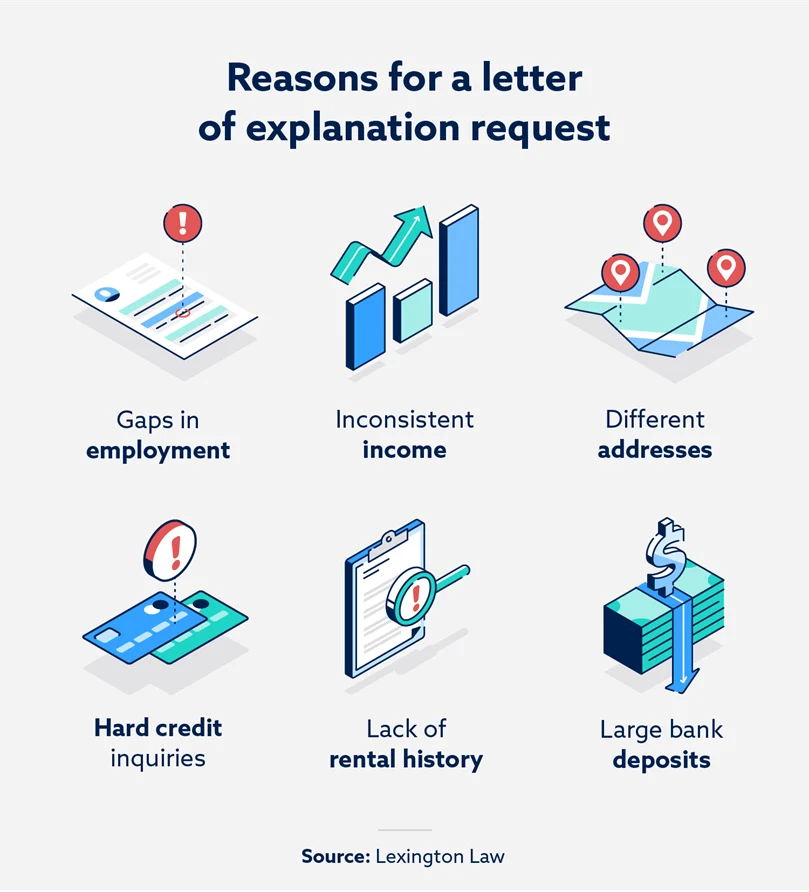
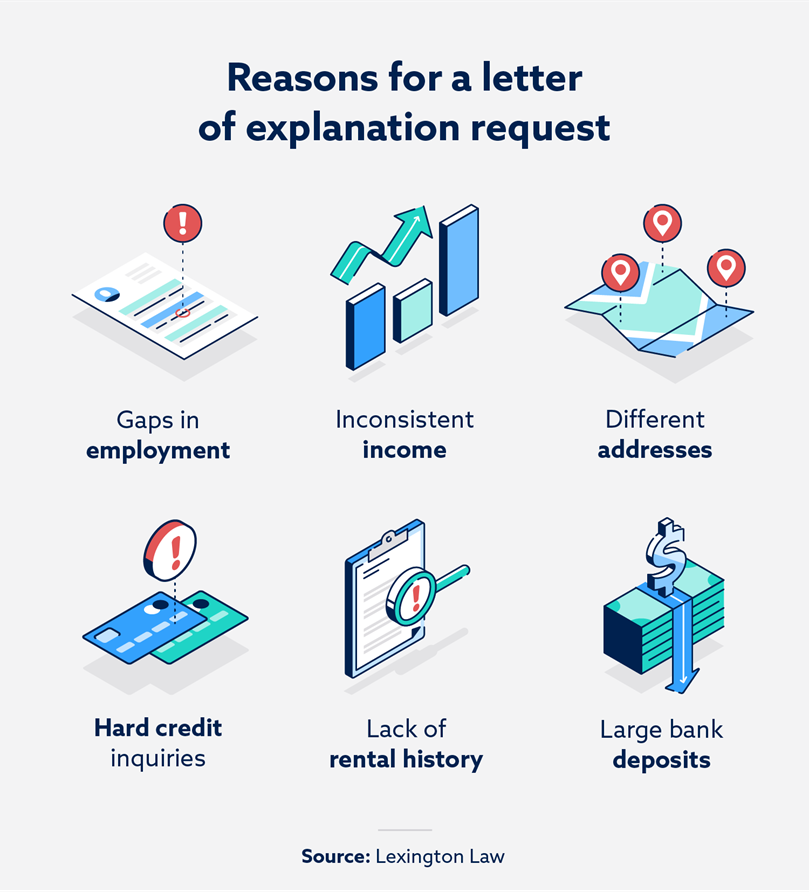
Mortgage lenders typically trigger an LOE request when they encounter "red flags" that deviate from standard underwriting guidelines. Common catalysts include:
- Inquiries on Credit: Numerous recent credit applications can signal financial distress.
- Employment Gaps: Significant periods of unemployment or frequent job hopping.
- Large Bank Deposits: Sudden, unexplained influxes of cash that might suggest non-verifiable income or borrowed funds.
- Late Payments: Even a single 30-day delinquency can trigger a request for justification.
- Collection Accounts: Outstanding balances or resolved debt that appear on the credit report.
- Address History: Frequent moves or inconsistencies between current and past residences.
A Five-Step Framework for Drafting Your Letter
Writing an effective LOE is not a creative exercise; it is an exercise in technical precision. Underwriters value brevity, clarity, and, most importantly, a solid paper trail. Follow these five steps to ensure your letter meets professional standards.
1. Formatting and Professional Presentation
Your letter must be easily identifiable. Whether it is sent via physical mail or a secure digital portal, your header should be standardized.
- Physical Mail: Use a formal business letter format with your contact information, the date, and the lender’s information.
- Email: Use a clear, descriptive subject line, such as: “Letter of Explanation – [Your Full Name] – [Loan Number].”
Always include your loan number prominently. This ensures the document is routed to your specific file without delay.

2. State the Facts with Neutral Language
Start by identifying the specific issue immediately. Do not attempt to hide or obscure the facts. Use a "Date–Entity–Amount" structure to be as precise as possible.
Crucially, remove emotional language. Statements like "I was so devastated by the sudden death in my family" are not helpful to an underwriter. Instead, frame it neutrally: "Due to a family bereavement in [Month, Year], my ability to manage accounts was temporarily disrupted." Keep your tone professional, objective, and concise.
3. The Resolution: Demonstrating Future Risk Mitigation
This is the most critical section of your letter. The underwriter is less interested in the past and more concerned with the future. You must explain what steps you have taken to ensure that the issue will not recur.
If you had a late payment, explain that you have since set up autopay. If you had an employment gap, highlight your current stability and long-term tenure in your new role. Demonstrating that you have "fixed" the root cause is the most effective way to gain an underwriter’s confidence.

4. Professional Closing
Conclude by stating that you are available to provide additional information. This signals your transparency and cooperation. Sign the letter exactly as your name appears on your loan application to avoid any discrepancies that could trigger a compliance review.
5. The "List of Enclosures"
A letter of explanation is only as strong as the evidence supporting it. If you mention a medical bill, include the invoice. If you mention a job loss, include your termination notice and your new offer letter. Create a formal "List of Enclosures" at the bottom of your letter, labeling each attachment (e.g., "Attachment A: Bank Statement," "Attachment B: Severance Agreement").
The Chronology of an LOE Request
The process usually follows a predictable timeline:
- Submission: You submit your initial loan application.
- Underwriting Review: The underwriter reviews your documents and identifies a point of concern.
- The "Condition" Letter: The lender issues a "Condition," which is an official request for more information or an LOE.
- Drafting: You draft the letter, gathering all necessary supporting documentation.
- Submission and Review: You submit the letter and attachments. The underwriter reviews the documentation to verify the claim.
- Approval or Clarification: The underwriter either clears the condition or asks for further, more specific proof.
Implications for Long-Term Credit Health
While an LOE can bridge the gap for a single mortgage application, it does not permanently fix your credit report. If you are consistently receiving requests for explanations due to credit errors, you should consider a long-term strategy of credit repair.
Inaccurate late payments, phantom debts, or incorrect balances are common occurrences. Rather than relying on letters of explanation for every future transaction, you should proactively dispute these items with the major credit bureaus. Engaging in credit repair services can help ensure your credit report is an accurate reflection of your financial behavior, which will not only help you get approved for a mortgage but may also secure you a better interest rate.
Official Perspectives and Expert Advice
Mortgage experts emphasize that an LOE request is rarely a "death knell" for an application. In fact, it is often a standard procedure for loans involving unconventional income streams or complex credit histories.
According to financial industry analysts, the most common reason for an LOE rejection is the failure to include third-party documentation. An unsupported statement—no matter how well-written—carries little weight. Underwriters are bound by strict guidelines that require "verifiable evidence." Always prioritize attaching official documents such as divorce decrees, insurance claims, or tax documents over a long, narrative-heavy letter.
Frequently Asked Questions (FAQ)
Does an LOE guarantee loan approval?
No. An LOE is a tool for transparency and context. It helps remove barriers that could lead to an automatic denial, but approval ultimately depends on whether your overall financial profile meets the lender’s risk appetite.
What should I do if the lender rejects my letter?
If your explanation is rejected, do not immediately assume the loan is dead. Ask the loan officer for specific feedback on what was missing. Often, they require more concrete proof, such as a formal bank statement or a specific legal document, to satisfy their requirements.
Are there situations where I shouldn’t write an LOE?
If the issue on your credit report is a clear, identifiable error, you should prioritize disputing it with the credit bureau rather than simply explaining it away. An explanation is for real events; a dispute is for inaccuracies.
Can I use a template?
Using a template is highly recommended to ensure you include all necessary structural components, such as the header, the reference to the loan number, and the list of enclosures. However, you must customize the content to ensure it accurately reflects your unique situation.
Conclusion
The journey to buying a home is complex, and the letter of explanation is a vital tool in your arsenal. By approaching the document with professionalism, precision, and a focus on documentation, you can effectively communicate your financial reality to an underwriter. Remember, the goal is to provide a clean, logical paper trail that demonstrates you are a responsible borrower. While the process may seem tedious, it is a necessary step toward the long-term goal of securing your own home.