









For borrowers blessed with robust credit profiles, refinancing student loans is often a straightforward financial win. By swapping high-interest debt for a new loan featuring a lower rate or more favorable terms, graduates can shave thousands of dollars off their total repayment costs. This strategy is particularly effective for those holding private student loans or high-income earners who derive little to no financial benefit from federal income-driven repayment (IDR) plans.
However, a pressing question confronts millions of Americans: What happens if your credit score is bruised, or if you have no credit history at all? Can you still qualify to refinance your student loans? And even if approval is possible, is it a financially sound move?
An in-depth look at the mechanics of credit underwriting, federal alternatives, specialized private lenders, and actionable credit-building strategies reveals a clear roadmap for borrowers facing less-than-stellar credit.
Main Facts: How Credit Underwriting Dictates Refinancing Success
When evaluating a borrower’s eligibility, private lenders rely heavily on creditworthiness as a core underwriting metric—unlike the U.S. Department of Education, which issues Direct Subsidized and Unsubsidized Loans without ever checking a credit score.
Private financial institutions look closely at three main pillars:
1. Credit Score
A credit score aggregates data on your debt repayment history, total debt burden, and credit mix. Ranging from 300 to 850 under the FICO model, scores are broken down into distinct categories:

- Exceptional/Very Good (740–850+): The gateway to the lowest interest rates and best terms.
- Good (670–739): Generally eligible for refinancing, though potentially at slightly higher rates.
- Fair to Poor (669 and below): Creates severe roadblocks to standalone approval, often leading to outright denials or exorbitant interest rates.
2. Employment and Income Stability
Lenders must be convinced that you can comfortably service the new monthly debt. A stable, higher-paying career path signals lower default risk and heavily influences approval odds for applicants with weaker credit profiles.
3. Debt-to-Income (DTI) Ratio
Your DTI ratio measures your gross monthly income against your recurring monthly debt obligations—including car payments, credit cards, mortgages, and existing student loans. For instance, a borrower with $15,000 in monthly income and $6,000 in debt obligations holds a 40% DTI. Lower DTI ratios consistently yield better refinancing rates.
Chronology: The Lifecycle of Bad Credit and the Path to Recovery
Understanding how credit problems develop is the first step toward correcting them.
- The Departure from School: Many borrowers leave higher education carrying significant student loan balances, only to enter a job market that fails to immediately deliver expected earnings. Others enter the workforce with a "thin file"—meaning they have never held a credit card, financed a car, or rented an apartment, leaving them with no credit history other than student debt.
- The Accumulation of Missed Payments: Because payment history is the single largest determinant of a credit score, isolated late payments or prolonged delinquencies severely depress a borrower’s score.
- The Default Trap: Borrowers overwhelmed by debt sometimes resort to short-term deferments or forbearances without realizing that interest continues to accrue, ultimately pushing them toward default.
- Rebuilding and Restructuring: Borrowers who actively attack their debt, lower their credit utilization, and establish consistent on-time payment histories can dramatically alter their financial standing over a period of months or years, eventually opening the door to favorable refinancing terms.
Supporting Data: Refinancing vs. Federal Consolidation Options
For borrowers struggling with low credit scores, choosing the right path depends heavily on whether loans are private or federal.
Private Loans
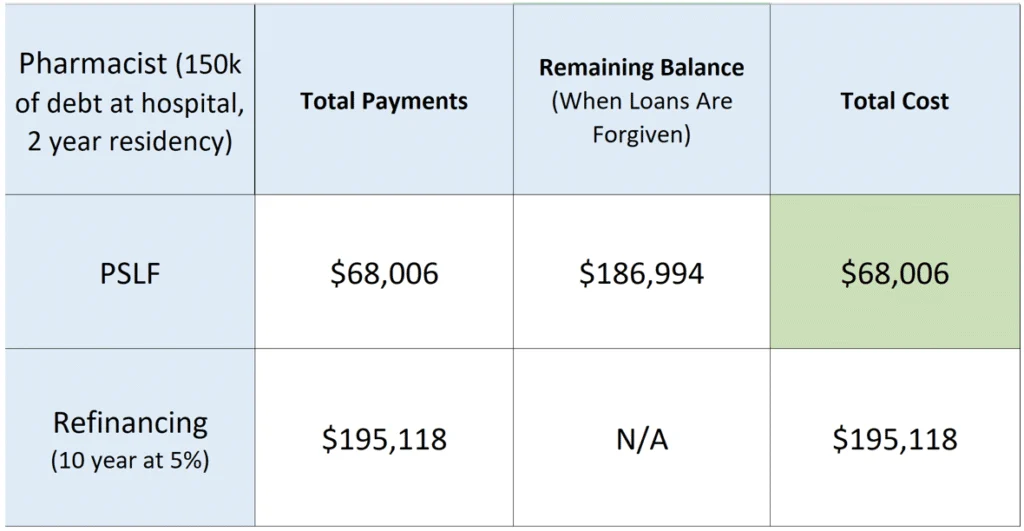
If your debt consists entirely of private student loans, refinancing remains the primary vehicle for securing lower interest rates and reducing lifetime interest charges. However, transitioning federal loans into private refinancing permanently strips away federal protections, including access to Public Service Loan Forgiveness (PSLF) and federal IDR plans.
Federal Consolidation as an Alternative
Borrowers with federal student loans who possess bad credit can utilize a Direct Consolidation Loan backed by the U.S. Department of Education.

- No Credit Check: Federal consolidation requires no credit check, meaning bad credit is never a disqualifier.
- Fixed Interest Rates: The new consolidated loan carries a fixed interest rate equal to the weighted average of the underlying loans rounded up to the nearest one-eighth of a percent.
- Policy Shifts: Borrowers should note critical repayment tradeoffs. Under current regulatory guidelines, new federal consolidations limit future repayment options to the Repayment Assistance Plan (RAP) or the Tiered Standard Repayment Plan, curtailing access to legacy IDR plans like Income-Based Repayment (IBR) for loans consolidated after July 1, 2026.
Official Responses and Specialized Lenders for Bad Credit
Most major financial institutions enforce rigid credit thresholds, making it nearly impossible for low-credit borrowers to refinance independently. Those who do get approved often face steep interest rates unless they secure a creditworthy cosigner.
Fortunately, a select group of lenders and marketplaces cater to borrowers with sub-par credit, often pairing flexible underwriting with cash-back incentives for qualified applicants.
1. Earnest
- Requirements: Minimum credit score of 650; no set income requirements, but requires consistent income or a signed job offer starting within six months.
- Benefits: Charges no origination, application, or prepayment fees. Earnest evaluates banking habits and employment stability alongside credit scores and offers robust unemployment protection.
2. LendKey
- Requirements: Minimum credit score of 660; minimum income of $24,000 (or $12,000 with a cosigner) and an associate degree or higher.
- Benefits: Partners with community banks and credit unions that offer personalized underwriting. Features hardship forbearances of up to 18 months, zero application or origination fees, and a cosigner release option.
3. Credible
- Requirements: Variable, as Credible operates as an online loan marketplace rather than a direct lender.
- Benefits: Submitting a single form generates prequalified rate quotes from multiple participating lenders, making it easier for applicants rejected elsewhere to find viable matches.
Special Circumstances: Bankruptcy and Non-Graduates
- Bankruptcy: Borrowers with past bankruptcies can eventually qualify for refinancing once accounts in collections are resolved and the bankruptcy drops off their credit report (typically 7 years for Chapter 13 and 10 years for Chapter 7).
- Non-Graduates: Individuals who left school without a degree can still refinance through select lenders, provided their loans are not in default. However, federal loan holders without degrees are generally advised to explore income-driven repayment plans rather than private refinancing.
Implications: Strategic Financial Habits to Future-Proof Your Credit
Securing a refinancing deal with bad credit may initially yield a higher-than-desired interest rate. However, financial experts emphasize that this should be viewed as a stepping stone rather than a permanent sentence.
Borrowers can actively reshape their financial profiles by implementing three core habits:
- Lowering the DTI Ratio: Aggressively paying down revolving debts (such as credit cards and auto loans) or taking on side income to boost gross monthly earnings directly improves debt-to-income ratios.
- Automating Payments: Setting up autopay or calendar alerts guarantees that every bill is paid on time, protecting the most critical component of the FICO score.
- Managing Credit Utilization: Keeping revolving credit balances well below the Consumer Financial Protection Bureau’s recommended 30% threshold (and ideally much lower) rapidly enhances creditworthiness.
By committing to these practices, borrowers who refinance with imperfect credit today position themselves to secure subsequent refinancing rounds at dramatically lower rates in the future, ultimately minimizing the total cost of their education debt.