








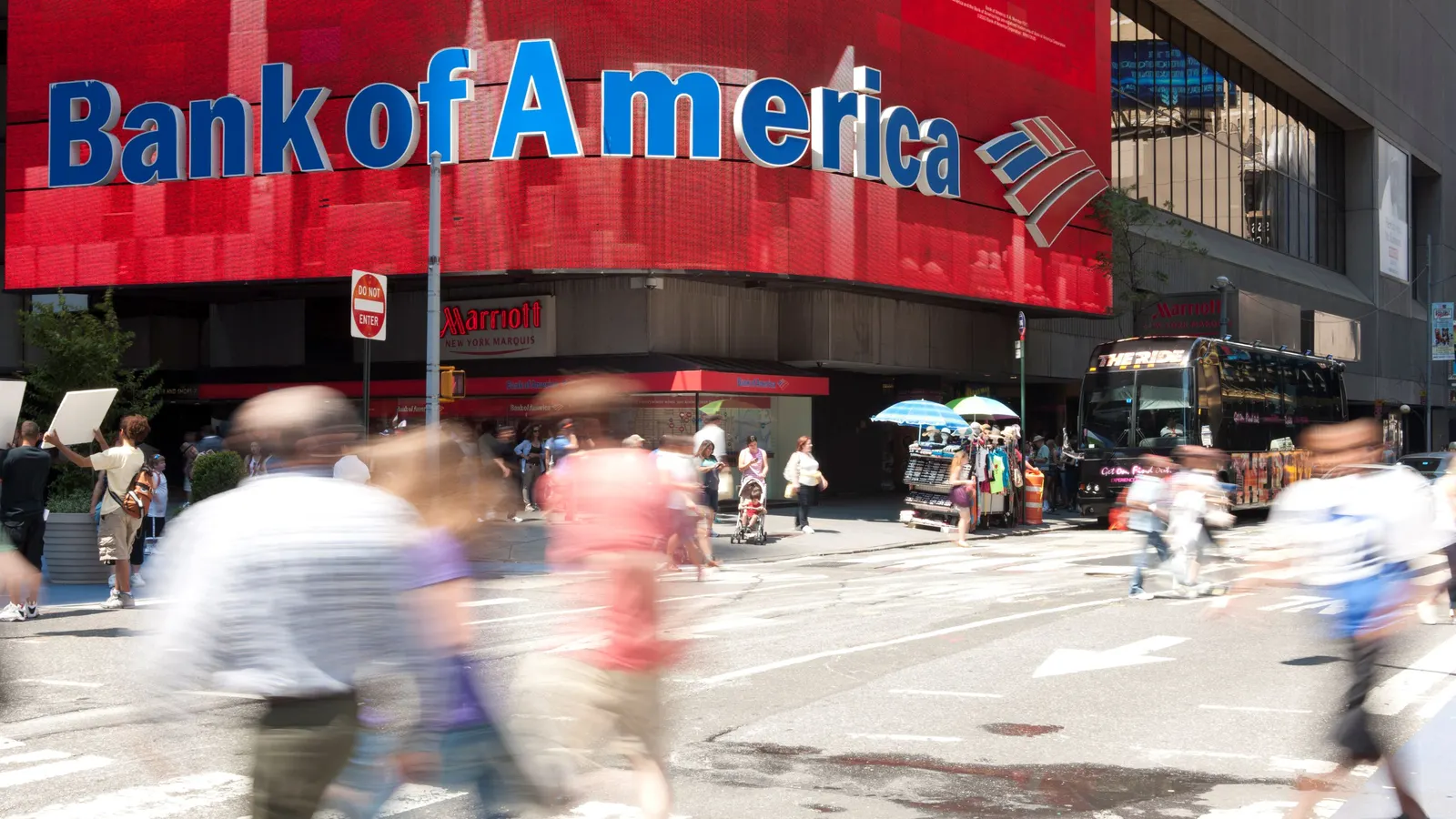
In an era where consumer loyalty is increasingly fickle and the battle for deposit primacy has reached a fever pitch, Bank of America (BofA) has unveiled a significant evolution in its relationship-banking strategy. Since the late May launch of its revamped, no-fee “BofA Rewards” program, the financial giant has successfully enrolled more than 3 million customers. Perhaps more importantly for the bank’s long-term health, nearly one-third of these participants are actively engaging with the program’s deals—a rate of engagement that is nearly triple what the institution observed under its previous loyalty frameworks.
This surge in participation signals a fundamental shift in how the nation’s second-largest bank approaches customer retention. By lowering the barriers to entry and tailoring benefits to a younger, more mobile-centric demographic, Bank of America is attempting to redefine the "rewards economy" from a luxury perk into a core component of its customers’ financial planning.
Main Facts: The Democratization of Preferred Rewards
The centerpiece of this strategic overhaul is the transition from the legacy "Preferred Rewards" model to the more inclusive "BofA Rewards." Historically, Bank of America’s most lucrative benefits were gated behind a significant financial wall: a minimum of $20,000 in combined balances across BofA accounts and Merrill investment vehicles. While this model was exceptionally effective at retaining high-net-worth individuals, it effectively excluded the burgeoning Gen Z and millennial segments who were still in the early stages of wealth accumulation.
The new BofA Rewards program dismantles these barriers. Key features of the new program include:
- Zero Minimum Balance: Eligibility is no longer tied to an asset threshold. Any customer with an eligible Bank of America checking account can join.
- No Enrollment Fees: The program is free, aimed at maximizing the volume of participants rather than generating immediate fee income.
- Tiered Progression: While the entry-level is open to all, the program maintains a "ladder" system (Member, Preferred Plus, Preferred Honors, etc.) that incentivizes customers to move more assets into the BofA ecosystem to unlock higher-tier benefits.
- Everyday Utility: Unlike traditional programs that focus heavily on high-end travel or niche luxuries, BofA Rewards emphasizes daily expenditures such as gasoline, groceries, and retail shopping.
Shikha Narula, Bank of America’s Head of Consumer Deposits and Rewards, emphasizes that the goal is "deepening relationships" across the board. "It’s not just our one aspect, one product, one feature," Narula stated in a recent interview. "We want to reward them for their entire relationship with Bank of America."
Chronology: From Elite Exclusivity to Mass Engagement
The evolution of Bank of America’s loyalty strategy has been a multi-year journey, culminating in the late May 2024 launch of the revamped program.
The Legacy Era (Pre-2024): For years, the Preferred Rewards program was the gold standard for retention. With a 99% retention rate and 94% primacy (meaning the bank was the customer’s primary financial institution), the program was a fortress for the bank’s wealthiest clients. However, internal data suggested that younger consumers were being left behind, often turning to fintech disruptors or neo-banks that offered lower entry requirements for perks.
The Strategy Pivot (Late 2023 – Early 2024): Recognizing the need to capture Gen Z early, BofA leadership began redesigning the program. The objective was to create a "lifecycle" loyalty program that could grow with a customer from their first paycheck through to retirement.
The Launch (May 2024): BofA Rewards was introduced to the public. The bank aggressively marketed the removal of the $20,000 threshold, specifically targeting the 18-to-25-year-old demographic.
Immediate Impact (June – August 2024): Within the first 90 days, the program saw an unprecedented influx of 3 million enrollees. The engagement data confirmed the bank’s hypothesis: by making rewards more accessible, they could drive transactional frequency. The 30% engagement rate on deals represented a 300% increase over previous engagement benchmarks.
Supporting Data: Mapping the ‘Rewards Economy’
The success of the program is underscored by granular data regarding how consumers are interacting with the bank’s offerings. Bank of America’s internal analytics reveal a clear preference for "utilitarian" rewards over "aspirational" ones at the entry levels.
Engagement by Category:
- Retail: Dominates the landscape, accounting for 45% of all client engagement. This includes discounts and cash-back offers at major national retailers.
- Gasoline: Represents 20% of engagement, reflecting the high sensitivity of consumers to energy costs in an inflationary environment.
- Food and Entertainment: The remaining third is split between dining, streaming services, and lifestyle events.
The Gen Z Influence:
The bank’s research into Gen Z (ages 18-25) has yielded striking insights into the psychological shift toward rewards. According to BofA surveys, 80% of Gen Z clients intend to use their rewards to fund travel—a significantly higher percentage than the 46% average across the general U.S. population.
This data suggests that for younger generations, rewards are not seen as a "bonus," but as a strategic "subsidy" for their lifestyle choices. Narula notes that for these clients, rewards are becoming "part of their financial plan," a way to bridge the gap between their income and their experiential goals.
Official Responses: Insights from Leadership and Analysts
The banking industry is watching BofA’s experiment closely. Shikha Narula views the program’s early success as a validation of a "life-stage" approach to banking.
"Now, there’s literally no barriers for the younger generation, for Gen Z, to engage with us," Narula told CX Dive. "We believe it’s our way of building that relationship and trust with them early by giving them benefits that will resonate with them in where they are in their lives today."
She further noted that the program is designed to be aspirational without being exclusionary. While a 20-year-old might start at the "Member" tier to save money on gas, the lure of "Preferred Plus" or "Preferred Honors"—which offer subscription credits, fraud monitoring, and access to premium events—encourages them to consolidate their savings and investments within Bank of America as their career progresses.
Halle Stern, a Director Analyst in Gartner’s marketing practice, provides a broader industry perspective on why this shift is necessary. According to Stern, transactional rewards like cash back are now "table stakes"—the bare minimum required to stay competitive.
"That’s the differentiator," Stern said, referring to the bank’s move toward experiential and behavioral rewards. "Being able to earn rewards that don’t necessarily involve me swiping my credit card, but taking other options, exhibiting other behaviors."
Stern points out that the banking industry is currently "oversaturated," and differentiation is increasingly difficult when most institutions offer similar interest rates and digital tools. By integrating rewards into the "entire relationship" rather than just credit card spend, BofA is attempting to create a "sticky" ecosystem that is harder for customers to leave.
Implications: The Future of the Primary Bank Relationship
The rapid adoption of BofA Rewards has profound implications for the future of retail banking and the broader "Rewards Economy."
1. The Death of the ‘Swipe-Only’ Reward
BofA is moving away from the idea that rewards should only be earned through spending. By rewarding the "entire relationship"—including deposit levels, investment activity, and even identity protection usage—the bank is training customers to view their bank account as a hub for value, not just a vault for cash. This shift forces competitors to reconsider their own loyalty programs, which are often siloed within their credit card divisions.
2. Solving the ‘Gen Z Problem’
Traditionally, large "money center" banks have struggled to attract younger users who find traditional banking bureaucratic and fee-heavy. By removing the $20,000 asset barrier, BofA has effectively removed the "elite" stigma of its rewards program, making it as accessible as a fintech app while offering the security and scale of a global institution. If BofA can maintain this 99% retention rate among Gen Z as they enter their peak earning years, it will secure a massive competitive advantage for decades.
3. Rewards as an Inflation Hedge
In a period of fluctuating inflation, consumers are increasingly viewing cash-back and discounts as a necessary financial tool. The fact that 20% of engagement is in gasoline suggests that BofA is successfully positioning itself as a partner in managing the cost of living. This "financial boost" approach builds brand affinity that is more resilient than purely interest-rate-driven loyalty.
4. Anecdotal Growth in Assets
While it is too early for the bank to release hard numbers on total deposit growth attributed to the new program, Narula notes that the anecdotal evidence from physical branches is "encouraging." Financial center associates are reporting stories of clients actively moving assets into the bank specifically to jump to the next reward tier. This suggests that the "gamification" of banking tiers is working, turning a passive savings account into an active pursuit of status and benefits.
Conclusion
Bank of America’s BofA Rewards program represents more than just a marketing refresh; it is a fundamental reconfiguration of the value proposition between a bank and its customers. By successfully enrolling 3 million people in a matter of months and tripling engagement rates, the bank has proven that there is a deep hunger for accessible, utility-driven loyalty programs.
As the "rewards economy" continues to evolve, the distinction between a "bank" and a "lifestyle partner" will continue to blur. For Bank of America, the early success of this program suggests that the path to winning the deposit wars lies not in higher interest rates alone, but in lowering the barriers to entry and rewarding the totality of the customer’s financial life. If the current trajectory holds, the BofA Rewards model may well become the blueprint for the next generation of relationship banking.