








By PYMNTS | July 14, 2026
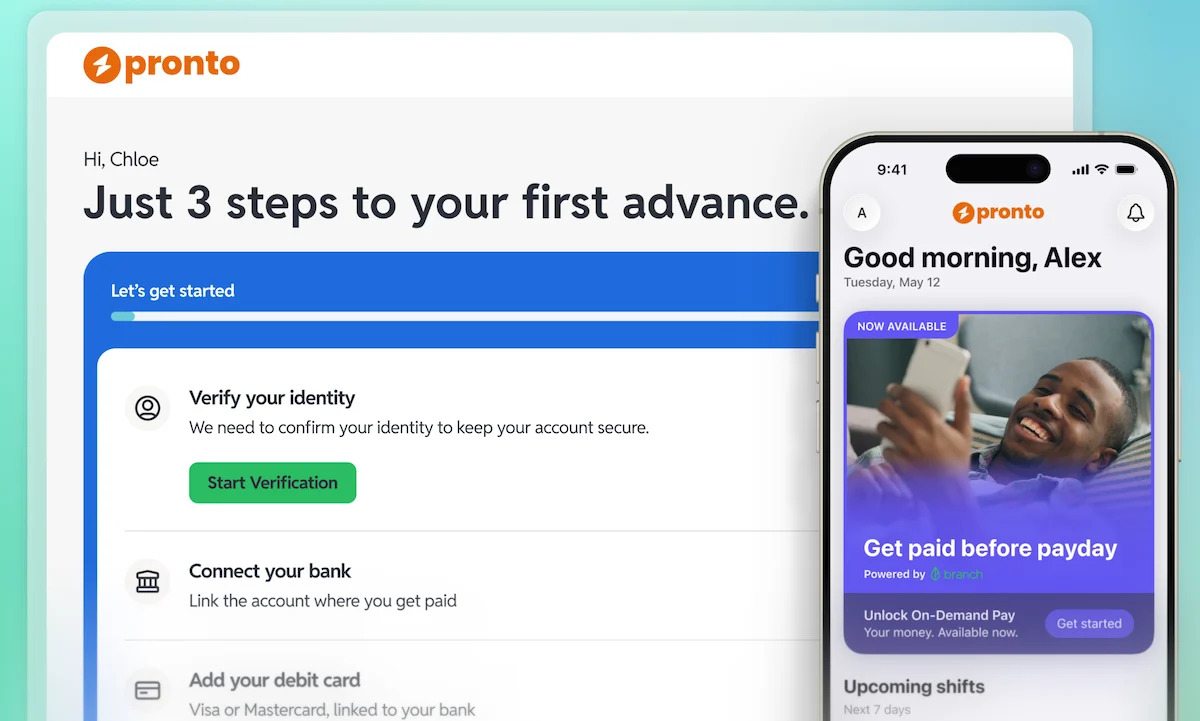
In an era where the traditional bi-weekly pay cycle is increasingly viewed as an archaic relic of the industrial age, workforce financial infrastructure provider Branch is taking a decisive step toward total modernization. On Tuesday, July 14, the company announced the launch of its "Flex" model—a strategic expansion designed to allow companies and platforms to embed earned wage access (EWA) directly into the everyday tools workers use for scheduling, shift management, and operational workflows.
This development marks a significant departure from Branch’s previous integration focus, which largely centered on backend payroll and time-tracking systems. By shifting the delivery mechanism to the "front end" of the employee experience, Branch is effectively transforming payroll from a static administrative function into an active, integrated component of the digital workplace.
The Flex Model: Removing Friction from Financial Inclusion
For years, the primary barrier to the widespread adoption of on-demand pay has been technical complexity. Integrating financial services into third-party scheduling software often required months of engineering work, complex API mapping, and rigorous security audits. Branch’s new Flex model is designed to dismantle these hurdles.
By offering a streamlined, modular integration path, Branch is empowering businesses to embed financial wellness tools into the platforms workers check multiple times a day. This is not merely a convenience feature; it is a fundamental shift in how businesses interact with their labor force.
"Embedding earned wage access into the workplace apps workers open every day can drive engagement, adoption, and ongoing usage," said Atif Siddiqi, founder and CEO of Branch. "These new configurations make that embedded experience far simpler to launch, so companies can turn earned wage access into a key value-add that differentiates and enhances their platform, while giving workers a compelling benefit they can genuinely rely on."
A Chronology of Financial Innovation
Branch’s trajectory over the past two years reflects a broader industry movement toward "Embedded Finance"—the integration of financial services into non-financial platforms.
- September 2025: Branch debuted its first comprehensive embedded platform, designed to simplify EWA, 1099 payouts, and paycard issuance for enterprise platforms. This served as the testing ground for the architecture that would eventually become the Flex model.
- March 2026: The company accelerated its reach by partnering with Stripe. By leveraging Stripe Issuing, Branch enabled businesses to launch digital wallets and branded debit cards, effectively turning any platform into a financial hub for its independent contractors and W-2 employees.
- July 2026: With the launch of the Flex model, Branch has moved beyond simple payouts to create a holistic, integrated ecosystem. By shifting from back-office payroll integration to front-end scheduling integration, Branch is positioning itself as the infrastructure layer for the modern, on-demand labor market.
The Economic Necessity: Data-Driven Insights
The motivation behind these innovations is rooted in the harsh realities of the modern labor economy. According to the Wage to Wallet™ Index: Never Quite Enough, a study conducted by PYMNTS Intelligence, the demand for liquidity is not a luxury—it is a survival mechanism.
The study found that 54% of labor economy workers faced a situation in the previous 90 days where they required money before their scheduled payday to cover an essential expense. Perhaps more concerning is that 16% of these workers reported facing such liquidity shortfalls at least four times within a three-month window.
This data underscores the "hidden" cost of traditional payroll cycles. When workers are forced to wait two weeks for earned income, they often turn to predatory high-interest credit cards, overdraft fees, or payday loans to bridge the gap. Branch’s solution directly challenges this cycle of debt.
Official Responses and Strategic Vision
The leadership at Branch has been vocal about the role of technology in alleviating financial stress. During an interview with PYMNTS CEO Karen Webster earlier this year, Branch CFO Matt Peterson articulated a clear vision for the future of compensation.
"There’s a secular trend here where workers don’t want to, and they shouldn’t need to, wait two to three weeks to get paid," Peterson noted. By providing workers access to what they have already earned, companies can reduce the pressure on employees to take on high-interest debt, thereby fostering greater loyalty and productivity.
The new updates to the Branch platform further bolster this mission. Under the new model, workers enrolled in either Core or Flex programs can receive funds instantly to an existing debit card for a nominal fee, or choose to wait two business days at no cost. For those on the Core model, instant transfers to the Branch app remain entirely free, ensuring that the most vulnerable workers have a path to liquidity that does not erode their take-home pay.
Implications for the Future of Work
The implications of Branch’s new strategy extend far beyond the payroll department.
1. The Rise of the "Integrated Workplace"
As companies continue to battle for talent in a competitive labor market, benefits are no longer limited to health insurance or retirement plans. Access to earned wages is becoming a baseline expectation for the modern workforce. By embedding these features into scheduling tools, platforms can differentiate themselves, offering a "financial wellness" suite that increases worker retention and reduces turnover costs.
2. The Death of the Bi-Weekly Pay Cycle
The traditional payroll cycle is increasingly at odds with the "gig" nature of modern work. As more industries adopt flexible scheduling, the need for flexible payout cycles becomes paramount. Branch’s infrastructure is effectively building the rails for a real-time payment economy, where "work today, get paid today" is the standard rather than the exception.
3. Financial Inclusion and Credit Alternatives
For millions of workers, the ability to access earned wages serves as a vital buffer against financial instability. By providing a low-cost, transparent alternative to high-interest debt, Branch is facilitating a form of financial inclusion that empowers workers to manage their budgets with greater autonomy.
4. B2B Platform Evolution
For the platforms that utilize Branch’s infrastructure, the Flex model represents a new revenue and engagement lever. Companies that provide shift scheduling or project management can now retain users within their ecosystem for longer, providing a seamless transition from the task (work) to the outcome (payment).
Conclusion
The launch of the Flex model by Branch is more than a technical update; it is a manifestation of the ongoing shift toward an on-demand economy that respects the time—and the financial needs—of the worker. By removing the engineering barriers to earned wage access, Branch is enabling a future where financial stress is decoupled from the calendar.
As the industry continues to evolve, the distinction between a "payroll provider" and a "workforce infrastructure provider" will continue to blur. For businesses, the mandate is clear: those who provide their workers with the tools to manage their finances in real-time will be the ones who attract and retain the best talent in an increasingly fluid labor market.
As Branch continues to iterate on its platform—following the successes of its Stripe integration and its 2025 embedded platform launch—it is clear that the company is not just building software; it is building the foundation for a more equitable and efficient future of work.