






In the modern business landscape, the margin between thriving and merely surviving often boils down to how effectively a company manages its physical resources. From heavy-duty manufacturing machinery to a fleet of delivery vehicles and precision workshop tools, equipment assets form the operational bedrock of commerce. Far beyond mere line items on a balance sheet, these tangible resources directly dictate a company’s productivity, operational velocity, and overall market competitiveness.
As corporate leaders navigate complex economic environments, understanding the lifecycle, valuation, and strategic optimization of equipment assets has transformed from a back-office accounting duty into a boardroom priority. Effective asset management safeguards financial health, optimizes tax liabilities, and ensures that every dollar invested in capital equipment yields maximum operational return.

Main Facts: Defining the Core of Equipment Assets
At its fundamental level, an equipment asset is a long-term, tangible resource utilized by a business to generate revenue, produce goods, or deliver services. Categorized within accounting frameworks under Property, Plant, and Equipment (PP&E), these assets are classified as non-current assets because they provide utility over a multi-year horizon rather than being quickly liquidated within a single fiscal year.
Key Characteristics of Equipment Assets
- Tangible Nature: Unlike patents, trademarks, or brand reputation, equipment assets possess physical form and substance.
- Useful Life: These resources typically maintain functional utility for an extended period, generally ranging from 3 to 20 years depending on the asset class and industry.
- Depreciation: Due to constant usage, technological obsolescence, and ordinary wear and tear, equipment assets systematically lose value over time, a process meticulously tracked on financial statements.
- Capitalization Thresholds: Businesses typically establish a financial threshold—often around $1,000—where minor tool purchases are expensed immediately, while high-value machinery and vehicles are capitalized as fixed assets.
By effectively capitalizing these resources, organizations can spread the acquisition costs over the useful life of the equipment, stabilizing cash flow and aligning expenses directly with the revenues the equipment helps generate.

Chronology and Lifecycle Management: From Acquisition to Disposal
Managing equipment assets requires a structured approach that spans their entire operational lifecycle. Strategic oversight cannot begin and end at the point of purchase; instead, it demands proactive administration from acquisition to final retirement.
Phase 1: Procurement and Valuation
The journey begins when an organization identifies an operational bottleneck or growth opportunity requiring new machinery or tools. During procurement, decision-makers must evaluate the total cost of ownership (TCO), which extends past the initial purchase price to include freight, site preparation, installation, and calibration. Utilizing historical data and industry benchmarks, managers estimate the asset’s useful life to establish a baseline for future productivity.

Phase 2: Operational Utilization and Preventive Maintenance
Once integrated into daily workflows, the equipment enters its primary productive phase. During this stage, the implementation of rigorous maintenance schedules is non-negotiable. Preventive maintenance not only mitigates the risk of catastrophic downtime but also preserves the asset’s resale or trade-in value. Organizations increasingly rely on real-time monitoring and IoT sensors to track machine health, shifting maintenance strategies from reactive repairs to predictive interventions.
Phase 3: Upgrading and Mid-Life Assessment
As technologies evolve, businesses must periodically assess whether existing equipment remains competitive. Timely upgrades or retrofits can breathe new life into older machinery, bridging the gap between legacy systems and modern efficiency standards without requiring a total capital outlay for brand-new replacements.

Phase 4: Retirement, Disposal, and Replacement
Eventually, every equipment asset reaches the end of its economically viable life. Whether through outright obsolescence, prohibitive repair costs, or declining output, the asset must be retired. Proper disposal involves updating fixed asset registers, calculating final book values, and navigating environmental or regulatory compliance standards regarding machine recycling and waste management.
Supporting Data: The Financial Impact of Equipment Assets
The strategic management of fixed assets directly influences a company’s financial standing, balancing sheet strength, and tax optimization strategies.

Equipment Asset Impact Matrix
| Aspect | Core Importance | Direct Impact on Business |
|---|---|---|
| Operational Efficiency | Streamlines workflows and production | Increases output while curbing labor and operational costs |
| Long-Term Investment | Establishes non-current resource stability | Supports corporate stability, scalability, and long-term growth |
| Depreciation Benefits | Unlocks significant tax advantages | Accurately reflects asset value while lowering taxable income |
| Fixed Asset Turnover | Measures asset utilization efficiency | Demonstrates management’s ability to generate sales from capital investments |
| Balance Sheet Valuation | Strengthens PP&E portfolios | Improves overall company valuation for lenders, investors, and stakeholders |
Valuation Methodologies
To accurately report the worth of equipment assets, organizations rely on three primary valuation approaches:
- The Cost Approach: Straightforward and widely used, this method calculates value based on the original acquisition price plus shipping and installation, minus accumulated depreciation. For example, a $100,000 machine with a ten-year lifespan depreciates by $10,000 annually under the straight-line method.
- The Market Approach: This technique benchmarks the equipment’s value against recent secondary market transactions for comparable machinery, adjusting for condition, age, and regional demand.
- The Income Approach: Frequently applied to specialized, high-yield machinery, this method evaluates the present value of the future net cash flows directly attributable to the equipment.
Official Perspectives and Regulatory Standards
Financial regulators, accounting boards, and corporate auditors maintain strict guidelines regarding how businesses must account for, depreciate, and report their equipment assets. Adherence to standards such as the Generally Accepted Accounting Principles (GAAP) or International Financial Reporting Standards (IFRS) is mandatory for corporate transparency.

The Mechanics of Depreciation and Tax Implications
Depreciation is more than an accounting abstraction; it is a critical fiscal lever. By systematically reducing the book value of an asset over time, businesses capture the economic consumption of the machinery.
- Income Statement Impact: Annual depreciation is recorded as an operating expense, which directly reduces net income and, consequently, corporate tax liabilities.
- Balance Sheet Impact: Accumulated depreciation offsets the gross value of property, plant, and equipment, yielding a realistic net book value. This figure heavily influences vital financial metrics, such as the Fixed Asset Turnover Ratio, which signals to creditors how effectively management leverages its capital base to drive sales.
- Tax Strategies: Accelerated depreciation methods and statutory provisions (such as Section 179 in the United States) often allow businesses to deduct the full purchase price of qualifying equipment in the year of purchase, freeing up immediate capital for reinvestment.
Strategic Implications and Future Trends
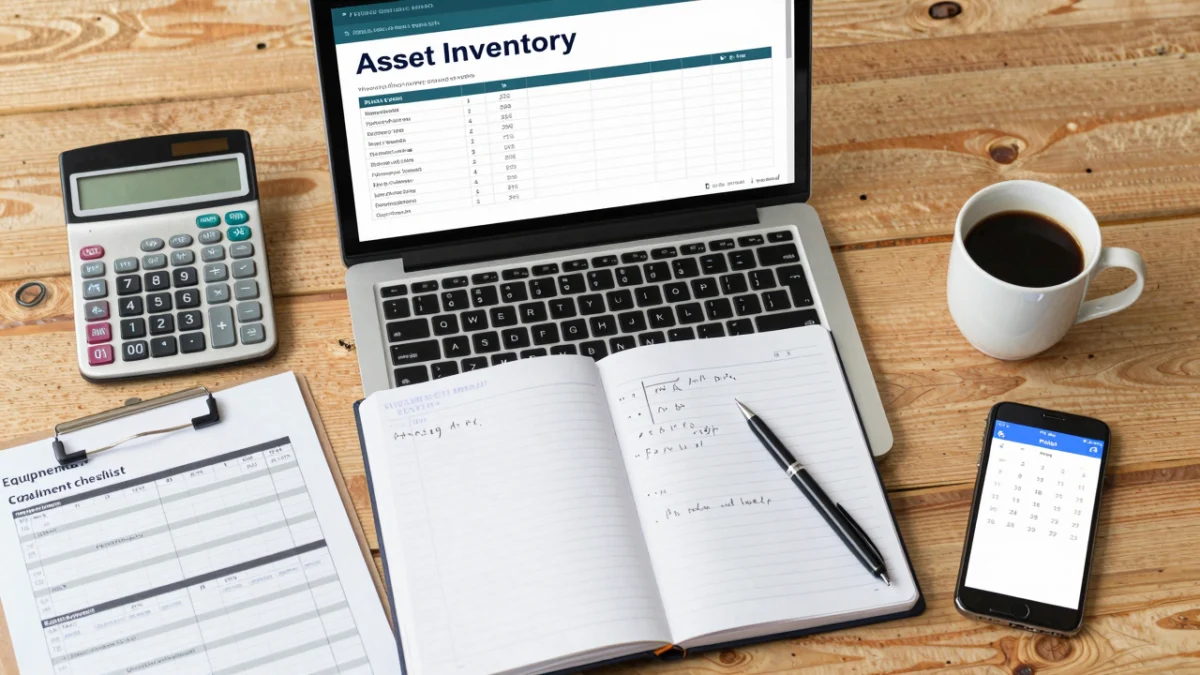
As enterprises look toward the future, the integration of advanced technology is fundamentally transforming how equipment assets are tracked, analyzed, and optimized. Traditional spreadsheets and manual ledgers are rapidly being replaced by sophisticated Enterprise Asset Management (EAM) and Computerized Maintenance Management Systems (CMMS).

Emerging Trends in Equipment Utilization
- IoT and Predictive Maintenance: Connected sensors embedded within machinery transmit real-time telemetry data regarding heat, vibration, and performance anomalies. This allows maintenance teams to service equipment before it fails, virtually eliminating unplanned downtime.
- AI-Driven Asset Valuation: Machine learning algorithms are increasingly utilized to analyze secondary market trends, accurately predicting equipment residual values and optimizing the ideal window for asset replacement or liquidation.
- Sustainability and Green Engineering: Regulatory pressures and corporate ESG (Environmental, Social, and Governance) goals are pushing organizations to invest in energy-efficient equipment. Modern asset management strategies now heavily factor in carbon footprints, energy consumption metrics, and sustainable end-of-life recycling programs.
Overcoming Common Management Challenges
Despite technological advancements, organizations frequently encounter hurdles in asset management. Miscalculating depreciation schedules can distort financial reporting, while deferred maintenance inevitably leads to compounding costs and plummeting productivity. Furthermore, navigating complex regulatory compliance and asset retirement obligations requires meticulous documentation and cross-departmental coordination between finance, operations, and IT teams.
Conclusion
Equipment assets are far more than passive tools sitting on a factory floor or in an office suite; they are the active engines of corporate productivity and financial health. By mastering the nuances of asset valuation, implementing rigorous maintenance lifecycles, and staying abreast of technological trends like IoT monitoring and predictive analytics, business leaders can transform their fixed assets into a sustainable competitive advantage.

Proactive equipment asset management ensures minimized downtime, optimized tax strategies, and fortified balance sheets—empowering organizations to navigate market uncertainties and drive long-term, profitable growth.