









Main Facts: The Financial Realities of Modern Policing
Law enforcement officers at local, state, tribal, and federal levels undertake daily risks and psychological burdens that most citizens will never fully understand. Beyond the physical and emotional toll of the badge, however, a quiet crisis weighs heavily on thousands of personnel: mounting student loan debt. While public safety officials focus on protecting their communities, student loans frequently rank among their top personal stressors.
Data from the National Police Foundation indicates that education is a high priority within the profession. More than half of all sworn officers in the United States hold at least a two-year associate degree, roughly 30% possess a bachelor’s degree, and approximately 5% have earned graduate-level degrees. Many officers completed these programs prior to entering law enforcement, while others pursue higher education mid-career to secure promotions, specialized assignments, or higher pay.
Managing significant student debt on a public servant’s salary is a formidable challenge. To make ends meet, many officers take on extra security work, side jobs, or regular overtime. Unfortunately, this financial survival tactic often compounds the physical, mental, and emotional exhaustion inherent in modern policing.
Fortunately, a variety of federal, state, and employer-backed student loan forgiveness and repayment assistance programs exist to help lighten this load. Understanding how to navigate these programs can mean the difference between decades of financial strain and complete debt elimination.
Chronology and Evolution of Relief Programs: How Public Service Debt Relief Got Here
The landscape of student loan relief for public servants has evolved significantly over the past two decades. Tracing the timeline of these programs reveals how policy shifts have opened—and occasionally closed—avenues for law enforcement officers seeking financial freedom.
- 2007: The College Cost Reduction and Access Act established the Public Service Loan Forgiveness (PSLF) program. This landmark legislation aimed to encourage individuals to enter and continue working in full-time public service jobs, including law enforcement, by promising tax-free debt forgiveness after 10 years of qualifying payments.
- Early Years (2007–2017): During its first decade, PSLF suffered from administrative hurdles, strict loan-type requirements, and a notoriously high denial rate. Many officers found themselves disqualified due to holding the wrong type of federal loans or being enrolled in ineligible repayment plans.
- 2017: The federal Perkins Loan program officially sunsetted, halting the issuance of new Perkins Loans. However, the program left behind a legacy of cancellation benefits specifically designed for law enforcement and first responders who had accumulated these loans earlier in their academic careers.
- 2021–2023: Recognizing widespread administrative failures within PSLF, the U.S. Department of Education implemented sweeping temporary waivers and permanent regulatory fixes. These changes retroactively counted previously ineligible payments, making the program vastly more accessible to police officers, federal agents, and correctional staff.
- Present Day: State-level initiatives—such as Texas’s Peace Officer Loan Repayment Assistance Program, launched for officers appointed after September 2019—alongside employer-sponsored repayment benefits, have emerged as modern tools to aid recruitment and retention in law enforcement agencies nationwide.
Supporting Data: Education Levels and Relief Programs in Numbers
To understand why student loan relief is vital for the law enforcement community, one must examine the demographic and financial data surrounding officers and their debt.
- 50%+: The percentage of sworn law enforcement officers nationwide who possess at least a two-year college degree, highlighting a highly educated workforce.
- 30% vs. 5%: Roughly 30% of officers hold a bachelor’s degree, while 5% have achieved graduate-level education, indicating substantial investment in higher learning.
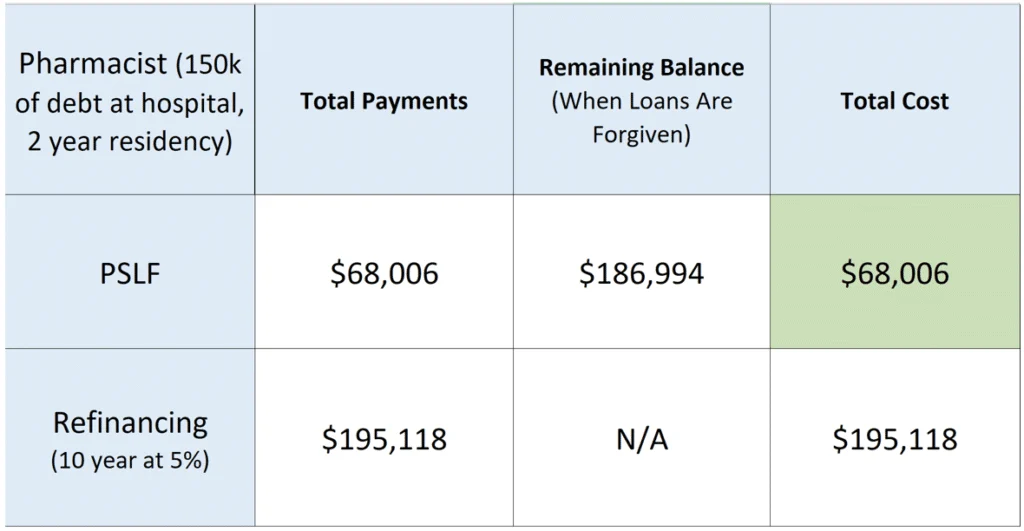
- 10 Years (120 Payments): The standard timeline required under the Public Service Loan Forgiveness program to achieve 100% tax-free discharge of remaining federal student loan balances.
- 5 Years: The service milestone required for full (100%) cancellation of Federal Perkins Loans for qualifying full-time law enforcement and correctional officers, scaled incrementally at 15% for the first two years and 20% for the final three years.
- Up to $20,000: The maximum financial assistance provided by targeted state initiatives like the Texas Peace Officer Loan Repayment Assistance Program over a five-year service commitment.
Official Guidelines: Four Key Law Enforcement Student Loan Forgiveness Programs
While public service loan programs are not exclusively designed for law enforcement, specific criteria allow police officers, federal agents, and public safety personnel to wipe away significant portions of their debt.
1. Public Service Loan Forgiveness (PSLF): Tax-Free Elimination
Because the vast majority of law enforcement personnel are employed by government entities, they are prime candidates for the Public Service Loan Forgiveness (PSLF) program.
- Who Qualifies: Anyone working full-time for a government organization engaged in crime prevention, control, reduction of crime, or the enforcement of criminal law. This includes city police departments, county sheriff’s offices, public university campus police, and federal agencies such as the FBI, CIA, DEA, NSA, CBP, and ICE.
- Who is Excluded: Officers working for for-profit private security firms or for-profit prisons are barred from PSLF. Furthermore, extra-duty contract work performed independently for private businesses (such as weekend security gigs) does not count toward qualifying employment.
- The Benefit: After making 120 qualifying monthly payments under an Income-Driven Repayment (IDR) plan while working full-time for an eligible employer, the remaining federal student loan balance is forgiven completely tax-free.
2. Federal Perkins Loan Cancellation
Although the Federal Perkins Loan program ended in 2017, many officers still carry legacy Perkins Loans. If you fall into this category, you may be eligible for partial or full cancellation.
- Eligibility Requirements: You must be employed full-time as a law enforcement officer, peace officer, or correctional officer.
- The Cancellation Schedule:
- 15% canceled for each of the first and second years of service.
- 20% canceled for each of the third and fourth years of service.
- 30% canceled for the fifth year of service.
- Achieving five years of qualifying service results in 100% cancellation of the loan balance.
- How to Apply: Contact the financial aid office of the university that issued the Perkins Loan or the school’s designated Perkins loan servicer.
3. Income-Driven Repayment (IDR) Plan Forgiveness
If an officer does not qualify for PSLF or Perkins loan cancellation, Income-Driven Repayment plans offer an alternative path to relief, particularly for those holding high federal debt loads relative to their salaries.
- Available Plans: Options include Pay As You Earn (PAYE), Income-Based Repayment (IBR), Income-Contingent Repayment (ICR), and newer iterations like the Repayment Assistance Plan (RAP).
- How It Works: Monthly payments are scaled to a percentage of discretionary income (typically 10% to 20%). After 20 to 25 years of qualifying payments (or up to 30 years under specific sliding-scale programs like RAP), any remaining balance is forgiven.
- The Caveat: Unlike PSLF, IDR forgiveness is currently treated as taxable income by the federal government. Borrowers must prepare for a potential "tax bomb" when their balance is ultimately discharged.
4. State-Specific and Employer-Driven Assistance
State legislatures and individual departments are increasingly utilizing student loan repayment assistance as a recruitment and retention tool.
- State Programs: Programs vary widely by region. For example, Texas administers the Peace Officer Loan Repayment Assistance Program, offering up to $20,000 in relief over five years for eligible officers who began their service on or after September 1, 2019.
- Employer Perks: Many municipal police departments now offer direct student loan paydown assistance. Officers should consult their department’s human resources or payroll division to identify local benefits.
Implications: Securing Financial Well-Being for Public Servants
The implications of student loan debt extend far beyond monthly household budgets; they directly impact the operational readiness, mental health, and career longevity of America’s law enforcement personnel. When officers are forced to moonlight constantly or sacrifice family time simply to service educational debt, burnout rates soar.
Navigating the labyrinth of federal and state student loan programs is notoriously difficult. Many officers discover too late that they have been paying into the wrong repayment plans or holding ineligible loan types, missing out on thousands of dollars in statutory relief.
Alternative Strategies for Managing Debt
For officers who find themselves locked out of formal forgiveness programs, alternative strategies can restore financial stability:
- Consolidation and Refinancing: Exploring federal consolidation or private refinancing can lower interest rates, though refinancing federal loans into private products permanently forfeits access to PSLF and federal IDR options.
- Budget Optimization: Working with financial professionals who understand public sector compensation can help officers restructure their debt without relying on hazardous amounts of overtime.
- Professional Consultation: Utilizing targeted financial planning services allows officers to audit their current loan structures, ensuring they maximize every available public benefit.
Ultimately, eliminating student loan stress enables officers to reduce reliance on grueling side jobs, reclaim precious time with their families, and perform their demanding public safety duties with greater peace of mind. Public servants protect their communities every day—it is vital that they utilize the systems designed to protect their financial futures in return.