









Main Facts: The Annual Opportunity for Financial Recalibration
For millions of American taxpayers, the arrival of a federal tax refund represents the single largest infusion of liquid capital they will receive in a given year. According to Internal Revenue Service (IRS) data, the average tax refund typically hovers around $3,000—a sum that, if managed with precision, can serve as a powerful catalyst for credit repair and long-term financial stability.
In the contemporary economic landscape, characterized by fluctuating interest rates and tightening lending standards, a consumer’s credit score is their most valuable financial asset. It dictates not only the ability to secure housing and transportation but also the cost of capital for every major life purchase. For those struggling with sub-prime scores, the tax refund provides a unique "reset button" to address the two primary pillars of credit health: payment history and credit utilization.
The strategic application of these funds can yield immediate improvements in credit profiles, potentially moving a score from "fair" to "good" within a few billing cycles. This transition is not merely cosmetic; it can save a household thousands of dollars in interest charges over the lifespan of a mortgage or auto loan.
Chronology: From Filing to Financial Fortification
The window for credit optimization follows a specific seasonal trajectory, beginning in late January and extending through the summer months. Understanding this timeline is essential for maximizing the impact of a refund.
Phase I: The Filing Window (January – April)
This is the period of assessment. Savvy consumers use this time to pull their annual credit reports from the three major bureaus (Equifax, Experian, and TransUnion). By identifying inaccuracies and quantifying total debt before the refund arrives, taxpayers can create a "battle plan" for the funds.
Phase II: The Processing Period (21 Days Post-Filing)
Most e-filed refunds are issued within 21 days. During this interval, financial advisors recommend prioritizing debts based on their impact on the FICO® score. The focus shifts from emotional debt (paying off a small loan to a friend) to strategic debt (paying down high-interest revolving credit).

Phase III: The Windfall and Execution (May – June)
Once the deposit hits, the execution of the credit repair strategy begins. This is the "Golden Window" where accounts are brought current and balances are slashed. The effects of these actions typically begin appearing on credit reports 30 to 45 days after the payments are processed, as creditors report the new, lower balances to the bureaus.
Phase IV: The Monitoring Period (July – December)
The latter half of the year is dedicated to maintaining the gains made during refund season. This involves monitoring the score for the "refund bump" and ensuring that the newly freed credit capacity is not consumed by lifestyle inflation.
Supporting Data: The Mechanics of Credit Scoring
To understand why a tax refund is so effective for credit repair, one must look at the mathematical components of the FICO® scoring model, which is utilized by 90% of top lenders.
The 30% Rule: Credit Utilization
Credit utilization—the ratio of your outstanding balances to your total available credit—accounts for roughly 30% of a credit score. It is the second most important factor in credit health. High utilization signals to lenders that a borrower may be overextended.
- The Math of Impact: If a consumer has a total credit limit of $5,000 and carries a balance of $4,500, their utilization is 90%. By applying a $3,000 refund to this balance, the utilization drops to 30% ($1,500). Historically, a drop of this magnitude can result in a significant and rapid increase in the credit score.
The 35% Rule: Payment History
Payment history is the most significant factor, comprising 35% of the total score. Even a single 30-day late payment can cause a score to plumet.
- The Cost of Delinquency: Bringing a past-due account current stops the ongoing damage of "stacking" late payments. While the historical late mark remains, the status of the account changes from "Delinquent" to "Current," which is a prerequisite for any significant score recovery.
The Emergency Fund Correlation
While not a direct scoring factor, the existence of an emergency fund is the strongest predictor of future credit success. Statistics from the Federal Reserve indicate that nearly 40% of Americans cannot cover a $400 emergency with cash. Utilizing a portion of a $3,000 refund to establish a $1,000 "starter" emergency fund creates a buffer that prevents future late payments when unexpected expenses arise.

Official Responses and Expert Financial Guidelines
Financial institutions and consumer advocacy groups, including the Consumer Financial Protection Bureau (CFPB), emphasize that credit repair is a marathon, not a sprint. However, they agree on several "best practices" for handling lump-sum windfalls.
The CFPB Perspective on Debt Prioritization
The CFPB suggests that consumers should focus on "high-cost debt" first. This usually refers to credit cards with APRs exceeding 20%. Using a tax refund to pay down these balances offers a "guaranteed return" equal to the interest rate saved.
Industry Consensus on "Zombie" Accounts
Credit experts warn against a common mistake: paying off a credit card and immediately closing the account. Official guidance from credit bureaus like Experian notes that closing an account reduces the "age of credit" and total available credit, which can inadvertently lower a score. The consensus advice is to pay the balance to zero but keep the line of credit active with occasional, small, fully-paid purchases.
Legal and Professional Credit Repair
Organizations like Lexington Law point out that paying down debt is only one half of the equation. The other half involves ensuring the accuracy of the credit report itself. Experts recommend that consumers use the financial breathing room provided by a refund to engage in the process of challenging inaccuracies, such as duplicate collections or incorrectly reported late payments, which can further amplify the score-boosting effects of the cash infusion.
Implications: The Long-Term Value of a Strategic Refund
The implications of using a tax refund for credit repair extend far beyond the immediate gratification of a higher score. It represents a fundamental shift from defensive financial posturing to offensive wealth building.
Reduced Cost of Borrowing
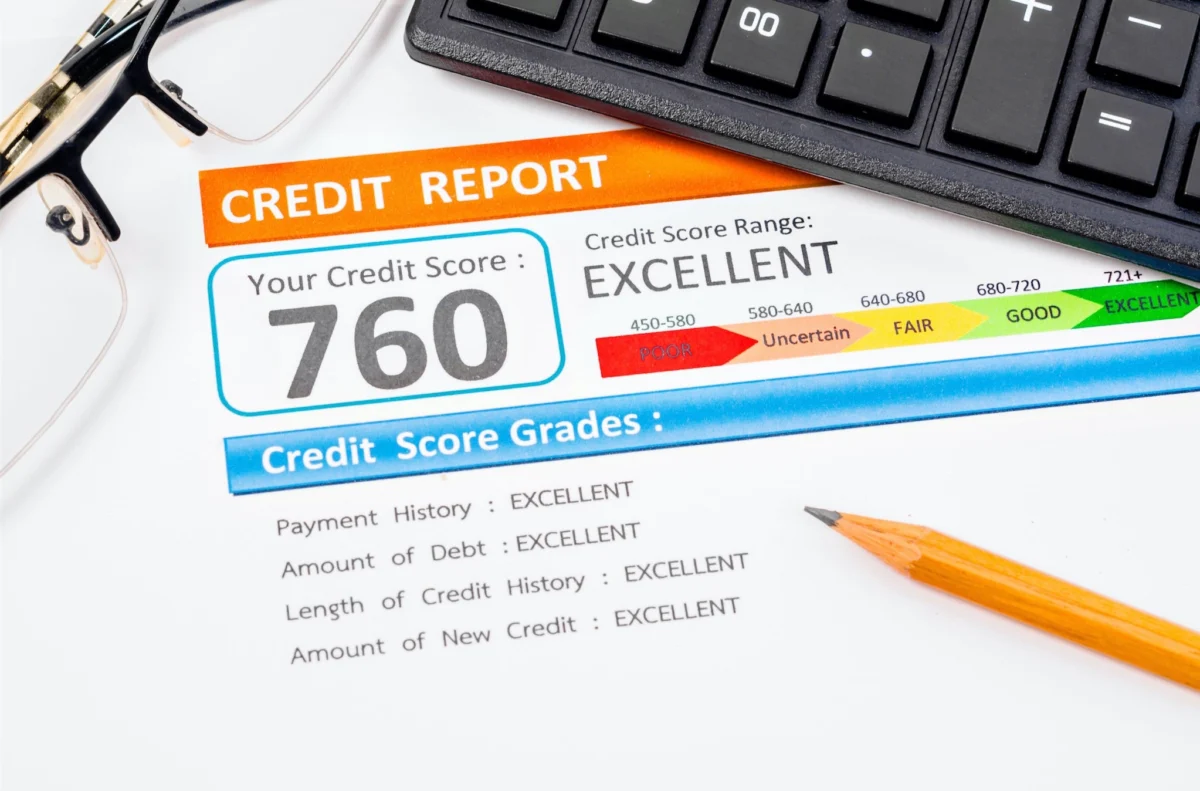
A consumer who moves their score from the "Fair" range (580–669) to the "Very Good" range (740–799) can see dramatic shifts in interest rates. On a $30,000 auto loan, this difference could equate to $5,000 in saved interest over the life of the loan. On a mortgage, the savings can reach six figures.

Behavioral Economics and the "Windfall Trap"
There is a psychological risk associated with tax refunds. Behavioral economists refer to "mental accounting," where consumers treat "found money" (like a refund) more frivolously than "earned money" (like a weekly paycheck). The implication is that without a pre-set plan, the refund is likely to be spent on depreciating consumer goods. By redirecting these funds toward credit repair, the consumer is essentially "investing" in their future borrowing power.
Breaking the Cycle of Debt
Perhaps the most profound implication is the ability to break the cycle of predatory lending. Individuals with low credit scores are often forced to rely on high-interest payday loans or title loans. By using a tax refund to boost their credit score, consumers gain access to traditional banking products with lower rates, effectively ending the "poverty tax" associated with poor credit.
Conclusion: The Path Forward
The tax refund is more than a yearly bonus; it is a strategic tool for financial liberation. To maximize its utility, taxpayers should adopt a tiered approach:
- Address the Urgent: Bring any delinquent or past-due accounts current to halt further credit damage.
- Optimize the Ratio: Apply remaining funds to high-utilization credit cards to lower the debt-to-limit ratio.
- Build the Shield: Allocate a portion to a high-yield savings account as an emergency fund to protect the newly repaired credit.
- Verify the Record: Ensure that all payments are reflected accurately on credit reports and challenge any lingering inaccuracies.
By transforming a one-time check into a long-term credit strategy, consumers can ensure that their tax refund provides value long after the money has been spent. The healthiest financial future is built on a foundation of accurate reporting and low debt—a goal that is well within reach during tax season.
Editorial Disclosure: The information provided in this report is for informational purposes only and does not constitute legal or financial advice. Readers are encouraged to consult with financial professionals regarding their specific credit situations. Credit repair results vary based on individual circumstances and the accuracy of reported data.