







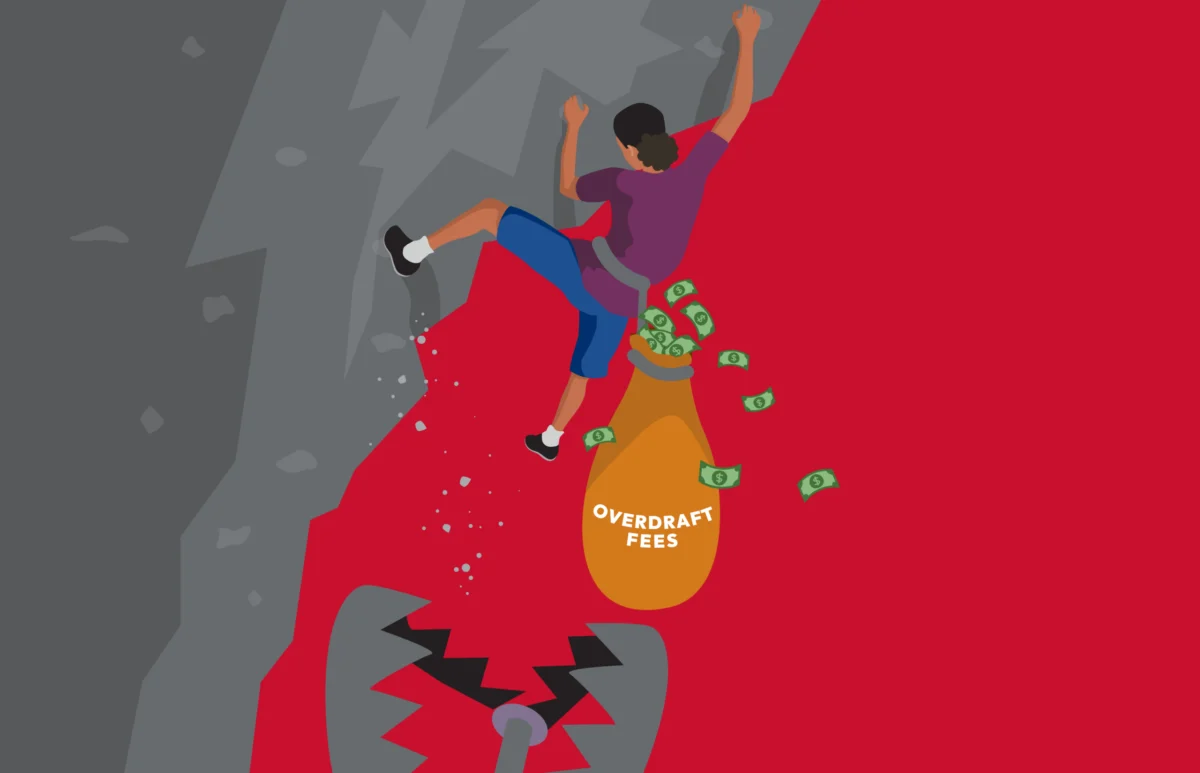
WASHINGTON — June 3, 2026 | In a climate of persistent economic strain, American households are facing a predatory resurgence in banking costs. According to a landmark report released today by the National Consumer Law Center (NCLC), struggling families across the United States were forced to surrender more than $12 billion in overdraft and nonsufficient funds (NSF) fees during the 2025 calendar year.
This financial drain, which critics argue is effectively a tax on poverty, has accelerated in the wake of federal deregulation. With the Trump Administration and the U.S. Congress having successfully rolled back key consumer protections, the onus to shield vulnerable families from aggressive banking practices has now shifted squarely to state legislatures and governors.
The Regulatory Rollercoaster: A Chronology of Erosion
The current landscape of overdraft banking is the result of a rapid, back-and-forth battle between consumer advocates and the financial industry. To understand how $12 billion left the pockets of consumers in a single year, one must look at the recent legislative history:
- 2023-2024: The Rise of Federal Oversight: Under the previous administration, the Consumer Financial Protection Bureau (CFPB) prioritized the elimination of "junk fees." In 2024, the Bureau finalized a rule designed to curtail excessive overdraft charges, a move projected to save American families roughly $5 billion annually—or approximately $225 per affected household.
- The Industry Pivot: Anticipating the rule’s implementation, many major financial institutions began to voluntarily modify their fee structures. Fearing reputational damage and strict regulatory oversight, the industry trended toward more consumer-friendly policies.
- 2025: The Regulatory Reversal: The landscape shifted dramatically in 2025. Congress, utilizing legislative maneuvers to bypass standard administrative hurdles, reversed the CFPB’s overdraft fee rule. Simultaneously, the Trump Administration rescinded existing enforcement guidance, effectively signaling to the banking sector that the era of aggressive oversight had concluded.
- The Present Day: In the absence of federal guardrails, the competitive pressure to keep fees low has evaporated. Banks, once incentivized to innovate toward "fee-free" models, have returned to the practice of leveraging overdrafts as a reliable profit center.
Supporting Data: The Anatomy of an "Overdraft Trap"
The NCLC’s analysis of the 20 largest consumer banks paints a grim picture of modern banking. While some institutions have maintained a commitment to low-cost banking, others have aggressively monetized the financial distress of their customers.
The Disproportionate Burden
Data indicates that approximately 25% of the U.S. population resides in households that pay overdraft fees on an annual basis. However, this cost is not distributed equitably across the socioeconomic spectrum. These fees fall disproportionately on:
- Low-income households: Those living paycheck to paycheck are the most likely to encounter a balance shortfall, triggering a cascade of fees.
- Black households: Historical and systemic financial disparities mean that minority communities are hit harder by automated fee structures.
- Education levels: Data shows a strong correlation between lower educational attainment and the likelihood of paying multiple overdraft fees annually.
The "Overdraft Hall of Shame"
While the report highlights that national players such as Capital One, Citibank, American Express, and Ally Bank have opted to charge no overdraft fees—and none of the top 20 banks currently charge NSF fees—other institutions have been identified as high-revenue extractors. The report spotlights several banks that have aggressively increased their fee revenue, transforming their most vulnerable customers into consistent profit drivers.
Official Responses: The Battle for Accountability
The reversal of federal protections has sparked a sharp rebuke from consumer advocates who argue that banks are exploiting a national affordability crisis.
"With Congress and the Trump Administration reversing protection against abusive and unfair bank practices that multiply overdraft fees, some banks are seizing the opportunity to turn struggling families into a profit center," said Lauren Saunders, senior attorney at the National Consumer Law Center.
Saunders emphasized the moral dimension of these banking practices, noting that the impact is being felt at the most basic levels of human survival. "It’s especially shocking that USAA, which caters to military families, is extracting money from families struggling to buy groceries, medicine, and gas," she stated. "States cannot stand by while their residents’ bank accounts are drained of billions of dollars during a national affordability crisis."
The NCLC’s position is clear: Because Washington has turned its back on the working class, the solution must come from the state house.
The Path Forward: A Call for State-Level Reform
The NCLC report concludes with a roadmap for state policymakers. While states lack the broad regulatory authority held by the federal government, they possess significant powers to regulate state-chartered banks and credit unions, and to apply pressure on national institutions operating within their borders.
Primary Recommended Reforms
The NCLC urges states to adopt the following measures to mitigate the damage caused by high overdraft fees:
- Strict Fee Caps: Implementing hard limits on the dollar amount of overdraft fees, ensuring they bear a reasonable relationship to the actual cost incurred by the bank.
- Frequency Limitations: Restricting the number of overdraft fees that can be charged per month or per year, preventing "fee stacking," where one small transaction triggers multiple penalties.
- Mandatory Opt-in Requirements: Ensuring that no account is automatically enrolled in an overdraft program without clear, explicit, and documented consent from the consumer.
- Grace Periods: Requiring banks to provide a "buffer" period, allowing customers time to deposit funds before a fee is triggered.
Addressing Abusive Practices
Beyond structural fee limits, the report highlights specific, predatory tactics that states should move to ban, including:
- Transaction Reordering: The practice of processing large transactions before small ones to maximize the number of overdrafts triggered.
- "Authorized Positive, Settled Negative" Fees: Charging a fee on a transaction that was authorized when the account had sufficient funds, but which settles after the balance has dipped.
- Enhanced Data Transparency: States should mandate that financial institutions operating within their jurisdictions report annual overdraft and NSF fee revenue. By making this data public, states can force transparency, allowing consumers to "vote with their feet" by moving their money to banks that do not engage in exploitative practices.
Implications: A Looming Economic Crisis
The implications of these banking practices extend far beyond the balance sheet of individual households. When a family is hit with a $35 fee for a $5 shortfall—a common industry practice—the impact is cumulative. It pushes households further into debt, limits their ability to pay for essential services, and can lead to the closure of bank accounts, effectively forcing those individuals into the "unbanked" population.
Once a consumer is unbanked, they are forced to rely on more expensive and unregulated alternatives, such as check-cashing services and payday lenders, creating a cycle of poverty that is nearly impossible to escape.
As the NCLC report makes clear, the $12 billion in fees collected in 2025 is not merely a revenue stream for the banking industry; it is a significant drag on the American economy. By stifling the purchasing power of low-income families, these fees exacerbate the broader affordability crisis currently gripping the nation.
With federal regulators sidelined, the ball is now in the court of state lawmakers. Whether they choose to confront these "Overdraft Hall of Shame" institutions or allow the status quo to persist will determine the financial security of millions of Americans in the coming years. For now, the report serves as both a warning and a call to arms for state leaders to reclaim their role as the primary defenders of consumer rights in the United States.