








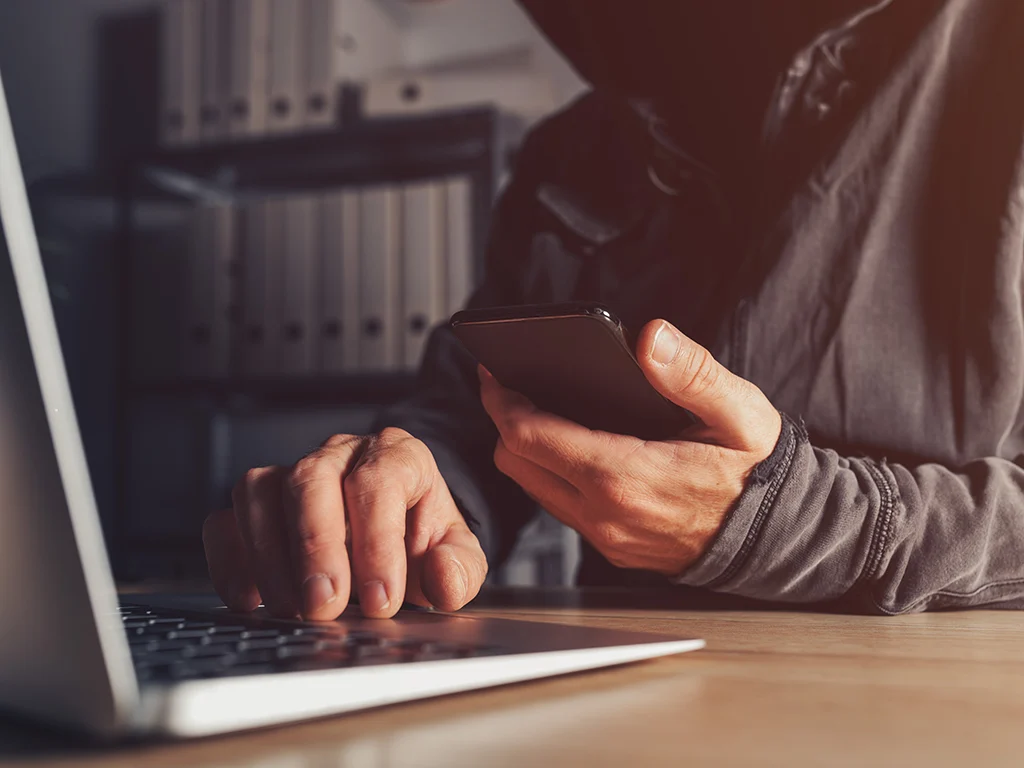
WASHINGTON — In an era defined by rapid technological advancement, the dark underbelly of the digital economy has found a powerful new accomplice: artificial intelligence. Con artists across the globe are no longer relying solely on poorly worded phishing emails or obvious telemarketing ploys. Instead, they are weaponizing advanced AI tools to generate hyper-realistic fake websites, flawless email correspondence, deceptive text alerts, and even eerily accurate cloned audio and video.
The result of this technological escalation is a historic wave of financial crime. According to the Federal Trade Commission’s (FTC) Consumer Sentinel Network Data Book, fraud losses reported by consumers skyrocketed to a staggering, unprecedented $12.5 billion in 2024. This figure represents a dramatic 25 percent surge from the previous year, highlighting a growing public safety and economic crisis that shows no signs of slowing down heading into the latter half of the decade.
Federal regulators and consumer advocacy groups point to a constellation of sophisticated offenses driving this upward trend. Chief among them are complex investment schemes, predatory romance scams, volatile cryptocurrency frauds, and deceptive imposter scams designed to mimic trusted institutions.
In response to this escalating threat landscape, the nonprofit consumer advocacy organization Consumers’ Checkbook has compiled a definitive 10-point defense strategy. Drawing from decades of rigorous consumer reporting and direct insights harvested from thousands of scam victims, these guidelines aim to fortify the public against a continually morphing array of digital predators.
The Anatomy of Modern Fraud: A Chronology of the Crisis
To understand how the fraud landscape reached the staggering $12.5 billion milestone, it is necessary to examine the evolution of digital deception over the past several years.
- The Pre-Digital Era (Traditional Cons): Historically, fraud relied on door-to-door sales pressure, physical mail solicitations, and traditional landline telemarketing. While devastating to individuals, the scale and reach of these operations were inherently limited by geography and manual labor requirements.
- The Early Internet Boom (Basic Phishing): As consumers migrated online in the late 1990s and 2000s, criminals followed. This era was characterized by rudimentary phishing emails—often riddled with spelling errors and grammatical mistakes—claiming to be from foreign princes or international banks. While easy for tech-savvy users to spot, these scams still caught vulnerable populations off guard.
- The Mobile & Social Media Expansion: The proliferation of smartphones and social networks in the 2010s gave fraudsters new vectors for attack. Imposter scams began taking over text messaging platforms (SMS phishing or "smishing"), while social media channels became hotbeds for fake storefronts and fraudulent marketplace listings.
- The AI Revolution (2023–Present): The introduction of accessible, highly sophisticated generative artificial intelligence marked a dangerous turning point. Criminals began utilizing large language models to write flawless, context-aware phishing emails free of linguistic markers. Simultaneously, voice-cloning technology enabled "grandparent scams" and executive impersonations using only a few seconds of audio harvested from social media videos.
This technological leap fundamentally changed the threat matrix, making fraudulent touchpoints nearly indistinguishable from legitimate communications.
Supporting Data: The Scale of the FTC’s 2024 Report
The numbers released by the FTC in its landmark data book underscore the sheer magnitude of modern financial exploitation.
- $12.5 Billion: Total reported fraud losses in 2024, marking a 25% year-over-year increase.
- The Primary Drivers: The bulk of these financial damages stem from four major categories:
- Investment Scams: Frequently tied to fraudulent crypto platforms promising guaranteed, astronomical returns.
- Romance Scams: Long-term psychological manipulation where bad actors build fabricated digital relationships before soliciting emergency funds.
- Cryptocurrency Scams: Exploiting the decentralized, irreversible nature of digital assets.
- Imposter Scams: Posing as government agencies, tech support, utility companies, or financial institutions.
While these official figures paint a grim picture, consumer protection experts emphasize that the true economic toll is likely much higher. A significant percentage of fraud victims never report their losses to federal authorities due to feelings of embarrassment, shame, or a belief that law enforcement cannot recover the stolen funds.
Official Responses and Regulatory Warnings
Federal agencies, consumer watchdogs, and banking institutions are racing to adapt to the AI-driven fraud boom, issuing urgent warnings and expanding resources for victims.
The FTC has repeatedly urged consumers to exercise extreme caution, noting that modern fraudsters are systematically exploiting institutional trust. Regulators emphasize that public awareness remains the first and most effective line of defense, as law enforcement agencies face severe jurisdictional and technical hurdles when tracking down transnational cybercriminal rings that utilize advanced masking techniques.
Concurrently, organizations like the AARP and the Better Business Bureau have ramped up public outreach. The AARP Fraud Watch Network Helpline (877-908-3360), which offers free support services regardless of caller age or membership status, has reported an influx of calls from distressed individuals targeted by AI voice-cloning and tech support scams.
"Fraudsters know exactly what psychological buttons to push," notes a spokesperson for Consumers’ Checkbook. "They rely on manufactured urgency, fear, and social engineering to bypass a victim’s rational decision-making process."
The 10 Essential Strategies for Staying Safe
To combat these evolving threats, Consumers’ Checkbook recommends implementing ten rigorous defensive habits into daily digital life:
1. Maintain Radical Skepticism
Question everything. Whether it is a telemarketing call, a physical mail solicitation, an unexpected email, an unknown website, a social media advertisement, or a targeted promotional post, assume it is untrustworthy until proven otherwise. Con artists routinely utilize forged seals of approval, fabricated testimonials, and sophisticated graphics to mimic legitimate brands.
2. Never Click Links in Emails or Text Messages
Phishing attacks are designed to capture your login credentials and personal data. Messages disguised as notifications from delivery services, credit card companies, or financial institutions will often direct you to pixel-perfect clone websites.
- The Fix: Never click the links provided in these messages. Always access your accounts independently by typing the official URL directly into your browser’s address bar, using a saved bookmark, or opening the institution’s verified mobile application.
3. Open and Read Your Postal Mail
Despite the digitization of finance, critical notifications are still sent via the U.S. Postal Service. If your identity has been compromised in a data breach, or if unauthorized activity is detected in your retirement account, official institutions will generally mail physical documentation. Monitoring your physical mailbox can provide early warning signs of identity theft.
4. Prioritize Credit Cards for Online and Mail-Order Purchases
When shopping online, always opt for a credit card over a debit card. Under the federal Fair Credit Billing Act, credit cards offer robust consumer protections. If merchandise fails to arrive, arrives defective, or if you are billed for an unauthorized item, you retain the legal right to dispute the charge directly with your credit card issuer. Debit cards offer far fewer protections and draw funds directly from your checking account.
5. Avoid Irreversible Payment Methods
Scammers heavily favor payment methods that clear instantly and cannot be reversed. Never send money via cryptocurrency, peer-to-peer payment apps, wire transfers, or physical gift cards to unfamiliar entities. Legitimate businesses and government bodies accept traditional debit and credit cards; they will never demand payment via gift cards or crypto.
6. Recognize Government Communication Protocols
Government bodies—including the IRS, Social Security Administration, and Medicare—will never initiate contact via phone, text message, or email to demand immediate payment or threaten instant legal action. Threats of arrest, frozen assets, or immediate fines delivered through electronic channels are definitive hallmarks of impostor fraud.
7. Guard Your Personal Information Viciously
Your Social Security number, bank account details, and online banking passwords are the keys to your financial life. Phone scammers frequently pose as bank fraud departments, claiming they need your PIN, account number, or multi-factor authentication (MFA) text codes to "resolve an issue." Never share verification codes or sensitive data over the phone with unsolicited callers.
8. Do Not Trust Caller ID
Caller ID spoofing is trivial for modern fraudsters. Criminals can easily program their outgoing systems to display the name and phone number of your local police department, a federal agency, or your credit card company. If you receive an unexpected call from an unfamiliar number, let it roll to voicemail. Legitimate entities will generally leave a detailed message with official callback numbers that you can verify independently.
9. Never Pay to Win a Contest or Claim a Prize
By federal law, requiring a financial purchase or payment to enter a sweepstakes is illegal. This is why legitimate contests always include a visible "no purchase necessary" alternative. If you are notified that you have won a prize—especially from a contest you never entered—and are asked to pay shipping fees, taxes, or processing costs upfront, it is a scam.
10. Pause, Breathe, and Take Your Time
Fraudsters thrive on panic. They engineer high-pressure scenarios designed to bypass your logical reasoning by manufacturing false emergencies (e.g., claiming a loved one is in immediate danger or an account is actively being drained).
- The Rule of Thumb: If an individual on the phone or online insists that a deal expires the moment you hang up, hang up immediately. Slow down, step away from the device, and consult a trusted family member, call the AARP Fraud Watch Network helpline, or check in with your local Better Business Bureau before taking any action.
Broader Implications for the Digital Economy
The emergence of a $12.5 billion fraud economy carries profound implications for society. Beyond the direct financial devastation suffered by individual victims—many of whom lose their life savings—this epidemic erodes fundamental trust in digital infrastructure, telecommunications, and e-commerce.
As artificial intelligence tools become more accessible, cybersecurity analysts warn that defending against fraud will require a multi-layered approach involving stringent platform regulations, advanced AI-based detection mechanisms at financial institutions, and continuous consumer education. Until systemic safeguards catch up to technological capabilities, consumer vigilance remains the single most effective barrier against financial ruin.
About Consumers’ Checkbook
Consumers’ Checkbook is a nationally recognized nonprofit organization dedicated to educating consumers and empowering them to make smarter financial and purchasing choices. Operating on a model supported entirely by consumer subscriptions and contributions—and refusing to accept funding from the companies it evaluates—Checkbook provides unbiased ratings of local service providers, price comparisons, and expert consumer advice. For more information and access to their latest investigative reports, visit Checkbook.org/NFCC.