









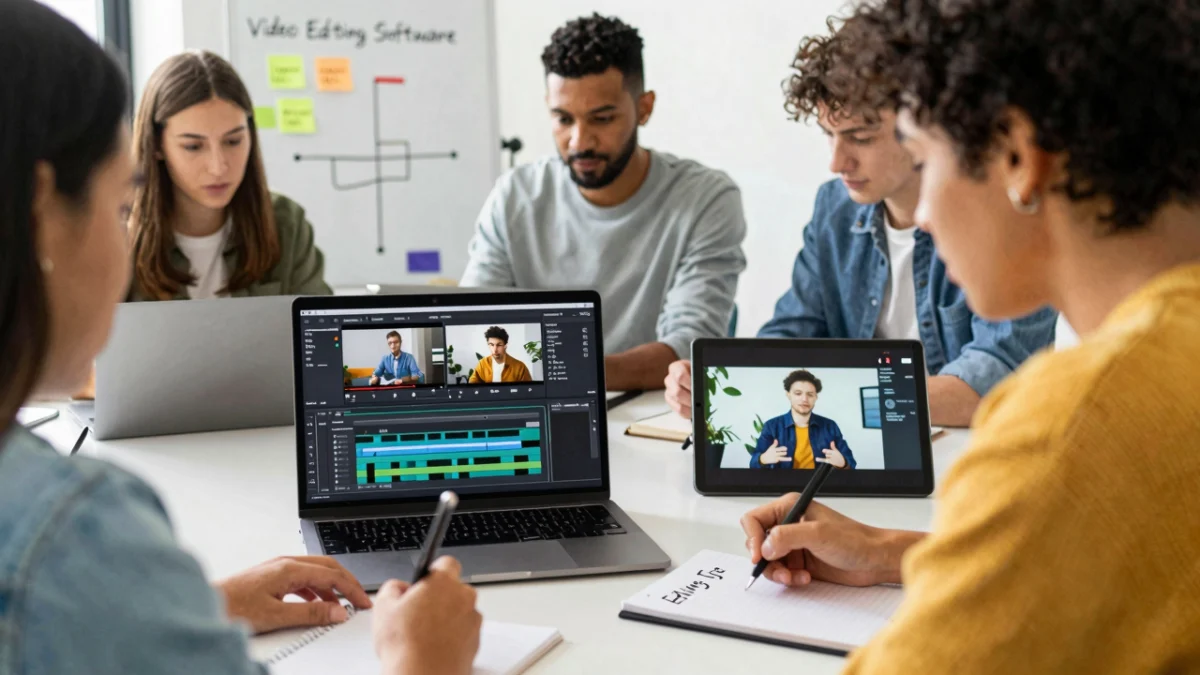
In the digital era, high-quality video production is no longer the exclusive domain of those with massive production budgets. Whether you are a small business owner, a burgeoning content creator, or a filmmaker-in-training, the barrier to entry has never been lower. Today, the market is saturated with powerful, cost-free tools that offer professional-grade capabilities without the intrusive branding—or "watermarks"—that once signaled the limitations of free software.
Selecting the right tool, however, is a strategic decision. With options ranging from AI-enhanced suites to complex non-linear editors, understanding the specific strengths of each platform is essential for optimizing your workflow.
The Landscape of Modern Video Editing
The demand for high-quality, watermark-free video editing software has surged as platforms like YouTube, TikTok, and Instagram have become central to modern business and personal branding. For many, the transition from simple cuts to complex, cinematic storytelling requires software that can handle color correction, multi-track audio, and advanced visual effects (VFX) without hidden costs.

Main Facts: What Defines a "Pro-Level" Free Editor?
When evaluating free video software, industry experts look for three specific markers:
- Resolution Freedom: The ability to export in at least 1080p, with many tools now offering full 4K support.
- No Branding: True "freemium" models—as opposed to "limited trial" models—should allow for the export of projects without watermarks.
- Extensibility: Support for third-party plugins, advanced audio mixing, and non-linear editing (NLE) capabilities.
Chronology: The Evolution of Free Editing Tools
The shift toward robust free software began in earnest around 2015, as open-source communities and established companies realized that fostering a user base at the entry level created a lifelong pipeline of professionals.
- 2015-2017: Open-source projects like OpenShot and Shotcut gained mainstream traction, offering basic, reliable tools for hobbyists.
- 2018-2020: The industry saw a "feature war." Blackmagic Design significantly lowered the barrier for DaVinci Resolve, bringing Hollywood-grade color correction to the public for free.
- 2021-Present: The rise of AI integration has redefined the field. Tools like PowerDirector began incorporating machine-learning-driven features—such as automatic object removal and voice enhancement—which were previously accessible only through expensive enterprise software.
Comprehensive Breakdown: Top-Tier Software Options
1. PowerDirector: The AI-Driven Powerhouse
PowerDirector has carved out a niche as the "best overall" for creators who need speed and efficiency. Its strength lies in its AI-assisted tools, which automate tedious tasks such as background noise reduction, wind removal, and smart-object tracking.

- Who it’s for: Content creators and small business owners who need to produce high-quality social media content quickly.
- Key Advantage: A massive library of templates and drag-and-drop transitions that require zero technical expertise to implement.
2. DaVinci Resolve: The Gold Standard for Professionals
If you are looking for the software that Hollywood colorists use, this is it. DaVinci Resolve is not just an editor; it is a full-scale post-production ecosystem. It features "Fairlight" for professional audio mixing and the "Fusion" tab for advanced compositing.
- The Learning Curve: Because of its immense power, it has a steeper learning curve than competitors. However, the return on investment for your skill set is unparalleled.
- Performance: It handles high-resolution 4K footage with ease, provided your hardware meets the requirements.
3. HitFilm Express: Mastering the VFX Domain
For those whose projects involve sci-fi elements, complex transitions, or motion graphics, HitFilm Express is the undisputed leader. It merges traditional NLE editing with a 3D compositing workspace.
- VFX Capabilities: With over 400 effects and presets, users can perform complex masking, keying, and 3D object integration.
- Support: The community surrounding HitFilm provides thousands of tutorials, making it easier to master advanced techniques.
4. OpenShot: Simplicity Meets Utility
OpenShot serves as the ideal entry point. It is built on an open-source framework and focuses on a clean, intuitive user interface. It doesn’t overwhelm the user with menus; instead, it provides a straightforward drag-and-drop timeline.

- Best Feature: Unlimited layers. While it remains simple to look at, the backend allows for the stacking of infinite tracks, enabling deep, complex compositions.
5. VideoProc Vlogger: Optimized for Action and Travel
Designed specifically for creators using drones, GoPros, or high-frame-rate cameras, VideoProc Vlogger focuses on stability and color management. It offers high-speed rendering and excellent support for large, high-bitrate files.
Supporting Data: Comparative Features
| Software | Best Use Case | Key Strength |
|---|---|---|
| PowerDirector | Social Media/Marketing | AI Automation |
| DaVinci Resolve | Cinematic/Film | Professional Color Grading |
| HitFilm Express | VFX & Sci-Fi | 3D Compositing |
| OpenShot | Quick Edits/Beginners | Interface Simplicity |
| VideoProc Vlogger | Action/Drone Footage | High-speed rendering |
Official Responses and Industry Implications
The democratization of editing software has forced a shift in the business models of traditional software giants. Companies like Adobe and Apple have responded by focusing on cloud integration and ecosystem synchronization, while the companies behind the software listed above have focused on "community-led" support.
Implications for Small Businesses:
Small businesses are now empowered to keep their video production in-house. By utilizing tools like DaVinci Resolve or PowerDirector, a business can save thousands of dollars annually in agency fees. The implication is a move toward more authentic, rapidly produced, and high-quality internal marketing collateral.

The Privacy Factor:
A critical consideration for modern users is the requirement for registration. Tools like OpenShot and Shotcut lead the charge in privacy, allowing users to install and edit without creating an account or providing personal data—a significant advantage for professionals handling sensitive client footage.
Frequently Asked Questions (FAQ)
Is it truly possible to get professional results for free?
Absolutely. The hardware remains the limiting factor more than the software. If you have a machine with a solid GPU and RAM, these free tools can output 4K video that is indistinguishable from projects edited in paid professional suites.
How do these companies make money if the software is free?
Most companies utilize a "Freemium" model. While the core editing features are free, they often sell "Design Packs," advanced plugin sets, or premium support tiers. This allows them to maintain a massive user base while monetizing through power users.

Does "no watermark" mean there are no limitations?
Usually, no. While the watermark is gone, some free versions may cap the export resolution (e.g., 720p or 1080p) or restrict access to advanced high-end codecs (like ProRes). Always verify the export settings before starting a major project.
Conclusion: Choosing Your Path
The decision of which software to download should be based on your specific goal.
- If you need cinematic quality, choose DaVinci Resolve.
- If you need speed and AI assistance, choose PowerDirector.
- If you are learning visual effects, choose HitFilm Express.
- If you are a beginner, start with OpenShot.
The era of "pay-to-play" in video production is effectively over. With these tools, the only thing limiting your video content is your creativity and your willingness to learn. Download one of these suites today, and begin the process of refining your digital presence.