









Published: October 26, 2026
Author: Sarah Lewis
Category: Small Business News / U.S. Energy News
Main Facts
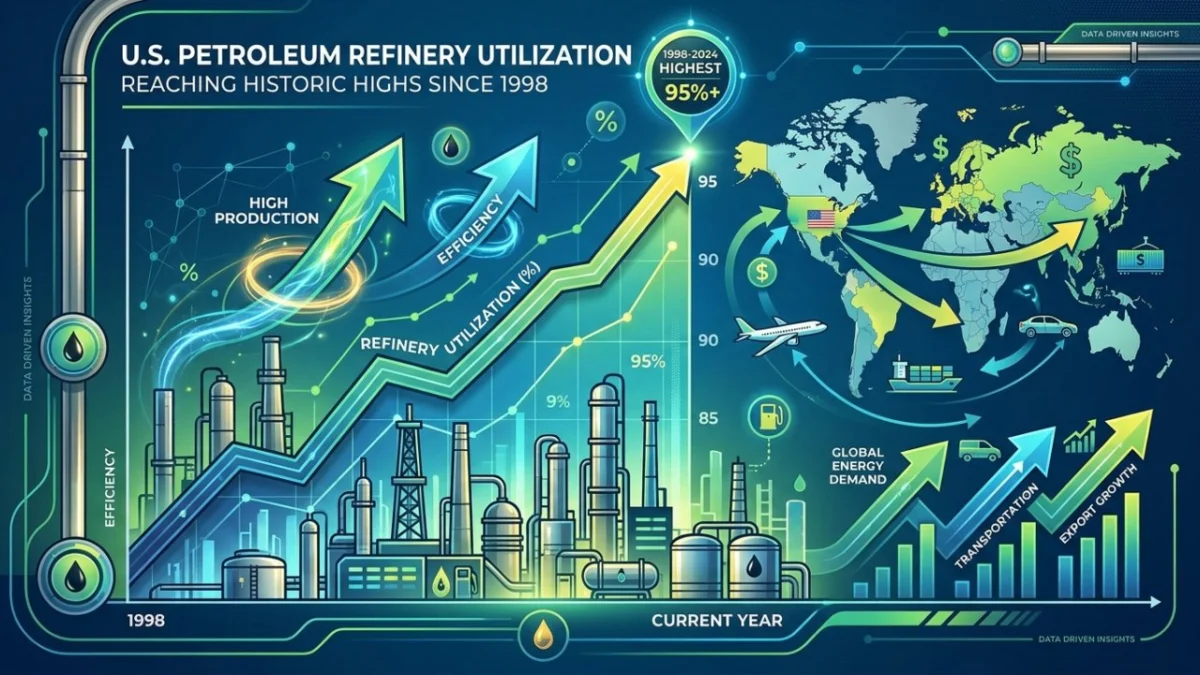
U.S. refineries have achieved a significant operational milestone, recording an average utilization rate of over 95% between May and September of this year. According to data highlighted by the U.S. Energy Information Administration (EIA), this summer performance marks the highest refinery utilization rate for these specific months since 1998.
The primary driver behind this surge in activity is intense global demand, particularly for distillate fuel oils such as diesel. Tight international energy supplies have considerably widened petroleum product margins, encouraging domestic refiners to maximize their throughput. However, this high-pressure operational environment presents a complex mix of opportunities and challenges—especially for small business owners operating in energy-intensive sectors like transportation, logistics, construction, and agriculture.
While utilization rates have soared to levels not seen in over two decades, overall total U.S. refinery output has not broken parallel records. Total production has only reached levels comparable to 2019, constrained by a cumulative 4% reduction in domestic refining capacity over recent years. As autumn progresses, utilization rates have dipped slightly from their blistering summer peaks, yet they continue to trend comfortably above the five-year seasonal average. For entrepreneurs and small business leaders, navigating this nuanced landscape requires a sharp understanding of the interplay between high refinery utilization, diminished overall capacity, and fluctuating fuel prices.
Chronology
To fully understand how the U.S. refining sector reached this historic milestone, it is essential to examine the operational timeline leading up to the current market conditions:
- Pre-2020 Baseline: Historically, U.S. refineries have followed a predictable seasonal cycle, ramping up processing activity during the late spring and summer months to satisfy surging gasoline demand. Normal peak summer utilization traditionally hovered around 92%, with lower rates recorded during the shoulder and winter months.
- The 2020–2025 Capacity Shrinkage: Over the past several years, the U.S. refining footprint contracted due to facility closures, conversions to biofuel production, and routine economic adjustments. Consequently, total refining capacity decreased by roughly 4% compared to pre-pandemic peaks, setting the stage for tighter supply margins.
- May – September 2026 (The Historic Surge): Propelled by robust international demand for U.S. petroleum exports—specifically distillate fuels—refineries pushed their processing units harder than at any time since 1998. Average utilization rates maintained a sustained level exceeding 95% throughout the entire five-month summer stretch.
- Early October 2026 (The Seasonal Cool-Down): As autumn set in, domestic refinery utilization experienced a natural, seasonal dip from its extreme summer highs. Despite this deceleration, production activity remained resilient, hovering above the five-year seasonal average through the first three weeks of October.
Supporting Data & Market Analysis
A deeper dive into the numbers reveals critical insights regarding domestic energy production and its downstream effects on the commercial market:

- 95%+ Utilization Rate: Recorded continuously from May to September 2026, representing the highest summer utilization average since 1998.
- 4% Capacity Reduction: The total volume of crude oil that U.S. refineries can process has declined by roughly 4% since 2019. This means that while individual facilities are running harder and more efficiently than they have in decades, the aggregate output ceiling is lower than it was prior to the pandemic.
- Focus on Distillates: Unlike traditional summers where gasoline takes center stage, market incentives this year heavily favored distillate fuels (such as diesel and heating oil) to feed robust international export channels.
- Historical Comparison: While summer utilization historically averages around 92%, the sustained push above 95% highlights an extraordinary market anomaly driven entirely by external, global supply pressures.
Official Responses and Expert Insights
Industry experts and federal analysts have weighed in on the factors driving these unprecedented metrics and what they signal for the broader economy.
Jimmy Troderman, Principal Contributor for the U.S. Energy Information Administration (EIA), pointed directly to international trade dynamics as the primary catalyst for the high output.
“High international demand for U.S. distillate fuel oil exports has kept refinery outputs elevated,” Troderman explained in recent federal energy briefs.
This heavy reliance on foreign buyers absorbing U.S. refined products underscores how globally interconnected domestic energy markets have become. Energy economists note that when international inventories tighten—driven by geopolitical conflicts, shifting OPEC policies, or structural deficits abroad—foreign buyers turn heavily to the United States to fill the void. This dynamic keeps domestic refineries running at maximum throttle, even when domestic gasoline demand stabilizes.
Furthermore, industry analysts emphasize that the structural contraction of the U.S. refining sector over the last half-decade means the system is operating with a much slimmer safety margin. If unexpected weather events, hurricanes, or unplanned maintenance outages hit major Gulf Coast refining hubs, the reduced overall capacity leaves the domestic market far more vulnerable to sudden price spikes.
Implications for Small Businesses
For small and medium-sized enterprises (SMEs), the 2026 refinery surge carries direct, actionable implications across multiple operational fronts:

1. Supply Chain and Fuel Cost Management
Businesses that rely heavily on fleets—such as delivery services, regional trucking companies, construction outfits, and agricultural producers—are directly exposed to diesel and distillate pricing. While strong refinery output can sometimes stabilize near-term supply and prevent acute shortages, the underlying capacity constraints mean that prices remain sensitive to external shocks.
2. Strategic Purchasing and Inventory Planning
Small business owners should take advantage of periods when refinery utilization is high and supplies are stable to lock in strategic purchasing agreements or bulk fuel contracts. Anticipating potential winter price hikes—driven by a transition to heating oil and colder-weather logistical challenges—can provide a vital financial cushion.
3. Energy Forecasting and Resource Allocation
The broader global shift toward distillate consumption requires entrepreneurs to re-evaluate their operational energy footprints. Utilizing modern forecasting and resource-planning tools can help business leaders predict future energy costs based on fluctuating market indicators, ensuring that tight margins are not eroded by unexpected fuel inflation.
4. Gaining a Competitive Edge
In industries where transportation and logistics represent a major overhead cost, proactively monitoring energy news, refinery output reports, and seasonal inventory trends can yield a distinct competitive advantage. Businesses that successfully anticipate fuel price movements can price their goods and services more accurately, protecting their profitability in a volatile economic climate.
Conclusion
The milestone achieved by U.S. refineries in the summer of 2026—surpassing a 95% utilization rate for the first time since 1998—is a testament to the resilience and export-driven agility of the American energy sector. However, paired with a 4% contraction in overall refining capacity, this trend is a double-edged sword. For small business owners, staying informed about the delicate balance between high facility utilization and tighter structural output is no longer optional; it is a fundamental requirement for navigating supply chain risks, managing operational costs, and securing long-term financial stability.
For further details and official federal analysis, visit the original report from the U.S. Energy Information Administration (EIA).