






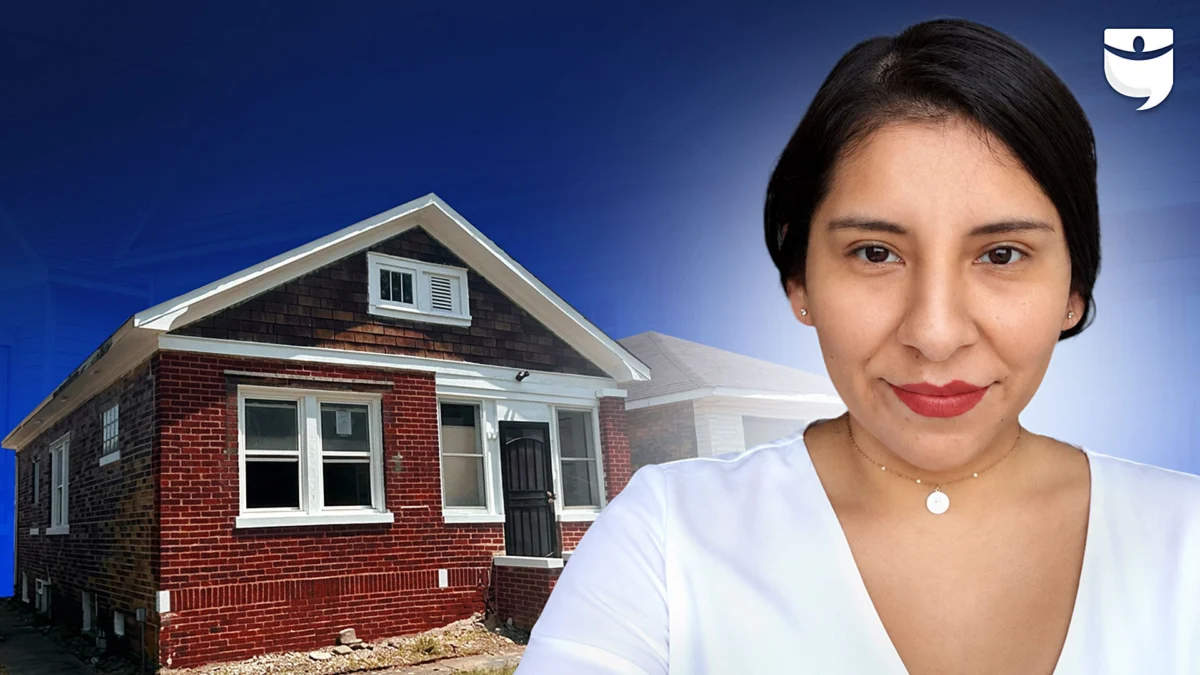
In late 2022, the American housing market presented a daunting picture for prospective buyers. Mortgage rates had surged to multi-year highs, home prices remained stubbornly elevated from pandemic-era peaks, and economic forecasters were warning of an impending downturn. For many, it was the ultimate sideline era—a time to wait for a "correction" that felt perpetually out of reach.
Yet, it was precisely during this turbulent window that Lindsay Barrientos, a registered nurse living in high-cost-of-living Los Angeles, decided to take her financial future into her own hands.
Armed with no massive inheritance, no prior real estate background, and standard W-2 income, Barrientos executed a disciplined, long-distance investing strategy. Just four years later, her portfolio has expanded to 12 properties. That accumulation has provided her with the ultimate professional flexibility: she has exited a grueling hospital career, completed advanced nursing school, launched her own psychiatric nurse practitioner business, and built a growing personal media brand.
Her journey—featured recently on the BiggerPockets Podcast hosted by Henry Washington and Dave Meyer—serves as a case study in strategic pivoting, market research, and the power of consistent, incremental execution.
Chronology of an Accidental Investor
Barrientos’s real estate trajectory did not begin with a master plan to amass a dozen doors. Instead, it evolved organically through a series of lifestyle choices and survival mechanisms prompted by the global health crisis.
Phase 1: The Los Angeles House Hack (2020)
Like countless frontline healthcare workers, Barrientos experienced profound burnout, stress, and trauma working in Los Angeles hospitals during the peak of the COVID-19 pandemic. Seeking financial independence and a way to mitigate her living expenses, she bought a four-bedroom single-family home in LA.
To offset her mortgage, she rented out rooms to fellow traveling nurse friends. While she did not yet label herself an "investor," she was effectively executing a classic house hack—drastically lowering her personal overhead while generating surplus cash.
Phase 2: Market Discovery and the Out-of-State Pivot (2022)
Following therapy and recovery from pandemic-related distress, Barrientos evaluated her long-term prospects in nursing and realized she wanted an alternative stream of income. Turning to a simple internet search—"What do rich people do to make money?"—she weighed starting a business against investing in real estate.
Realizing that purchasing an investment property in Los Angeles required a prohibitive 20% down payment on a million-dollar asset ($200,000 cash), she expanded her geographic horizons. Recognizing that the rest of the country offered significantly lower asset prices, she began studying real estate fundamentals via podcasts, blogs, and educational literature.
Phase 3: The First Out-of-State Turnkey Deal (Late 2022)
Looking for a landlord-friendly market with strong cash-on-cash returns within driving distance of a major hub, Barrientos targeted Northwestern Indiana—specifically Hammond, 30 minutes south of Chicago.
By immersing herself in online investor communities, local WhatsApp groups, and transparent social media channels, she vetted property managers and realtors. In late 2022, she closed on her first out-of-state investment: a 3-bedroom, 2-bathroom single-family home purchased via a conventional 25% down payment for approximately $135,000 at a 6.01% interest rate. Rented immediately for $1,400 a month, the asset generated roughly $400 in monthly cash flow after debt service and property management fees.
Phase 4: Scaling into Value-Add and Creative Finance (2023–Present)
Having established a "proof of concept" and letting her first property run smoothly for a year, Barrientos accumulated $16,000 in savings and expanded into Gary, Indiana—a market with lower price points and higher upside potential.
- The Fix-and-Flip / BRRRR Strategy: She purchased a distressed 800-square-foot home for $55,000, invested $16,000 in renovations (new roof and floors), and rented it for $1,100 a month via a Section 8 voucher. Later, she tackled a BRRRR (Buy, Rehab, Rent, Refinance, Repeat) project on a $33,000 fire-damaged home, successfully pulling her capital back out via appraisal.
- Creative Financing: As her portfolio grew to 12 units (consisting largely of single-family homes and one duplex), Barrientos began deploying dual-offer strategies—submitting cash offers alongside creative seller-financing proposals. This approach allowed her to secure five properties through seller financing, including one structured with 0% down.
Supporting Data: The Math Behind the Portfolio
Barrientos’s transition from a high-cost coastal market to Midwest secondary markets highlights key financial mechanics that make long-distance investing viable for average income earners:
- Capital Efficiency: In Los Angeles, a 20% down payment on a $1,000,000 property requires $200,000. In contrast, Barrientos’s Indiana acquisitions ranged from $33,000 to $135,000, meaning her out-of-pocket capital requirements per door were a fraction of coastal requirements.
- The 2% Rule Realized: Her acquisition in Gary, Indiana—purchased for $55,000 with $16,000 in rehab ($71,000 all-in)—rented for $1,100 per month, yielding a monthly rent-to-price ratio approaching the legendary 2% threshold.
- Debt Service Margins: With conservative leverage, her mortgage payments sat comfortably low (e.g., $388 to $880 per month), leaving reliable cash flow buffers even when accounting for vacancy or local property management fees.
- Portfolio Composition: Out of 12 total properties, 11 are single-family residences, demonstrating that single-family rentals can form the backbone of a high-cash-flow portfolio when acquired at scale in landlord-friendly secondary markets.
Official Insights: Perspectives from the Experts
During their interview on the BiggerPockets Podcast, co-hosts Henry Washington and Dave Meyer analyzed the psychological and tactical frameworks that enabled Barrientos’s rapid ascent.
"There’s no perfect timing, no big bank account, just plain and simple, consistent action," Henry Washington noted, emphasizing that aspiring investors frequently paralyze themselves by over-analyzing macroeconomic indicators rather than focusing on micro-level market fundamentals.
Dave Meyer highlighted the importance of Barrientos’s community-first approach to out-of-state investing:
"Investing out-of-state is so much about finding people who are good at it… Two investors can invest in the same market. One can be incredibly successful and one can completely fail because they’re not good at it."
Rather than relying on cold corporate directories, Barrientos deliberately sought out micro-influencers and smaller-scale creators on platforms like YouTube, Instagram, and Facebook groups. Because these smaller operators had bandwidth, they were willing to engage in voice chats, share raw numbers, and direct her to vetted local networks of contractors, realtors, and property managers.
Broader Implications for Modern Real Estate Investors
Barrientos’s success story carries profound implications for retail investors navigating high-interest-rate environments:
1. Geographic Arbitrage Remains a Viable Path
Investors trapped in high-cost-of-living metropolitan areas (such as New York, San Francisco, or Los Angeles) do not need to abandon real estate simply because local price-to-rent ratios are unfavorable. By leveraging digital communication tools, reliable property management, and local boots-on-the-ground networks, remote investing bridges the gap between high local earning power and high-yield regional markets.
2. The Power of Dual-Offer Structuring
In a market where traditional buyers struggle with high mortgage rates, presenting sellers with parallel options—a lower cash offer versus a higher, terms-driven seller-financing offer—creates flexibility. Sellers who previously operated as landlords are often uniquely positioned to act as the bank, providing passive income streams while bypassing institutional lending hurdles.
3. Real Estate as a Vehicle for Professional Autonomy
Perhaps the most significant takeaway from Barrientos’s narrative is the intersection of real estate passive income and career transition. By utilizing her portfolio cash flow to stabilize her finances, she successfully funded her education to become a psychiatric nurse practitioner, ultimately leaving hospital-based W-2 employment to launch her own practice and co-host the Real Estate Chisme podcast, which encourages women and people of color to enter the asset class.
For anyone currently sitting on the sidelines paralyzed by high home prices, sticky inflation, or fluctuating interest rates, Barrientos offers a simple counter-narrative: success belongs not to those who time the market perfectly, but to those who build a system, trust the process, and take consistent, measured action.