






In a decisive move to dismantle the financial architecture supporting the Russian war effort and global cybercrime, the United Kingdom has levied sweeping economic sanctions against Cryptomus, a chameleonic cryptocurrency platform that has long served as a critical nexus for illicit digital finance.
On October 8, 2026, the U.K. government officially designated Cryptomus—along with affiliated platforms VexPay, TokenSpot, and the Tsunami Payments service—as entities subject to severe financial restrictions. The sanctions represent a turning point in international efforts to choke off the funding streams that enable ransomware gangs, narcotics traffickers, and darknet marketplaces to operate with near-impunity. By freezing assets within British jurisdiction and prohibiting U.K. companies from engaging in any business with these platforms, London has signaled that the era of "no-questions-asked" crypto processing is drawing to a close.
A Legacy of Deception: The Chronology of Cryptomus
The rise of Cryptomus is a study in corporate obfuscation. Since its emergence in 2022, the platform has functioned as a digital hydra, constantly shedding its identity to evade regulatory scrutiny. Originally operating under the banners of Certa Payments and Xeltox Enterprises, the platform established a business model predicated on processing payments for high-risk clients.
2022–2024: The Build-Out
Cryptomus established itself as the preferred payment processor for dozens of Russian cryptocurrency exchanges and websites hawking specialized cybercrime services. During this period, the company maintained a veneer of legitimacy, even utilizing a shared Vancouver address with dozens of other foreign currency dealers—none of which appeared to have a physical presence at the site.
2025: The Canadian Intervention
The platform’s luck began to run out in 2025 when Canadian authorities, recognizing the systemic risk posed by the firm’s lack of anti-money laundering (AML) protocols, imposed a record-breaking CAD $176 million fine. In a calculated maneuver, the operators of Cryptomus did not fold. Instead, they launched Heleket, a parallel service designed to continue "no-KYC" (Know Your Customer) payment processing, effectively attempting to outrun the penalty while continuing to facilitate illicit cash flows.
2026: The U.K. Shutdown
Following the Canadian fine, which proved difficult to enforce, the U.K. sanctions have provided the "kill switch" many investigators argued was necessary. As of early October 2026, reports indicate that the Cryptomus support bot on Telegram—previously a hub for facilitating transactions—began notifying users that the platform was suddenly unable to process funds, signaling a total collapse of their operational capacity.

Supporting Data: The Scale of Illicit Finance
The sheer volume of capital flowing through the Cryptomus ecosystem is staggering. Blockchain analysis firms, which have spent years mapping the platform’s tentacles, have provided data that paints a grim picture of its impact on global security.
The $7 Billion Nexus
According to findings published by TRM Labs in April 2026, Cryptomus processed upwards of $7 billion in transactions since its inception. This volume was not generated by benign commerce; rather, it was heavily concentrated in high-risk categories, including:
- Terrorist Financing: Facilitating the movement of funds for extremist networks.
- Human Trafficking: Providing payment rails for illegal operations.
- Exploitative Content: Handling payments for vendors of child sexual abuse material (CSAM).
Chainalysis’s Findings on Wartime Economics
The firm Chainalysis has highlighted that the U.K. sanctions specifically target the infrastructure supporting Russia’s wartime economy. In an October 8 blog post, Chainalysis noted that Cryptomus and its alter-ego, Heleket, became major payment hubs for illicit activity, receiving more illicit funds across tracked categories than traditional cryptocurrency mixers. Most alarmingly, the number of illicit counterparties transacting through these platforms surged to more than 900 in a single month during late 2025, demonstrating the platform’s role as an essential service for the criminal underground.
The Mirage of Regulation: The "Western Sahara" Connection
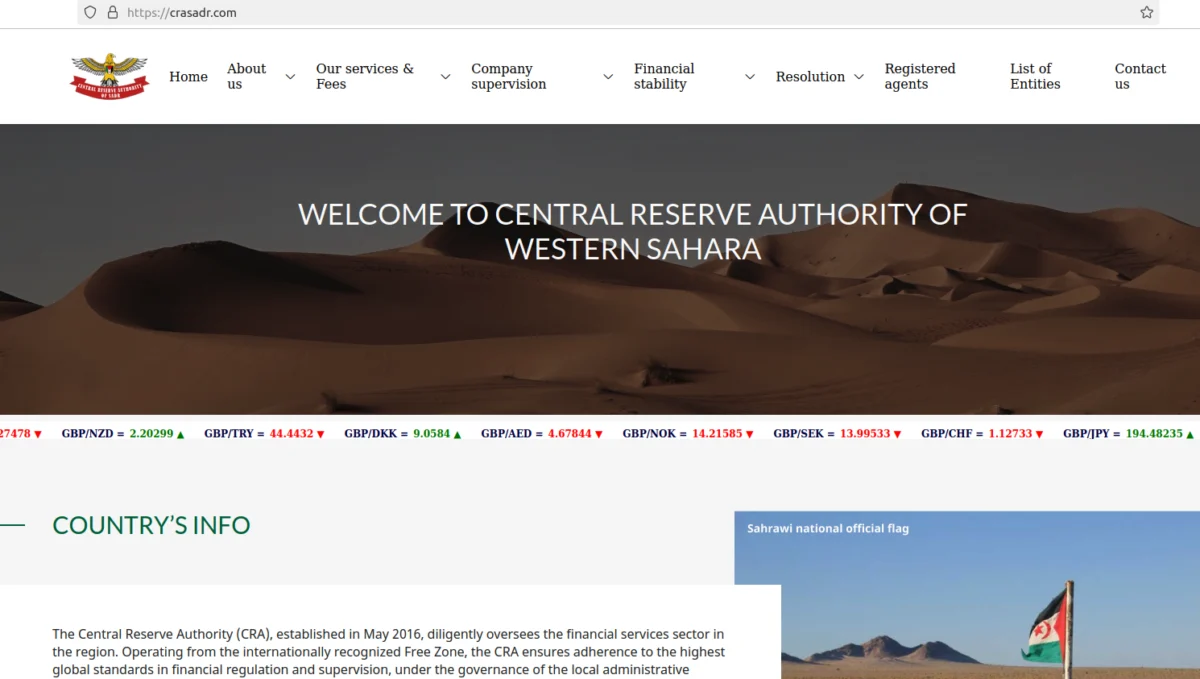
One of the most bizarre elements of the Cryptomus investigation is the source of its "regulatory authority." To present a facade of compliance, the platform relied on a web of fake institutions.
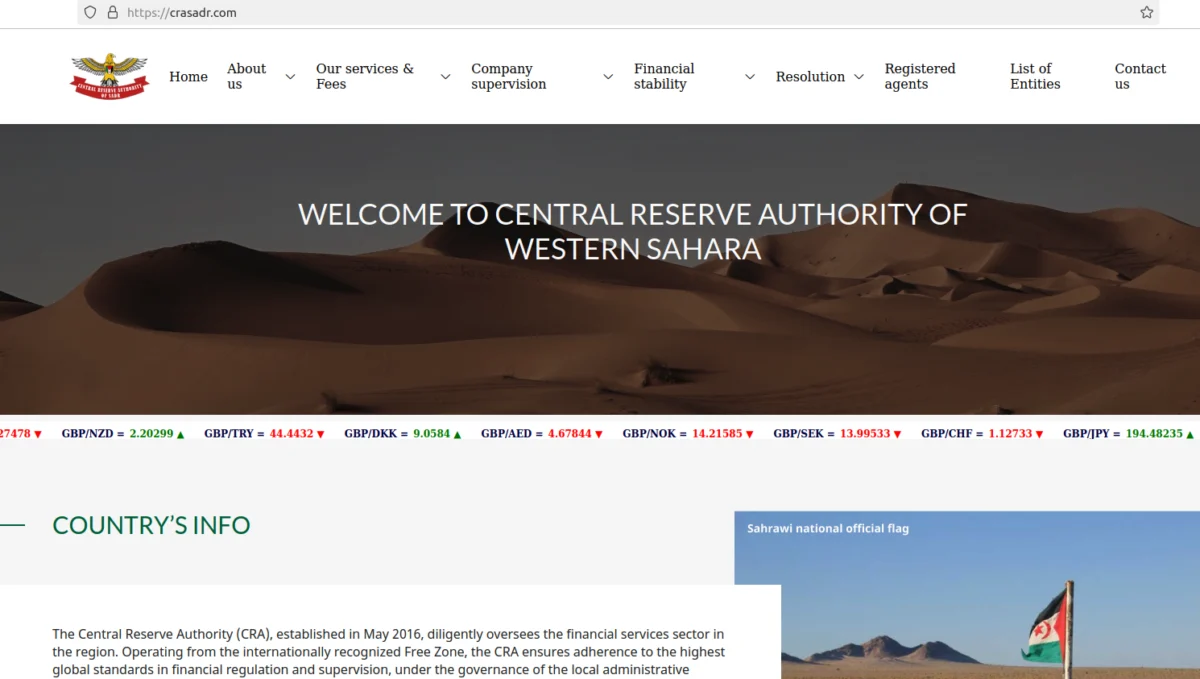
Investigations revealed that the sole shareholder of Certa Payments was a 25-year-old Ukrainian woman who also directed the WS Management and Advisory Corporation. This entity billed itself as a legitimate regulatory body overseeing cryptocurrency licenses in the disputed region of Western Sahara.
Through websites like crasadr.com, the group offered "official" licenses for cryptocurrency, foreign exchange, and online gaming businesses. This phony regulatory body functioned as a "laundry" for corporate reputation, providing a stamp of approval to firms that were, in reality, shells for money laundering. The technical infrastructure of these sites often overlapped with the core payment processors, revealing that the entire ecosystem was a self-contained circle of fraud.

Implications: The "Five Eyes" Strategy Shift
The U.K. sanctions are being hailed by experts as a masterclass in modern geopolitical enforcement. Richard Sanders, a blockchain investigator who spent months mapping the Cryptomus payment infrastructure, noted that the action is historically significant for several reasons.
The "Kill Switch" Effect
Sanders argues that while financial penalties like the CAD $176 million Canadian fine are important, they are often treated as a "cost of doing business" by criminal enterprises. "A fine doesn’t stop a cryptocurrency payment processor from processing payments," Sanders stated on LinkedIn. "Sanctions kill the operation. The distinction matters." By cutting off the platform from the British financial system, the U.K. has rendered the platform toxic for any legitimate service provider, effectively forcing its collapse.
A New Precedent for International Cooperation
Perhaps most significantly, this is the first known instance of a "Five Eyes" nation (the U.K., U.S., Canada, Australia, and New Zealand) sanctioning a cryptocurrency entity incorporated in another Five Eyes jurisdiction. This marks a new level of intelligence and enforcement sharing, suggesting that international regulators are moving past the "jurisdictional arbitrage" that allowed crypto-criminals to hide in plain sight.
The Future of Anti-Money Laundering (AML)
The collapse of Cryptomus leaves a massive void in the illicit financial ecosystem, but the lessons learned will shape future enforcement efforts. The case proves that even the most complex, "chameleonic" operations cannot outrun coordinated state action.
As regulators continue to tighten the noose, the era of anonymous, no-KYC crypto-processing is likely approaching a terminal phase. The targeting of Cryptomus demonstrates that the fusion of blockchain forensics with traditional economic sanctions is the most effective weapon available to democratic nations.
For the operators behind Cryptomus, the game is up. For the global financial system, the removal of this $7 billion hub is a necessary step toward sanitizing the digital economy and ensuring that the tools of the future are not used to bankroll the crimes of the present. As international authorities continue to track the remnants of the Heleket network, the message to other illicit processors is clear: hide as you might behind fake regulators and shell corporations, but the digital trail is indelible, and the international community is watching.