







In a decisive move to disrupt the financial arteries of Russia’s wartime economy and international cybercrime, the United Kingdom has levied heavy economic sanctions against Cryptomus, a prolific cryptocurrency payment processor. For years, the platform has operated as a "chameleonic" entity, shifting identities and jurisdictions to facilitate a massive flow of illicit funds tied to ransomware syndicates, narcotics trafficking, darknet marketplaces, and state-sponsored fraud.
The October 8, 2026, sanctions represent a significant escalation in the international effort to starve Russian financial networks of their liquidity. By freezing all Cryptomus assets within British jurisdiction and prohibiting U.K. companies from engaging in any business with the platform, the British government is moving beyond the symbolic fines that have previously failed to deter the firm’s operations.
The Anatomy of an Evolving Threat
Cryptomus is not merely a payment processor; it is the backbone of a sprawling, illicit digital infrastructure. Since its emergence in 2022, the platform has rebranded repeatedly—operating under names such as Certa Payments and Xeltox Enterprises—to evade regulatory scrutiny. Its most recent iteration, Heleket, surfaced following a landmark $176 million penalty imposed by Canadian authorities in 2025.
The U.K. sanctions package is comprehensive, targeting not only Cryptomus but also a network of affiliated payment platforms, including VexPay, TokenSpot, and the Tsunami Payments service. According to intelligence provided by blockchain analytics firms, these entities collectively serve as the primary conduits for Russian financial institutions attempting to circumvent international sanctions and fund clandestine operations.
Chronology of a Shadow Empire
2022: The Inception
Cryptomus launched with a business model explicitly designed to cater to high-risk, non-compliant sectors. From its earliest days, it established a reputation for "no-questions-asked" processing, attracting users who had been de-platformed by mainstream financial institutions due to suspicious activity.
2024: The Investigation
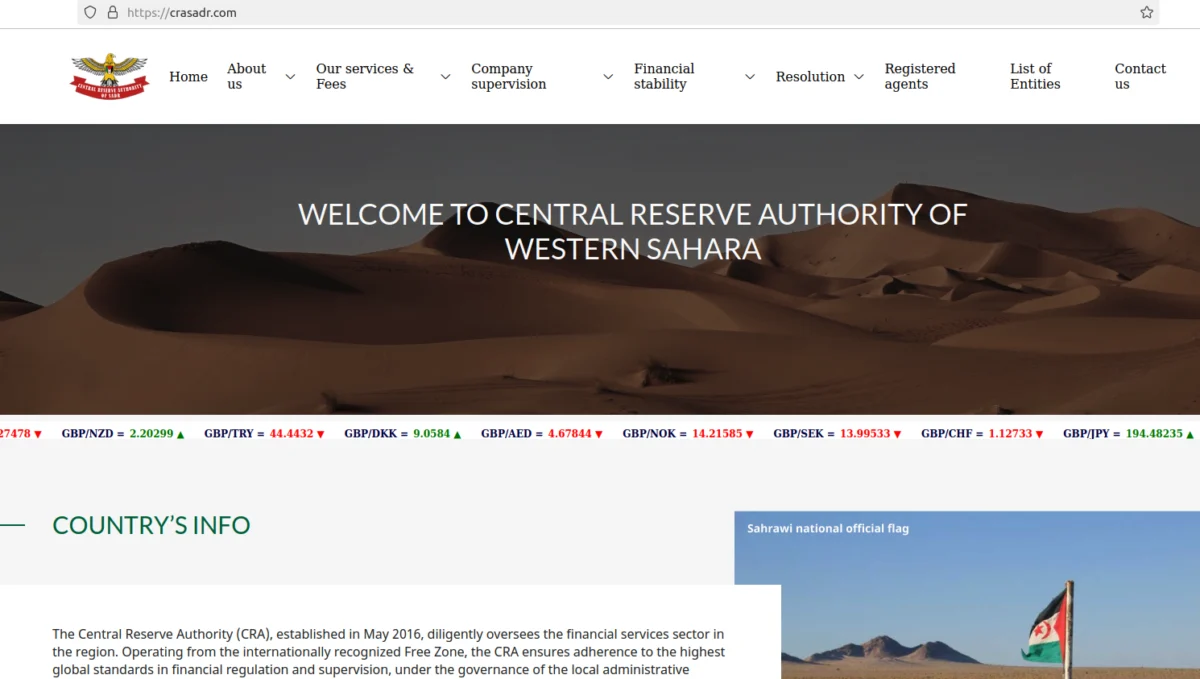
A deep-dive investigation by Krebs on Security revealed the structural rot at the heart of the company. It was discovered that Cryptomus shared a Vancouver business address with dozens of other phantom money transfer firms. The investigation also unearthed a bizarre corporate governance structure: the sole shareholder of Certa Payments was a 25-year-old Ukrainian national who also presided over a shell entity called the WS Management and Advisory Corporation. This "regulatory body" claimed to license crypto and forex businesses in the disputed territory of Western Sahara, essentially providing a veneer of legitimacy to a criminal enterprise.
2025: The Canadian Crackdown
In October 2025, Canada delivered a record-breaking CAD $176 million fine against Cryptomus for blatant anti-money laundering (AML) violations. However, the enforcement action proved to be a cautionary tale in the limitations of traditional monetary penalties. Instead of shutting down, the platform simply appealed the fine, launched "Heleket" as a parallel service to continue no-KYC (Know Your Customer) operations, and effectively ignored the debt.

2026: The "Five Eyes" Intervention
By April 2026, blockchain research firm TRM Labs reported that Cryptomus had processed over $7 billion in transactions since its inception. The volume included funds linked to child sexual abuse material (CSAM), terrorist financing, and human trafficking. Recognizing that the Canadian fine was uncollectible, the United Kingdom took the unprecedented step of invoking full-scale sanctions, marking the first time a "Five Eyes" nation has sanctioned a cryptocurrency entity incorporated in another member’s jurisdiction.
Supporting Data: The Scale of Illicit Flow
The data provided by Chainalysis underscores the severity of the threat. In a post-sanctions analysis, the firm noted that Cryptomus and its alter-ego, Heleket, had become the premier hubs for illicit activity.
"Together, these services received more illicit funds across tracked categories than the mixers in our dataset," Chainalysis noted. "The number of illicit counterparties surged to more than 900 in a single month in late 2025."
The trajectory of the platform’s transaction volume reveals a telling pattern. When Cryptomus attempted to implement superficial KYC protocols to appease regulators, its volume cratered. In response, the platform immediately shifted its most profitable, high-risk traffic to the Heleket brand, which maintained the "no-KYC" mandate that criminal organizations demand. This "liquidity migration" proves that the platform’s business model is inherently predicated on the absence of regulatory oversight.
Official Responses and Tactical Shifts
The U.K. sanctions are designed to do what fines cannot: cut off access to the global financial system. By targeting the "virtual infrastructure" of these entities, the U.K. is effectively rendering the platforms radioactive to any legitimate financial institution.
Richard Sanders, a blockchain analyst who has spent months mapping the Cryptomus infrastructure, highlights the shift in strategy. "A fine doesn’t stop a cryptocurrency payment processor from processing payments," Sanders explained in a LinkedIn post. "Sanctions kill the operation. The distinction matters."
The impact was immediate. On the day of the announcement, the Cryptomus support bot on Telegram—which had previously maintained a facade of legitimacy—began responding to customer inquiries with the admission that the platform was "suddenly unable to process transactions."

Implications: The End of "Fake" Regulatory Havens
Perhaps the most significant aspect of this case is the exposure of how these entities operate under the guise of fake sovereignty. The reliance on the "Central Reserve Authority of the Western Sahara" to issue operating licenses highlights a growing trend in cybercrime: the creation of synthetic regulatory frameworks.
By establishing a "phony regulatory body" in a disputed region, criminals have attempted to create a jurisdictional firewall. They argue that because they are "licensed" by a local authority, they are compliant with international standards—even if that authority does not exist in any recognized international capacity.
The U.K. sanctions effectively shatter this illusion. By ignoring these "licenses" and treating the entities as criminal enterprises rather than financial services providers, the U.K. has set a precedent that will likely be adopted by other nations.
Conclusion: A New Standard for Digital Enforcement
The sanctions against Cryptomus serve as a watershed moment for digital asset regulation. The international community has moved past the phase of attempting to "fine" criminal crypto exchanges into compliance. The realization that platforms like Cryptomus and Heleket are not just businesses, but essential components of a hostile nation’s financial survival, has changed the stakes.
As the "Five Eyes" nations continue to coordinate their intelligence, the window for these chameleonic platforms is closing. For the criminals operating behind these digital curtains, the message is clear: the ability to shift names and jurisdictions is no longer a shield against the reach of global law enforcement. The era of the "unregulated" crypto hub is entering its final, desperate chapter.
Moving forward, the focus will likely shift to the service providers that continue to facilitate these platforms—the domain registrars, the hosting companies, and the infrastructure providers that allow these shells to maintain a digital footprint. As the U.K. has demonstrated, the most effective way to deal with a digital phantom is to freeze the ground beneath its feet.