








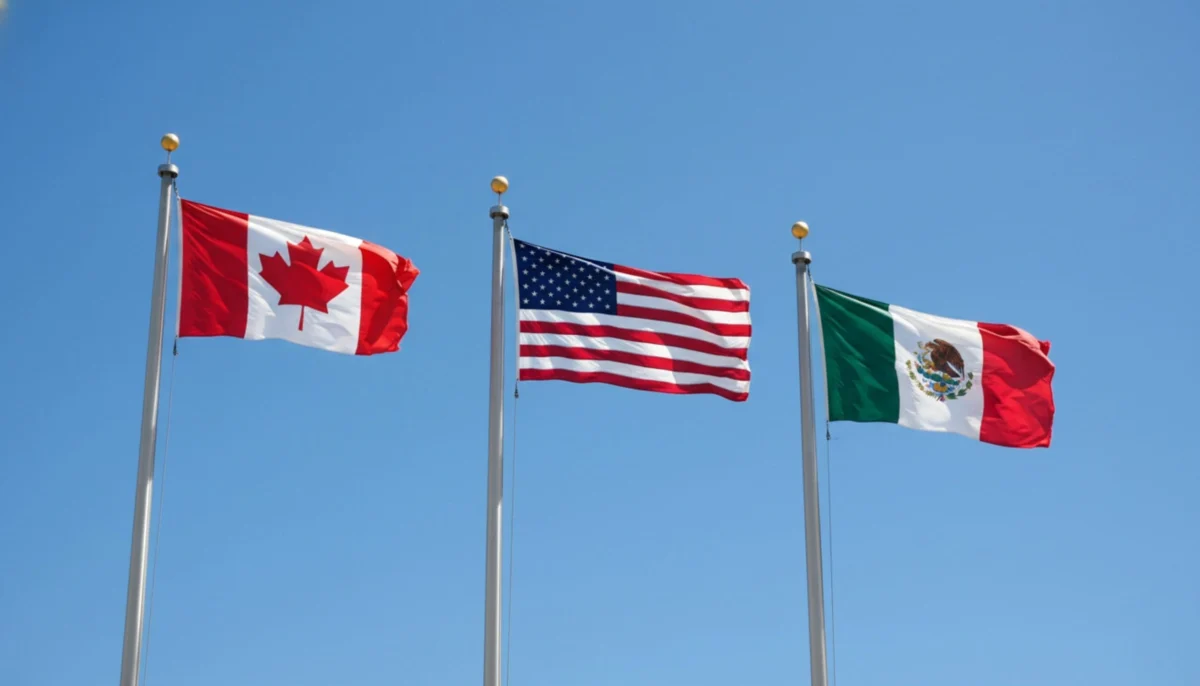
As the United States, Mexico, and Canada approach the pivotal July 2026 deadline for the first formal review of the United States-Mexico-Canada Agreement (USMCA), the North American economic landscape finds itself at a precarious juncture. Policymakers are now forced to confront a binary reality: preserve the stability of the current trilateral framework or descend into a period of prolonged trade volatility characterized by potential tariff hikes, fractured supply chains, and significant economic uncertainty.
Recent signals from the Trump administration suggest that a "clean extension" of the agreement is off the table. Instead, the White House has opted for a path of rigorous scrutiny, setting the stage for what promises to be years of annual reviews, tense renegotiations, and a potential pivot toward bilateralism that could reshape the continent’s commercial identity.
The Main Facts: The Sunset Clause and the July Deadline
The USMCA, which replaced the North American Free Trade Agreement (NAFTA) in 2020, was drafted with a unique feature: a "sunset clause." This provision mandates a formal review of the agreement every six years to determine whether all three nations wish to continue the pact. July 2026 marks the first such milestone.
The agreement currently facilitates more than $1.5 trillion in annual trade between the three nations. It governs everything from automotive manufacturing rules of origin to digital trade, labor standards, and agricultural quotas. Under the terms of the agreement, if any one party decides not to extend the deal, the agreement could technically expire, reverting the three countries to a state of trade limbo.
President Donald Trump’s recent declaration that he will not pursue a simple, clean renewal of the USMCA represents a departure from the "set-it-and-forget-it" model of modern trade diplomacy. By choosing to subject the agreement to persistent, iterative review, the administration is signaling a shift toward a more aggressive, transactional approach to international commerce.
A Chronology of North American Trade Integration
To understand the gravity of the current moment, one must look at the evolution of North American trade:
- 1994: The North American Free Trade Agreement (NAFTA) takes effect, effectively eliminating most tariffs on goods traded between the U.S., Canada, and Mexico. This ushered in an era of deep supply chain integration.
- 2017–2018: The Trump administration initiates the renegotiation of NAFTA, citing concerns over trade deficits and labor standards.
- 2020: The USMCA is ratified and enters into force, maintaining the core tenets of free trade but updating regulations regarding digital economy, environmental standards, and automotive manufacturing thresholds.
- 2025: As the 2026 deadline approaches, friction regarding energy policies in Mexico and dairy quotas in Canada begins to dominate diplomatic discussions.
- 2026 (June/July): The official review period commences. The Trump administration confirms it will forego a simple extension, opting instead for a strategy that may lead to the dismantling of the trilateral structure in favor of individual bilateral agreements.
Supporting Data: Why Stability Matters
The economic stakes of this decision are immense. North American trade is not merely a collection of exports and imports; it is a highly integrated industrial ecosystem.
Supply Chain Integration
In the automotive sector, for instance, a single vehicle component may cross the border between the three countries multiple times before a final assembly occurs. Disrupting the regulatory certainty of the USMCA could impose billions of dollars in new compliance costs. According to recent economic modeling, even a minor increase in trade barriers could result in a contraction of GDP for all three nations, as manufacturers face the "cost of complexity."
The Tax and Regulatory Burden
From a fiscal perspective, the USMCA serves as a stabilizer for business investment. When businesses know the "rules of the road," they are more likely to invest in long-term capital projects. Uncertainty acts as a de facto tax on investment; when firms are unsure about future tariff regimes, they withhold capital expenditure. By opting for annual reviews, the administration is effectively increasing the risk premium for every business operating within the North American bloc.
Official Responses and Diplomatic Friction
The reaction to the administration’s stance has been a mix of caution and concern from both domestic and international stakeholders.
The U.S. Administration’s Stance
The White House argues that a clean extension would be an abdication of its duty to protect American workers. Officials have hinted that the current framework is too lenient regarding labor and environmental standards, particularly concerning Mexican manufacturing. By keeping the USMCA in a state of perpetual review, the administration believes it can force concessions on a year-by-year basis, essentially treating the agreement as a living, breathing negotiation rather than a static document.
Canadian and Mexican Perspectives
Canadian officials have emphasized the importance of a "rules-based" trading system. Prime Minister Justin Trudeau’s administration has consistently argued that the stability of the USMCA is the bedrock of the Canadian economy, which is heavily reliant on exports to the United States.
Meanwhile, Mexico—which has become the United States’ largest trading partner—faces the most significant pressure. The Mexican government has expressed a desire to maintain the status quo but is preparing for a scenario where it must negotiate separate deals with Washington, a move that would significantly weaken its bargaining position.
The Implications: A Shift Toward Bilateralism
The move away from a trilateral framework carries profound long-term implications.
1. The Death of the "Bloc" Strategy
If the U.S. pursues bilateralism, the concept of a "North American Bloc" could effectively dissolve. Trade relations would become a series of "hub-and-spoke" agreements, with the U.S. as the hub and Canada and Mexico as separate spokes. This increases the leverage of the United States but creates massive logistical and bureaucratic headaches for companies attempting to manage regional supply chains.
2. Market Volatility
Financial markets react poorly to trade uncertainty. We should expect to see increased volatility in the currencies of all three nations—the U.S. Dollar, the Canadian Dollar, and the Mexican Peso—as investors adjust to the prospect of higher tariffs and disrupted trade flows.
3. The Competitive Advantage of Other Regions
Perhaps the most significant long-term risk is that by bickering among themselves, the North American nations may lose their collective competitive edge against other global powers, specifically China and the European Union. A fractured North America is a less efficient North America. If the costs of doing business within the continent rise, global corporations may look toward other, more stable regions for their manufacturing and service hubs.
Conclusion: A Misguided Strategy?
While the desire to modernize trade agreements is valid, the methodology of continuous, destabilizing reviews is fraught with peril. The USMCA, despite its flaws, provides the necessary framework for the most integrated economic relationship in the world.
To discard this stability in favor of political theater or a desire to constantly renegotiate is to gamble with the economic prosperity of 500 million people. Policymakers should recognize that while no trade deal is perfect, the alternative—an era of uncertainty, protectionism, and bilateral fragmentation—is a high price to pay. The USMCA deserves to remain at the center of our economic relationship, not as a target for destruction, but as the foundation for future, incremental improvements that do not sacrifice the structural integrity of the North American economy.
Alex Durante is a Senior Economist at the Tax Foundation, focusing on federal tax policy and model development. His work regularly explores how trade policies and tax regulations influence the competitiveness of the American economy. Before joining the Tax Foundation, Alex served as a staff economist on the Council of Economic Advisers and worked as a research assistant at the Federal Reserve Board.