









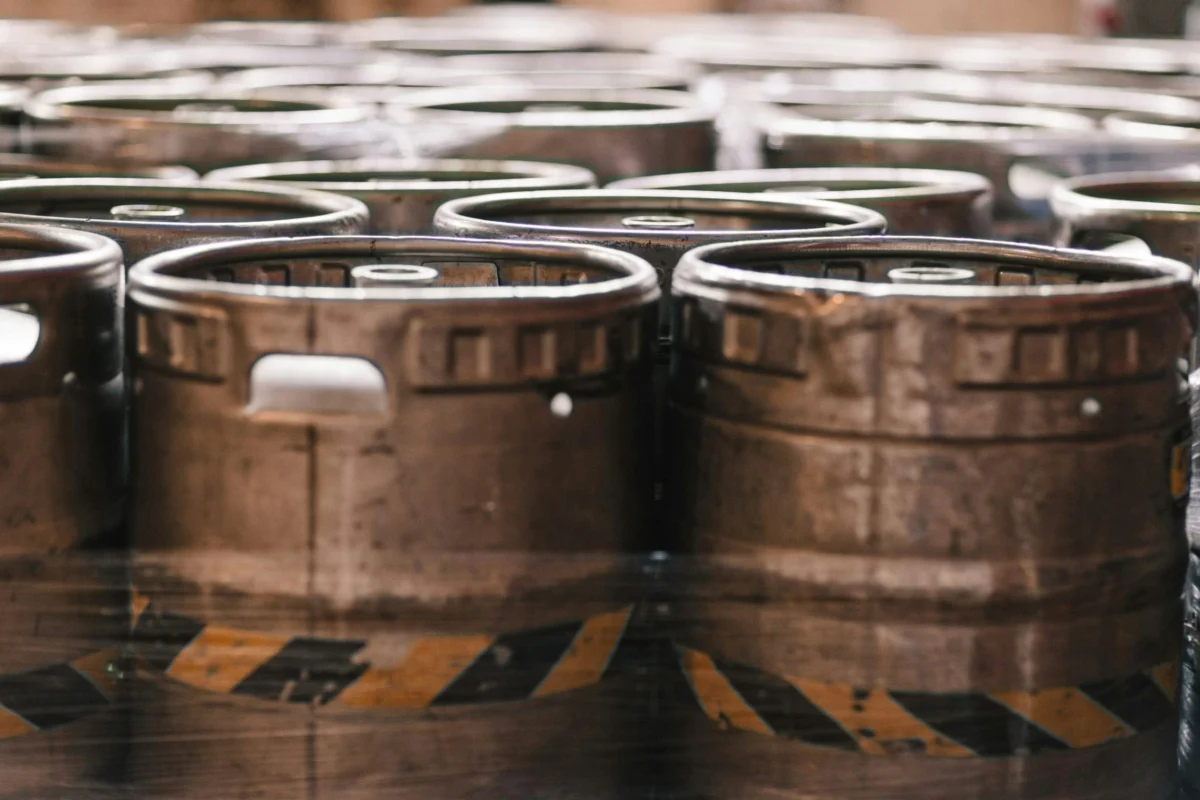
To the average consumer, a barrel is a barrel—a quintessential cylindrical container associated with oil extraction, brewing, and old-fashioned shipping. But to ask "how many gallons are in a barrel?" is to step into a regulatory minefield. While mathematics and federal law offer straightforward answers, state-level bureaucrats have spent generations muddying the waters. Today, the definition of a barrel depends entirely on what is inside it—and, bafflingly, where in the United States it happens to be sitting.
Across the country, six states stubbornly refuse to adhere to federally recognized measurements for petroleum and beer barrels. This patchwork of nonconforming legal definitions introduces unnecessary administrative complexity, inflates compliance costs for interstate commerce, distorts economic data, and arguably treads on constitutional ground reserved exclusively for the federal government.
Main Facts: The Anatomy of a Non-Standard Barrel
At its core, the barrel problem is a symptom of federalism gone awry in the realm of weights and measures. Under the Code of Federal Regulations, two distinct standard barrels govern major U.S. commodities:
- The Oil Barrel: Universally standardized at 42 gallons.
- The Beer Barrel: Universally standardized at 31 gallons.
These definitions were hard-fought and historically designed to streamline trade, taxation, and accounting. Yet, six U.S. states have written idiosyncratic definitions into their local statutes, creating localized deviations that complicate tax remittances.
For petroleum, Indiana, Kansas, and Missouri define a barrel in specific tax contexts as 50 gallons rather than the federally mandated 42. For beer, Arkansas, Connecticut, and Virginia have enacted alternative statutory volumes or convoluted calculation methods that diverge from the standard 31-gallon benchmark.
The consequences of these deviations reach far beyond state borders. Companies operating across state lines must constantly reconfigure their accounting software, navigate hyper-specific tax formulas, and absorb compliance burdens simply because a gallon of oil or beer magically changes volume when crossing state lines.
Chronology: A Brief History of Standardizing the Unruly Cylinder
To understand why these state-level deviations are so disruptive, one must look back at how modern measurements were established to rescue commerce from chaos.
The Wild West of 19th-Century Oil
In the nascent days of the American petroleum industry—ignited in the oil-rich valleys of Pennsylvania during the 1860s—there was no standard container. Producers shipped oil in whatever barrels they could acquire. Whiskey barrels, molasses barrels, and assorted makeshift wooden casks of random sizes dominated the market. This inconsistency wreaked havoc on trade, pricing, and accounting.
Recognizing the urgent need for order, Pennsylvania oil producers convened in 1866 and agreed upon a compromise: the 42-gallon barrel. This specific volume struck a vital balance—it was light enough to be handled manually by a single worker, yet large enough to make bulk transport commercially viable. By 1872, the Petroleum Producers’ Association officially adopted the standard, and it remains enshrined in modern federal regulations (Title 43 of the Code of Federal Regulations).
The Evolution of the Beer Barrel
The standardization of brewing containers followed a similarly pragmatic path. The federal government issued its first tax stamps for beer in 1866, though alcohol duties had existed long before. Initially, these stamps were issued for a haphazard variety of barrel sizes.
As the brewing industry matured, both trade and tax collection demanded uniformity. Eventually, the federal government codified the 31-gallon beer barrel, a standard that persists today under Title 27 of the Code of Federal Regulations.
For more than a century, these standard volumes provided a predictable foundation for nationwide commerce and taxation. Unfortunately, a handful of state legislatures decided to reinvent the wheel.
Supporting Data: How the Six States Break the Mold
The six outlier states employ a variety of unique mechanisms that disrupt uniform taxation and reporting.
Petroleum Outliers: The 50-Gallon Fiction
- Indiana: While Indiana uses the standard 42-gallon definition for its petroleum severance tax, it plays by a different rule for its petroleum products inspection fee. Under state statutes, the inspection fee is levied on a "barrel" defined as 50 gallons—taxing gasoline at $0.50 per 50-gallon barrel (or precisely 1 cent per gallon).
- Kansas and Missouri: Both states similarly levy their gasoline inspection fees on a per-barrel basis, arbitrarily defining the unit as 50 gallons rather than the standard 42.
Beer Outliers: Bureaucratic Gymnastics
- Arkansas: The state levies taxes on a per-barrel basis using a 32-gallon measurement, which is just slightly askew from the standard. Paradoxically, elsewhere in Arkansas state statute, a beer barrel is correctly defined as 31 gallons. Adding to the absurdity, Arkansas levies a specific tax on beer festivals at a rate of $7.507808 per 31-gallon barrel for unregistered products—a tax rate carried out to the millionths of a decimal place.
- Connecticut: Connecticut assesses beer taxes based on a statutory range rather than a fixed volume, defining a barrel as having at least 28 but not more than 31 gallons. While this grants brewers some flexibility, it penalizes those using smaller-than-average containers with a slightly higher tax burden per gallon.
- Virginia: Virginia’s state code classifies any container holding more than 43 ounces (0.336 gallons) as a "barrel," while anything smaller is a "bottle." Because these definitions are practically unworkable, the state structures its alcohol levies through a labyrinth of rates: "per gallon per barrel," "per gallon per bottle" for specific ounce ranges, and "per ounce per bottle" for larger containers. While this effectively functions as a per-gallon tax—rendering the "barrel" definition functionally irrelevant for the tax itself—the state’s annual brewery license fees are still calculated based on the total number of "barrels" produced.
Official Responses and Data Discrepancies
The headaches caused by nonconforming measurements are not theoretical; they actively disrupt government reporting and institutional oversight.
Consider the plight of the Energy Information Administration (EIA), a federal entity responsible for collecting, analyzing, and publishing comprehensive energy data, including state-level fuel taxes. Because Kansas utilizes a "Kansas barrel" of 50 gallons for its petroleum inspection fee, the EIA has been forced to retroactively revise previously published tax data to account for the mathematical distortion.
When a premier federal statistical agency struggles to reconcile state-level barrel definitions, the compliance burden placed on private enterprises becomes glaringly obvious. Interstate trucking firms, national energy conglomerates, and regional distributors must maintain complex, state-specific tax-mapping software just to ensure they are remitting the correct fractions of a cent to state treasuries. This friction directly counteracts the foundational purpose of a national market.
Implications: Economic Inefficiency and Constitutional Questions
The insistence of six states on maintaining non-standard barrel definitions creates two distinct problems: blatant economic inefficiency and dubious constitutional authority.
Economic Detriment and Compliance Costs
In a modern economy, compliance costs are a hidden tax on productivity. When businesses must navigate contradictory definitions across state lines, resources are diverted away from innovation, hiring, and expansion and funneled into compliance bureaucracy. Tax compliance should be about calculating liabilities, not deciphering regional linguistic quirks regarding volumetric containers.
A Constitutional Overreach
Beyond mere economic inefficiency, state barrel nonconformity faces serious constitutional scrutiny.
When the states ratified the United States Constitution, they consciously delegated a specific, limited set of powers to the federal Congress. Among these enumerated powers, explicitly outlined in Article I, Section 8, is the authority to "fix the Standard of Weights and Measures."
The framers of the Constitution recognized that allowing thirteen (and later fifty) independent sovereign entities to define their own inches, pounds, and gallons would paralyze interstate commerce. By granting this power exclusively to the federal government, the Constitution ensured a unified national marketplace.
Federal agencies have exercised this constitutional authority by clearly defining oil and beer barrels in federal regulations. Consequently, states that attempt to legally redefine these standard volumes are stepping outside their jurisdictional bounds.
Legal scholars have noted that these non-standard definitions are reminiscent of historical legislative blunders—most famously, Indiana’s infamous 1897 legislative attempt to statutorily redefine the mathematical constant $pi$ (pi) as 3.2. While amusing in retrospect, state-level interference with foundational measurements carries real-world economic consequences.
Conclusion: Time to Align the Cylinders
The answer to the question "how many gallons are in a barrel?" should be uniform, predictable, and devoid of geographical caveats.
Indiana, Kansas, Missouri, Arkansas, Connecticut, and Virginia gain no meaningful policy advantage by clinging to idiosyncratic volume definitions. Instead, they impose a localized tax on national commerce, forcing businesses to pay an avoidable compliance penalty and inviting administrative chaos for federal statisticians.
For the sake of economic efficiency, legal consistency, and common sense, these outlier states should abandon their nonconforming statutes and fully align their laws with federal barrel measurements. Until then, businesses operating across state lines will continue to pay the price for a regulatory absurdity that belongs in the history books alongside 3.2 $pi$.