






Executive Summary: A New Frontier in Financial Infrastructure
On Wednesday, the halls of the House Financial Services Committee became a rhetorical battleground over the fundamental architecture of the American economy. At the center of the dispute is the proposed Payments Access and Consumer Efficiency (PACE) Act, a bipartisan piece of legislation that seeks to bridge the gap between traditional banking and the rapidly evolving financial technology (fintech) sector.
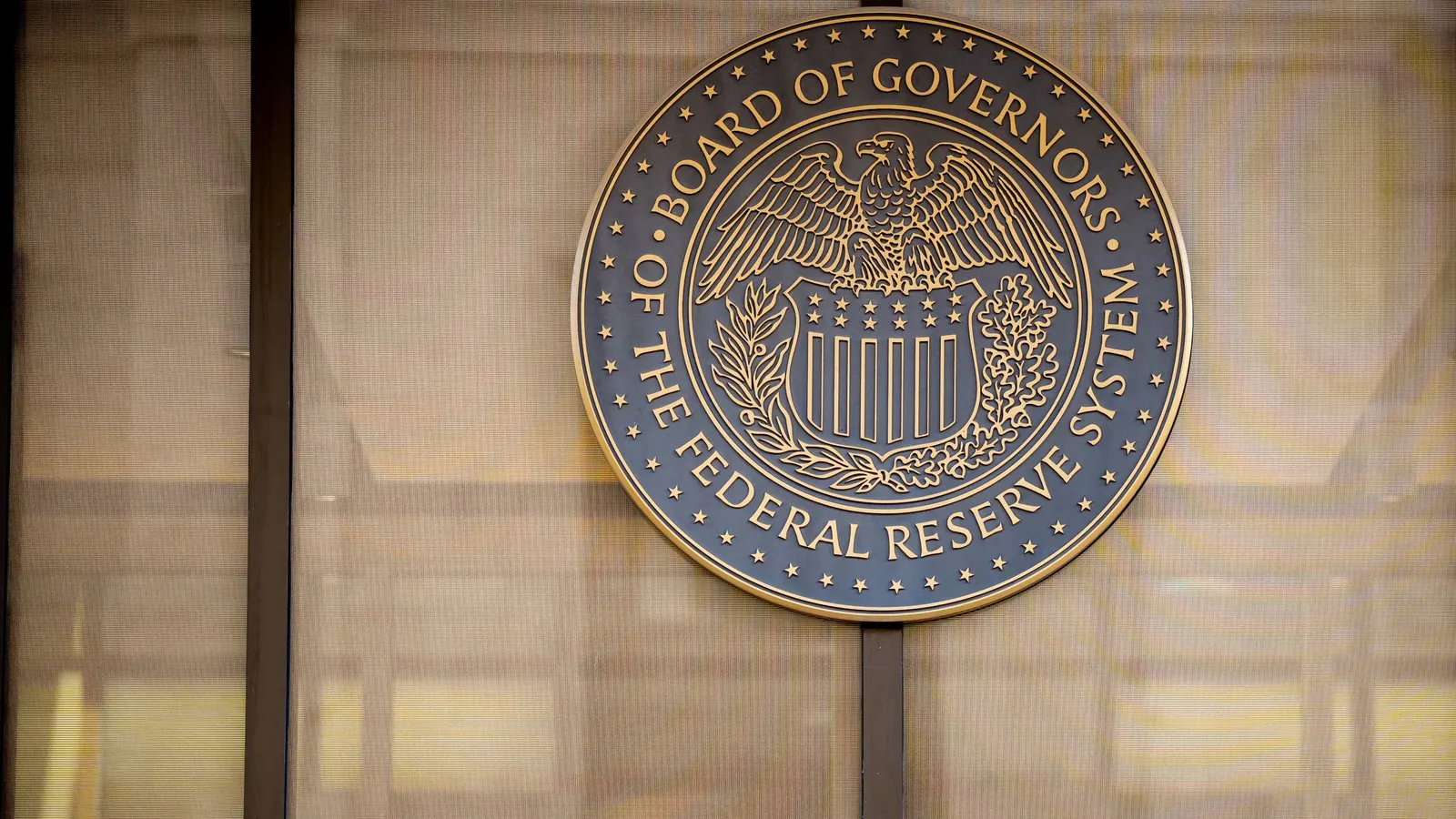
The bill proposes a seismic shift in how money moves: allowing non-bank fintech companies—such as Stripe, PayPal, or specialized payment processors—direct access to the Federal Reserve’s payment systems. Currently, these "rails" (Fedwire, FedNow, and FedACH) are the exclusive domain of chartered banks and credit unions. Proponents argue that the bill is essential for American competitiveness and small business liquidity, while critics warn of systemic risks, "super-app" monopolies, and a dangerous dilution of regulatory oversight.
As the hearing, titled "Future of Payments: Promoting Innovation and Fair Markets," unfolded, it became clear that the debate is about more than just software and spreadsheets; it is a fundamental disagreement over the definition of a "bank" in the 21st century and whether the U.S. government should prioritize rapid innovation or institutional stability.
Main Facts: The Mechanics of the PACE Act
The PACE Act, introduced by Representatives Young Kim (R-CA) and Sam Liccardo (D-CA), aims to modernize the U.S. payment ecosystem by creating a federal pathway for non-bank entities to interface directly with the central bank.
The OCC Registration Process
Under the proposed legislation, the Office of the Comptroller of the Currency (OCC) would establish a new registration category for "payment service providers." This would allow fintechs to bypass the traditional requirement of obtaining a full national bank charter—a process that is notoriously expensive, time-consuming, and carries heavy capital requirements.
Access to Federal "Rails"
Once registered with the OCC, these non-bank entities would be eligible to apply for access to three primary Federal Reserve services:
- Fedwire Funds Service: The real-time gross settlement system used for large-value, time-critical payments.
- FedNow Service: The Fed’s newest platform, designed to allow banks of all sizes to provide instant payment services 24/7.
- FedACH Services: The Automated Clearing House system, which handles batches of electronic fund transfers, such as direct deposits and bill payments.
The "40-State" Threshold
To prevent "fly-by-night" operations from gaining access to the nation’s core financial infrastructure, the bill includes a significant barrier to entry: a fintech must already hold money transmitter licenses in at least 40 states before it can apply for the federal registration. This ensures that only established, scaled players can participate in the program.
Chronology: The Road to the PACE Act
The legislative push for the PACE Act is the culmination of years of tension between the "Silicon Valley" model of finance and the "Wall Street" model.
- April 2024: Reps. Kim and Liccardo formally introduce the PACE Act. The bill receives immediate backing from influential trade groups, including the Financial Technology Association and the Blockchain Association.
- 2023: The "Skinny Account" Debate: The Federal Reserve floated the idea of a "skinny" Fed account—a limited-access account for non-banks. However, after intense lobbying from the banking sector, the Fed retreated, ultimately proposing that such accounts remain restricted to traditional depository institutions.
- The Post-Pandemic Shift: The COVID-19 pandemic accelerated the demand for real-time payments. While the U.S. launched FedNow in July 2023, it remained a bank-only service, leaving fintechs to rely on "partner banks" to access the system, often adding layers of fees and delays.
- International Context: Proponents of the bill frequently point to the G7. The United Kingdom, for instance, opened its payment systems to non-banks years ago, leading to a surge in "Challenger Bank" innovation. U.S. lawmakers now argue that the domestic "patchwork" system is leaving American small businesses at a disadvantage.
Supporting Data: The Economic Argument for Open Rails
Witnesses at the hearing, most notably Eileen O’Mara, Vice Chair of the digital payments giant Stripe, provided a data-driven defense of the bill.
Solving the "Patchwork Quilt" Problem
Currently, a non-bank fintech must navigate a labyrinth of 50 different state regulators. This "patchwork quilt" creates massive compliance overhead. O’Mara testified that for small businesses, this complexity translates to uncertainty. When a small business owner delivers a service, they often don’t know exactly when the funds will clear because the money must jump from the fintech to a partner bank, through the Fed, to another bank, and finally to the business’s account.
The Liquidity Gap
For small businesses, "time is money" is a literal truth. Traditional ACH transfers can take 2-3 business days to clear, and even longer over weekends or holidays. By allowing fintechs direct access to FedNow, the PACE Act would enable 24/7/365 instant settlement. Supporters argue this would unlock billions of dollars in "trapped" liquidity for the U.S. small business sector.
The Innovation Deficit
Rep. Young Kim highlighted a startling statistic: the United States is currently an outlier among G7 nations regarding faster payments regulation. Without a federal framework, American fintechs—many of which are headquartered in Kim’s home state of California—are forced to operate under 20th-century rules while competing in a 21st-century global market.
Official Responses: The Battle of Interests
The hearing exposed a deep divide between those who see fintech as the future and those who see it as a threat to financial stability.
The Banking Industry: "Safety and Soundness"
The Bank Policy Institute (BPI), represented by Paige Paridon, Co-Head of Regulatory Affairs, voiced the industry’s fierce opposition. The BPI’s argument is centered on "regulatory arbitrage."
"Banks embrace innovation and welcome competition when it is based on products and services, not the ability to evade regulation and supervision," Paridon stated. She argued that banks are subject to rigorous capital requirements, liquidity mandates, and "Know Your Customer" (KYC) laws that fintechs, under a "novel charter," might not have to follow. Opening the Fed’s master accounts to these entities, she warned, could pose "considerable risk" to the entire U.S. payment system.
Democratic Skepticism: The Rise of "Super Apps"
While the bill is bipartisan, several Democrats, including Rep. Bill Foster (D-IL), raised alarms about the unintended consequences of the "free market" in payments. Foster pointed to the Chinese model, where apps like WeChat and Alipay have become so dominant they effectively control the flow of economic data.
"These super apps find that they can squeeze the manufacturers at one end and the consumers at the other end," Foster warned. He suggested that without bank-level oversight, these platforms could use their data advantage to create monopolies that "ordinary banks" could never compete with.
Consumer Protection Concerns
Lawmakers also noted the current state of the Consumer Financial Protection Bureau (CFPB). Some committee members argued that until consumer protections are strengthened and standardized across the fintech sector, giving these companies access to the "crown jewels" of the federal financial system is premature and potentially dangerous for working families.
Implications: The Future of Money and "Agentic Commerce"
The debate over the PACE Act is not merely about clearing checks faster; it is about the infrastructure of the future economy.
The Era of Agentic Commerce
Rep. Foster introduced the concept of "agentic commerce"—a future where AI agents conduct transactions on behalf of humans at high speeds. In such a world, the friction of the current banking system would be a terminal bottleneck. However, the speed of agentic commerce also makes financial regulation exponentially more difficult. If a system can move billions of dollars in milliseconds, a software glitch or a cyberattack could trigger a systemic collapse before human regulators can even react.
Redefining the Federal Reserve’s Role
If the PACE Act passes, the Federal Reserve will transition from being a "banker’s bank" to a "service provider’s bank." This shifts the Fed’s responsibility from supervising a few thousand highly regulated banks to overseeing a diverse array of tech-driven entities with varying risk profiles. This could fundamentally change the Fed’s risk management strategies and its role as the "lender of last resort."
The Competitive Landscape
If fintechs gain direct access to the Fed, the primary "moat" that traditional banks have enjoyed—the exclusive ability to move money—will evaporate. Banks will be forced to compete solely on the quality of their products and interest rates, rather than their status as gatekeepers. This could lead to a massive wave of consolidation in the banking industry as smaller community banks struggle to compete with the technological agility of fintech giants.
Conclusion: A High-Stakes Balancing Act
The PACE Act represents a classic American dilemma: how to foster the "creative destruction" of innovation without destroying the stability of the institutions that underpin the economy. As the bill moves through the House, the central question remains: Is the U.S. payment system a public utility that should be open to all qualified innovators, or is it a protected infrastructure that requires the heavy hand of traditional bank regulation to remain safe?
For small businesses and consumers, the promise of the PACE Act is a world where "the check is in the mail" is a phrase of the past. For regulators and traditional bankers, however, it is a world where the risks are as instant as the payments.