








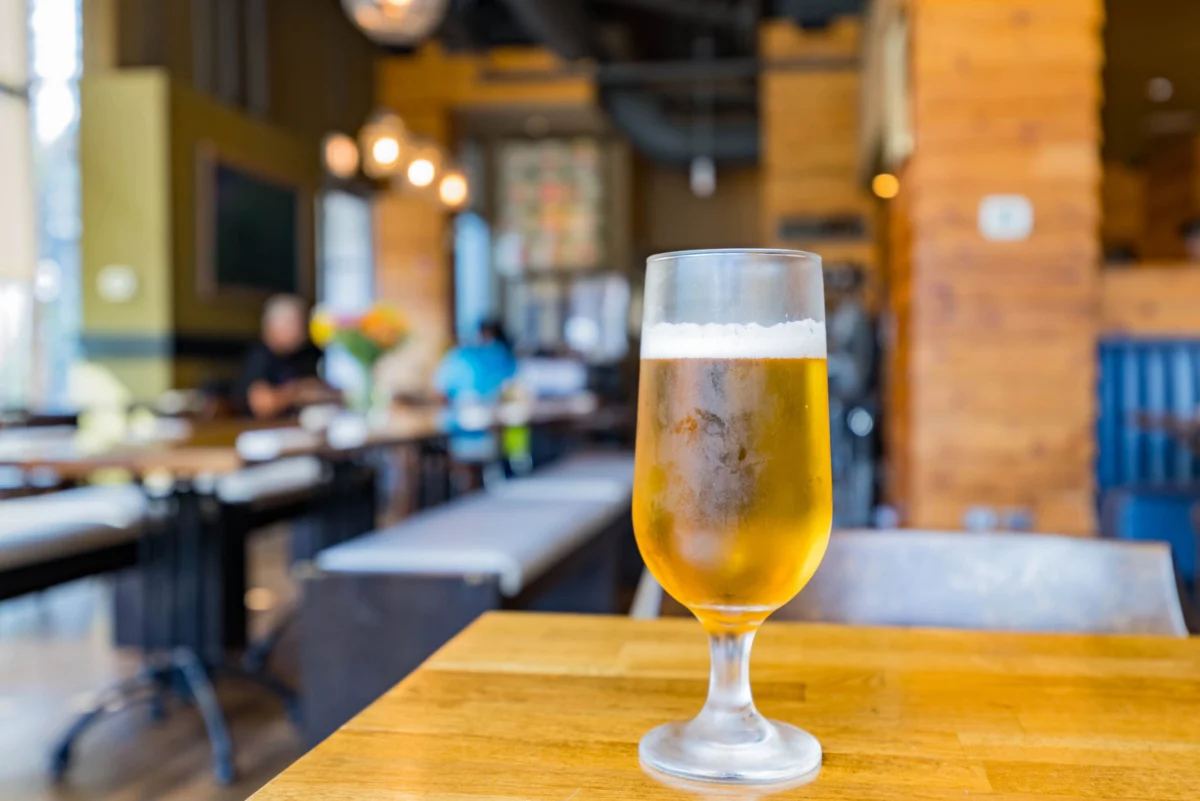
As the United States marked its 250th anniversary this past July, the air was thick with the familiar, nostalgic scents of charcoal smoke, blooming fireworks, and the crisp pop of a cold beverage. For millions of Americans, the Fourth of July remains a sacred tradition defined by leisure and celebration. Yet, for those reaching into a cooler in cities like Chicago, the cost of that celebratory beer contains a hidden, historical complexity that few drinkers consider: they are participating in a tax regime that is nearly as old as the nation itself.
While the rhetoric of Independence Day focuses on liberty and the pursuit of happiness, the reality at the checkout counter reveals a far more bureaucratic truth. The taxation of alcohol in the United States is not a modern invention of overreaching local governments; it is a sprawling, multi-layered system that has evolved from a single, controversial excise tax on whiskey into a complex web of federal, state, and municipal levies.
The Main Facts: The Anatomy of a Chicago Beer Tax
When a consumer in Chicago walks out of a store with a 12-pack of beer, they are unknowingly paying a premium that transcends the market price of hops, barley, and aluminum. The final receipt reflects a "layered" tax structure that can turn a simple purchase into a significant revenue stream for the public sector.
For a standard carry-away 12-pack, the tax burden typically exceeds $2.00. This figure is not derived from a single line item but is instead a compounding effect of three distinct tiers:
- Federal, State, and County Excise Taxes: These specific levies, totaling approximately $1.01 per 12-pack, are applied at the wholesale or distributor level.
- Municipal Taxes: Chicago imposes an additional 1.5 percent tax specifically on alcohol.
- General Sales Tax: Finally, the consumer pays a 10.25 percent general sales tax on the total, including the previously applied taxes.
This "tax-on-tax" phenomenon means that for many working-class families, the tax itself has become the single most expensive "ingredient" in their drink of choice, often costing more than the raw materials or the labor required to manufacture the product.
A Chronology of Consumption and Control
The history of alcohol taxation in America is a mirror reflecting the evolving relationship between the state and the citizen.
The Whiskey Rebellion and Early Federalism (1791)
The precedent for modern alcohol taxes was set in 1791, when Treasury Secretary Alexander Hamilton pushed for an excise tax on domestic distilled spirits to pay off revolutionary war debt. The result was the Whiskey Rebellion, a violent insurrection that forced the young federal government to prove its authority. While the tax was eventually repealed in 1802, it established a constitutional principle: the federal government held the power to tax goods deemed "luxuries" or "vices."
Prohibition and the Great Rebirth (1920–1933)
The 18th Amendment effectively ended legal alcohol sales, cutting off federal revenue streams and fueling the rise of the black market. When the 21st Amendment repealed Prohibition in 1933, the federal government saw an opportunity to replenish its coffers. The post-Prohibition era ushered in the "Three-Tier System"—a regulatory framework separating producers, distributors, and retailers—which remains the backbone of the industry today. This system allowed for easier monitoring and, crucially, easier taxation.
The Modern Regulatory Era (1970–Present)
Over the last half-century, the focus of alcohol taxation has shifted from revenue generation to "social engineering." States and cities began to justify higher excise taxes through the lens of public health, arguing that taxes serve as a deterrent against excessive consumption. This shift has led to the current environment, where alcohol taxes are frequently adjusted to fill budget gaps in local government, often with little public debate regarding the economic burden on the average consumer.
Supporting Data: The Economic Burden
The economic reality of alcohol taxation is often obscured by the fact that these taxes are "hidden"—embedded in the price rather than itemized at the register. However, the data provided by the Tax Foundation paints a clear picture of an increasingly regressive burden.
- The Multiplier Effect: Because sales tax is applied to the final price—which already includes the excise taxes—the government effectively taxes the tax. This "pyramiding" of taxes is a violation of sound tax policy, which generally aims to tax final consumption once and at a uniform rate.
- The Elasticity of Demand: While proponents argue that higher taxes reduce consumption, economic data suggests that demand for alcohol is relatively inelastic. Consumers are less likely to change their behavior than they are to change their spending habits elsewhere, meaning the tax burden disproportionately affects lower-income households who spend a higher percentage of their earnings on basic consumer goods.
- Regional Disparity: Illinois, and Chicago in particular, represents a high-water mark for these taxes. When compared to neighboring states, the cumulative effect of city-specific and county-specific taxes creates a competitive disadvantage for local retailers, who lose business to neighboring jurisdictions with lower tax burdens.
Official Responses and Perspectives
The debate over alcohol taxation involves a clash between two primary schools of thought: the public health advocate and the fiscal realist.
The Public Health Perspective
Advocates for higher alcohol taxes, often supported by municipal health departments, argue that alcohol is not a standard consumer good. They point to the "social costs" of alcohol consumption—including healthcare burdens, traffic accidents, and lost productivity—as justification for high taxation. From this viewpoint, a $2.00 tax on a 12-pack is a modest contribution toward covering the public costs associated with drinking.
The Fiscal Realist Perspective
Conversely, economists like Adam Hoffer and Jacob Macumber-Rosin of the Tax Foundation argue that current excise tax policies are arbitrary and punitive. They contend that if the government aims to address social externalities, it should do so through targeted policies, not by layering broad-based taxes on an entire industry. Furthermore, they emphasize that tax policy should be transparent. "When taxes become the most expensive ingredient in a product," says Dr. Hoffer, "we are no longer taxing a vice; we are taxing the middle class’s ability to participate in their own social traditions."
Implications for the Future
The current trajectory of alcohol taxation in major urban centers like Chicago suggests a precarious future for both retailers and consumers. As municipal budgets continue to face pressure from rising pension costs and infrastructure requirements, alcohol remains a "low-hanging fruit" for tax hikes. Because alcohol is a non-essential good, politicians find it politically easier to increase taxes on beer and spirits than to raise broad-based income or property taxes.
The Risk of Economic Distortions
If the trend of layering taxes continues, the economic implications could be severe. Small, independent breweries and neighborhood retailers are the first to suffer. As the price of legal alcohol rises, it creates a perverse incentive for consumers to seek cheaper, potentially unregulated alternatives or to cross jurisdictional lines, causing tax revenue to shift away from the city.
The Call for Reform
Industry analysts suggest that for the system to be equitable, a shift toward "tax neutrality" is required. This would involve:
- Eliminating Tax Pyramiding: Ensuring that general sales taxes are applied only to the base price of the product, not the excise tax components.
- Consolidating Levies: Reducing the number of administrative layers at the city, county, and state levels to simplify compliance for businesses.
- Transparency: Mandating that the portion of the purchase price that constitutes government tax be clearly itemized on consumer receipts, ensuring the public is aware of the "hidden ingredient" they are purchasing.
Conclusion
As the United States moves toward its next quarter-century, the debate over alcohol taxation serves as a microcosm of the broader American experience. It is a tension between the need for government revenue, the desire for public order, and the fundamental American instinct for personal liberty.
The next time you enjoy a cold beverage on a summer evening, remember that the price you pay is not merely a reflection of the market, but a reflection of 235 years of evolving fiscal policy. Whether those taxes are a necessary social tool or an outdated, burdensome legacy is a question that remains at the heart of the American tax debate—a debate that is as far from settled as the day the Whiskey Rebellion first broke out in the hills of Pennsylvania. As we move forward, the challenge for policymakers will be to ensure that in their quest for revenue, they do not inadvertently tax away the very traditions that make the American experience worth celebrating.