







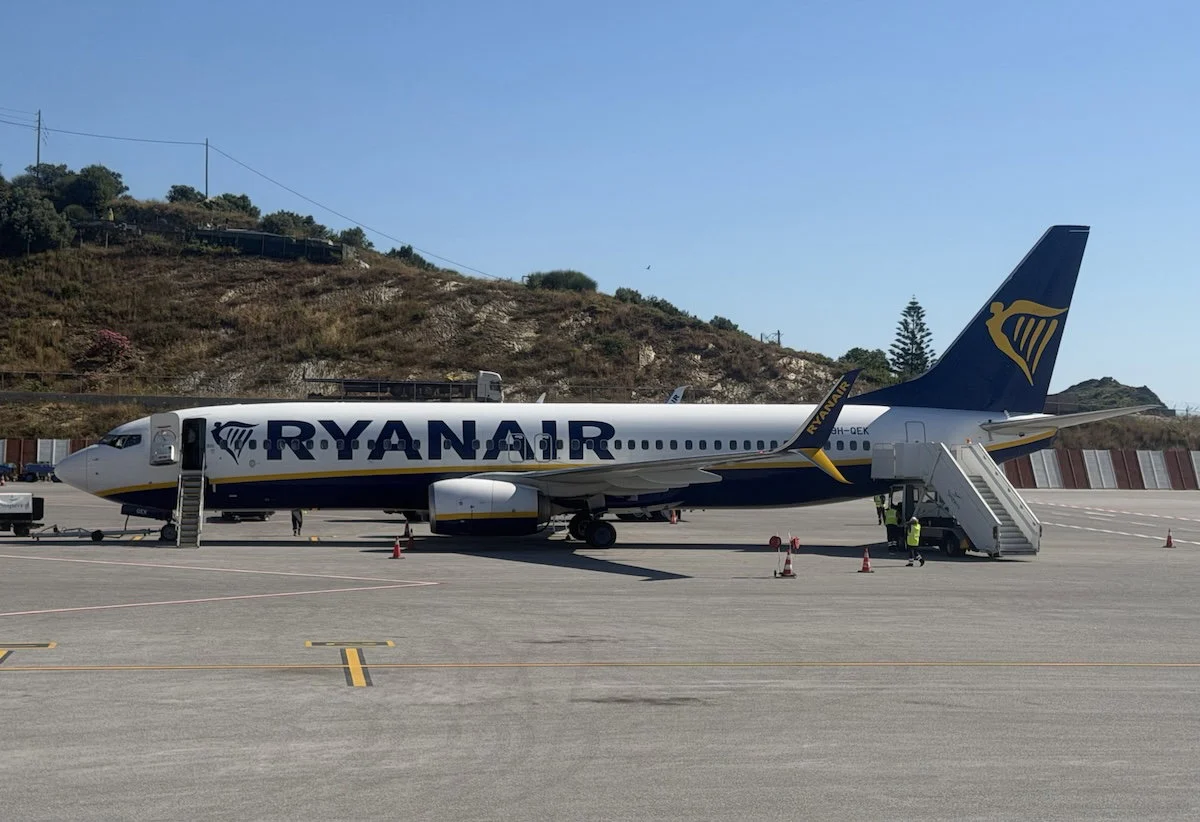
The low-cost aviation sector has long been defined by a complex web of unbundled services, where the base fare is merely the beginning of the transaction. For years, Europe’s largest budget carrier, Ryanair, has sat at the center of this ecosystem, championing a business model that prioritizes extreme efficiency and ancillary revenue. However, a recent confrontation with the United Kingdom’s Competition and Markets Authority (CMA) has forced a significant pivot in the airline’s operational strategy.
Effective June 25, 2026, Ryanair has officially abandoned its long-standing family seating policy in favor of an "industry-standard" approach. This shift follows weeks of intense regulatory scrutiny and a public war of words between the airline’s management and government officials. The move signals not just a change in where families sit, but a broader recalibration of how budget airlines must navigate the increasingly stringent landscape of consumer protection laws.
The Core Conflict: What Triggered the Investigation?
At the heart of the dispute was the interpretation of "fairness" in the digital age of air travel. Under its previous policy, Ryanair required that at least one adult traveling with children aged two to 11 purchase a reserved seat. Once that adult paid for their seat, the airline would automatically provide adjacent seat assignments for up to four children at no additional cost.
Ryanair marketed this as a consumer-friendly, transparent system that guaranteed families would be together from the moment of booking. However, the UK’s CMA took a different view. Regulators argued that this policy constituted an "unfair contract term." The contention was that by requiring the accompanying adult to pay for a reserved seat, the airline was effectively creating a mandatory charge for families that was not imposed on individual travelers, who retained the option of being randomly allocated a seat for free.
The CMA’s investigation was predicated on the belief that this structure unfairly penalized families, essentially forcing them to pay for a service (seat selection) that they would otherwise decline if given the option to take their chances with random allocation.
A Chronology of the Policy Shift
- Mid-2026: The UK’s Competition and Markets Authority (CMA) launches a formal inquiry into Ryanair’s seating allocation practices, citing potential breaches of consumer protection legislation.
- Early June 2026: Negotiating behind closed doors, Ryanair maintains that its policy is compliant, while the CMA pressures the airline to align with the practices of other major European carriers.
- June 25, 2026: Ryanair formally implements its updated seating policy. The airline confirms that families who do not wish to pay for seat reservations will now be subject to random seat allocation at check-in.
- Post-Implementation: Ryanair publicly declares the change "revenue neutral" while simultaneously attacking the regulatory body for its intervention.
The New Reality for Traveling Families
The policy update marks a return to the "random allocation" model common among legacy and low-cost carriers across the continent. Under the new rules, families traveling with children who opt out of paying for seat selection will no longer be guaranteed adjacent seats at the time of booking.
Instead, these passengers will be assigned seats—potentially separate from one another—upon check-in. Ryanair has been blunt about the likely outcome of this process: families choosing the free option will, in most cases, be seated toward the rear of the cabin.
Furthermore, the airline has removed the discounted structure for those who do wish to secure specific seats in advance. Families now face the full retail price for every passenger on the booking if they wish to guarantee that they are sitting together. This shift essentially removes the previous "perk" of the children-included-for-free seat reservation, effectively raising the total cost of travel for families who prioritize sitting together.
Official Responses: A Clash of Ideologies
The response from Ryanair’s leadership was as characteristically combative as the airline’s marketing campaigns. CEO Michael O’Leary, rarely one to shy away from public conflict, utilized the announcement to deliver a scathing critique of the CMA.
"European regulators such as the UK CMA have consistently failed consumers by ignoring blatant anti-consumer reselling of inflated air fares by unauthorised OTAs (Online Travel Agencies), overcharging by airport monopolies, and service failures by Europe’s ATCs (Air Traffic Control)," O’Leary stated in a press release.
He characterized the move not as a victory for consumers, but as a regression to a less transparent system. "The CMA is on a mission to force Ryanair to adopt the less transparent and less consumer-friendly family seating policy applied by most other airlines—just because it’s the industry standard."
O’Leary’s sentiment suggests that the airline feels "reluctant" to comply, viewing the change as a response to regulators who, in his view, "misunderstand what is in the best interest of consumers." He argued that the previous system provided "certainty of seat allocation at the time of booking," which he claims families valued more than the new, standard process.
Implications for the Aviation Industry
The implications of this policy shift extend far beyond the Ryanair cabin.
1. The Death of the "Innovation" Argument
For years, budget airlines have defended their auxiliary charges as "innovations" that allow for lower base fares. By forcing Ryanair to adopt industry-standard seating policies, the CMA has signaled that there are limits to how much a business model can deviate from established consumer norms. This may set a precedent for future investigations into other "unbundled" services, such as baggage fees or priority boarding.
2. The Cost of "Standardization"
While the CMA frames this as a consumer protection win, the economic reality is more nuanced. By eliminating the discounted family seating options, the change may paradoxically make flying more expensive for families who prioritize safety and proximity. Critics of the ruling argue that in an attempt to make the market "fairer," regulators have inadvertently removed a low-cost option for families who were willing to pay a premium for the guaranteed peace of mind that comes with pre-assigned seating.
3. The Future of Regulatory Oversight
The conflict highlights a growing friction between lean, aggressive business models and the regulatory bodies tasked with protecting the public. As airlines increasingly rely on complex revenue management algorithms to maximize profit, the definition of "fairness" will continue to be a battleground. The CMA’s intervention suggests that regulators are becoming less tolerant of airline policies that they perceive as "forced" ancillary revenue streams.
Analysis: Did the Regulator Go Too Far?
The fundamental question remains: Who actually benefits from this change?
The previous Ryanair policy was undeniably a clever way to capture revenue while maintaining a public-facing narrative of "family-friendly" service. By tying the free child seat to the purchase of an adult seat, the airline ensured a steady stream of ancillary income. However, it also provided a tangible, predictable outcome for parents.
With the new policy, the unpredictability of check-in allocation may lead to more operational headaches at the boarding gate. Cabin crew may find themselves managing stressed parents separated from their children, leading to potential delays during boarding—a metric that Ryanair, an airline obsessed with punctuality, generally avoids at all costs.
Moreover, by forcing the airline to align with the "industry standard," the CMA has effectively codified a system where families are more likely to be split up unless they pay the full price for reservations. For a low-cost carrier, this is a "revenue neutral" win, but for the average consumer, it feels like a loss of choice.
Conclusion: A New Chapter for Ryanair
Ryanair’s decision to update its policy is a testament to the power of regulatory pressure, but it is also a reminder that in the airline industry, "consumer-friendly" is a term often used to justify deeper profit-seeking measures.
As of late June 2026, the playing field has leveled, but the cost of that leveling is being passed directly to the passenger. Families now face a binary choice: pay the full price for peace of mind, or accept the uncertainty of the back-of-the-plane lottery. While the CMA may have succeeded in forcing the airline to comply with its vision of standard practice, the passengers who fly with Ryanair will be the ultimate judge of whether this "regulatory success" has actually improved their travel experience.
In the high-stakes, low-margin world of aviation, the only certainty is that the battle between airline efficiency and regulatory intervention is far from over. For now, passengers should prepare for a future where the "free" in travel is increasingly restricted, and the seat you get is truly a matter of chance.