









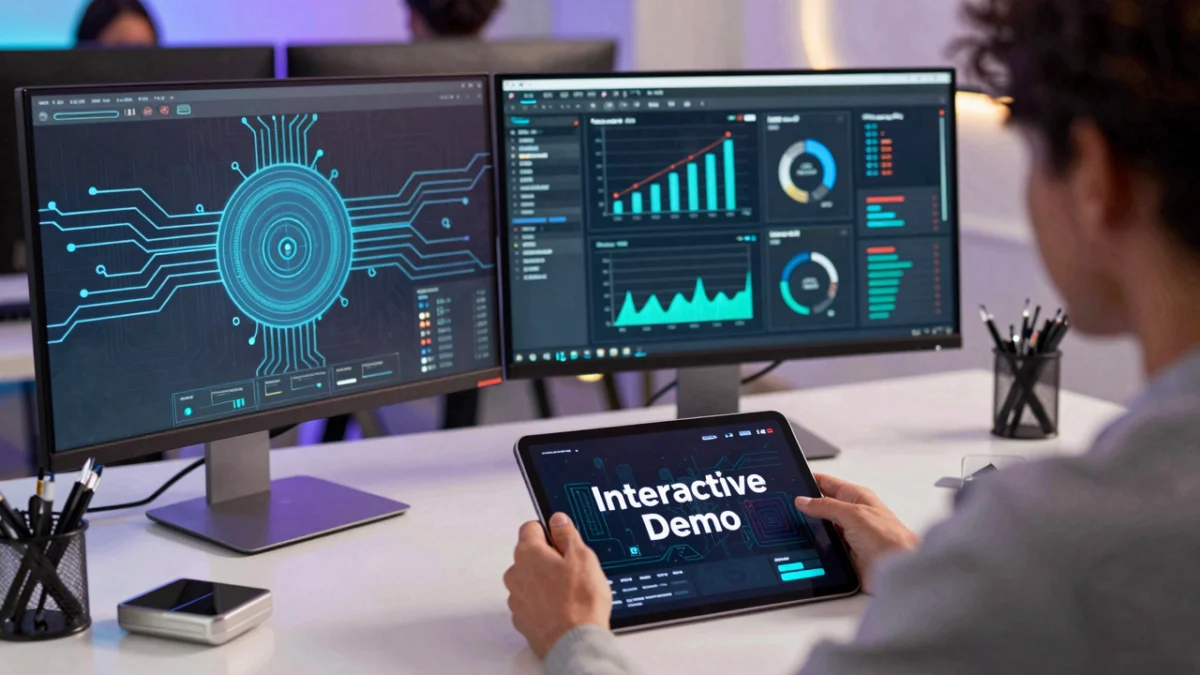
In the fast-evolving landscape of modern software-as-a-service (SaaS) and digital enterprise tools, traditional marketing playbooks are undergoing a radical metamorphosis. Gone are the days when a prospective buyer was content watching a static 30-minute pre-recorded webinar or sitting through a gated, multi-week sales cycle just to catch a glimpse of a software’s core user interface. Today, the modern tech buyer demands immediacy, autonomy, and proof.
Enter interactive product demos—no-login, browser-based simulations that allow potential customers to click, explore, and evaluate software in real-time. According to recent market data, integrating interactive demos into a sales and marketing strategy can supercharge trial-to-paid conversion rates by 20% to 40%, while driving up overall user engagement by a staggering 32%.

As organizations increasingly look to streamline customer acquisition and reduce friction in the buying journey, platforms like Walnut, Storylane, Navattic, Supademo, and Demostack have emerged as the foundational pillars of a new digital sales era.
Main Facts: The Anatomy of Modern Interactive Demos
At its core, an interactive demo is a replica or a guided, clickable walkthrough of a software product embedded directly onto a website, landing page, or sent via email. Unlike traditional videos, these tools permit users to navigate through actual product screens, workflows, and dashboards without ever needing to provision an account, set up a database, or remember a password.

Key industry metrics underscore their growing dominance:
- Conversion Lifts: Companies utilizing robust interactive demos report up to a 67% demo completion rate and a 32% to 40% increase in qualified sales leads.
- Friction Reduction: By allowing prospects to self-qualify early in the evaluation cycle, these tools drastically shorten sales cycles.
- Data-Driven Insights: Modern platforms come equipped with deep user analytics, enabling sales and marketing teams to track precise user behavior, drop-off points, and feature interest down to the individual click.
Prominent software players have already proven the model. Industry giants like Zapier notably witnessed a 14% surge in sign-ups for specialized products like Zapier Tables simply by embedding targeted, hands-on interactive previews directly into their adoption funnels.

Chronology: The Evolution from Gated Whitepapers to Instant Previews
To understand the sudden omnipresence of interactive demos, one must look at how digital buying habits have evolved over the past decade.
- The Era of Static Content (Early 2010s): Software evaluation relied heavily on downloadable whitepapers, PDFs, and high-level marketing copy. To see the product in action, a buyer had to book a live call with a sales representative.
- The Rise of Video Walkthroughs (Mid-to-Late 2010s): Pre-recorded video walkthroughs and webinars gained traction. While more visual than text, these mediums remained entirely passive. A viewer could not click around to test specific features relevant to their unique business use case.
- The Sandbox Experimentation Phase (2020–2022): Early SaaS pioneers began offering live sandbox environments. However, maintaining these environments often placed a heavy burden on engineering teams, as sandbox databases frequently broke or suffered from security vulnerabilities.
- The Rise of Dedicated No-Code Demo Platforms (2023–Present): A new wave of specialized platforms—such as Walnut, Storylane, and Navattic—pioneered lightweight HTML capture and AI-driven personalization. These tools allowed marketing and sales teams to spin up flawless, highly secure product replicas in minutes, completely bypassing engineering bottlenecks.
Supporting Data: Evaluating the Leading Interactive Demo Ecosystems
With dozens of solutions flooding the market, choosing the right platform depends heavily on a company’s technical maturity, sales team size, and primary goals. Below is an evaluation of the industry’s leading solutions.

1. Walnut: The AI-Powered Personalization Leader
Targeted primarily at enterprise sales teams, Walnut has cemented its status as a market leader by leveraging artificial intelligence to hyper-personalize the buyer journey.
- Standout Metrics: Boasts a stellar G2 rating of 4.8/5, with documented capabilities of boosting demo completion rates by 67% and increasing overall conversions by 32%.
- Best For: Complex enterprise software showcases that require tailored data and targeted messaging for various stakeholder personas within a single buying committee.
2. Storylane: Ideal for New Sales Teams and Rapid Creation
For agile sales teams eager to make an immediate impact without a steep learning curve, Storylane offers an intuitive drag-and-drop editor.

- Efficiency: Cuts demo creation time down from days to mere hours.
- Pricing & Accessibility: Features a competitive entry price point starting around $40 per month, making it exceptionally accessible for small-to-medium-sized businesses (SMBs).
- Standout Feature: Customizable "demo hubs" that centralize multiple product presentations into a single, shareable link for prospects.
3. Navattic: The Gold Standard for Technical Product Demos
When software relies on complex backend mechanics, data visualization, or intricate multi-step workflows, Navattic provides the necessary firepower.
- Technology: Utilizes advanced HTML capture technology to replicate sophisticated features with remarkable fidelity.
- Consideration: While it features a slightly steeper learning curve compared to lightweight screenshot tools, the depth of technical capability it affords makes it invaluable for developer-facing tools and complex B2B platforms.
4. Supademo: Speed and AI-Driven Simplicity
For marketing teams working against tight deadlines, Supademo delivers rapid deployment.

- Speed: Allows creators to build interactive demos in under 15 minutes.
- AI Integration: Automatically generates text prompts and audio voiceovers, minimizing manual copywriting and editing overhead.
- Format: Relies heavily on high-resolution screenshot stitching to ensure hyper-realistic product visuals paired with built-in basic analytics.
5. Demostack: Immersive Sandbox Simulations
Demostack bridges the gap between lightweight click-through demos and fully functional product environments.
- Functionality: Provides fully cloned, data-customized sandbox environments that simulate real client experiences without risking actual backend architecture.
- Trade-off: Requires a higher initial investment of time and resources to set up, but yields unmatched depth during late-stage enterprise sales calls.
Official Responses and Industry Perspectives
Software analysts and sales leaders alike have increasingly championed interactive demos as an essential survival tool in a crowded SaaS marketplace.

Industry veterans note that the modern B2B buyer is inherently self-directed. Research consistently shows that up to 70% of the buyer’s journey is completed independently before a prospect ever fills out a "Contact Sales" form. By offering an interactive demo directly on the homepage, companies meet buyers precisely where they are in their research phase.
Furthermore, customer success executives point out a secondary, often overlooked benefit: reduced support and onboarding friction. When a prospect thoroughly explores an interactive demo that proactively answers common workflow questions, they enter the paid trial phase with a realistic understanding of the software’s capabilities. This alignment leads to a noticeable drop in initial support tickets and a healthier long-term net retention rate (NRR).

Implications: Best Practices for Strategic Implementation
Implementing an interactive demo tool is not merely a technical deployment; it is a strategic shift in how a business communicates value. To maximize ROI, organizations should adhere to proven industry best practices:
- Map the User Journey First: Before capturing any screens, outline the exact pain points your target audience faces. Focus the demo on highlighting the "Aha!" moment—the specific feature that delivers immediate value.
- Prioritize Mobile Optimization: With a significant portion of executive buyers reviewing software links on mobile devices or tablets, ensure that demos scale seamlessly across all screen sizes.
- Leverage Analytics Rigorously: Treat your demo data as a goldmine. Monitor completion rates, track which specific screens experience the highest drop-offs, and continuously A/B test your layout and messaging based on quantitative user behavior.
- Integrate with CRM Systems: Connect your demo platform directly into your CRM and marketing automation stacks (such as Salesforce or HubSpot). This guarantees that sales reps receive real-time alerts when a high-value account engages deeply with a shared demo link.
Conclusion
The transition toward frictionless, self-service software evaluation is no longer a futuristic trend—it is the current baseline expectation for tech consumers. By integrating platforms like Walnut, Storylane, Navattic, Supademo, or Demostack into your digital strategy, you empower potential customers to experience the genuine value of your product on their own terms.

By prioritizing transparency, interactive engagement, and smart personalization, businesses can expect not only a dramatic lift in conversion rates and qualified leads, but a fundamentally smoother, more satisfying journey for every user who enters their digital ecosystem.