









By Real Estate Analysis Desk
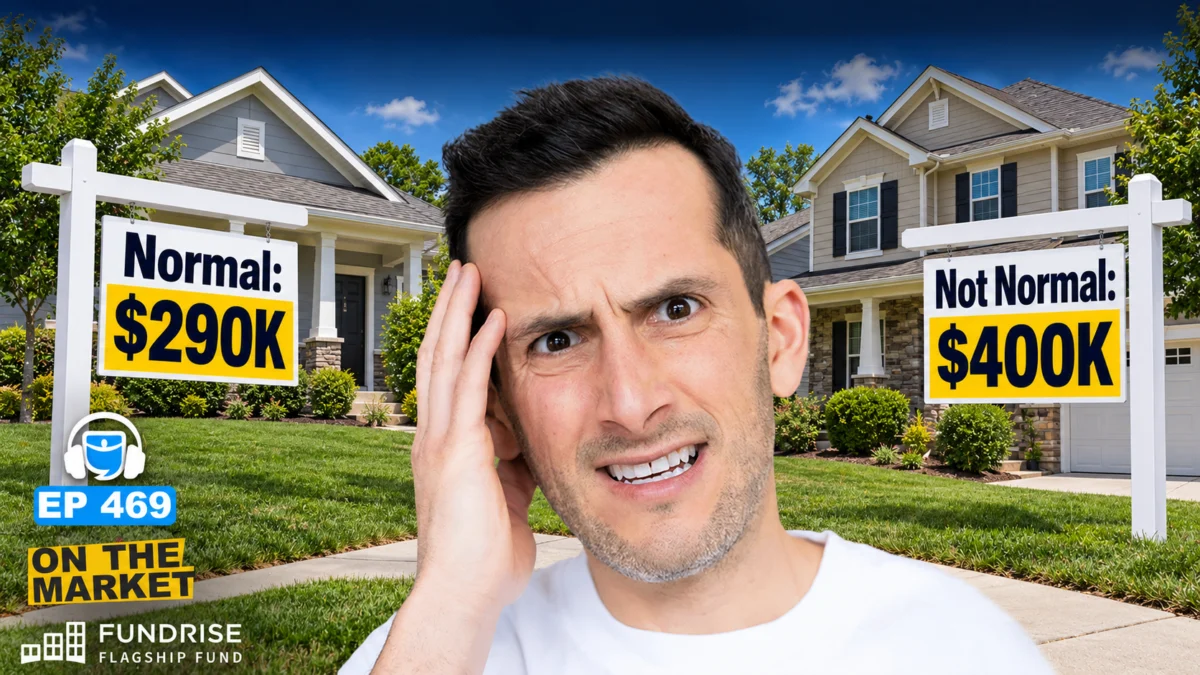
The American housing market has entered a prolonged holding pattern, and according to rigorous economic modeling, the wait for a return to historical normalcy could be significantly longer than many buyers, sellers, and industry professionals anticipate.
With mortgage rates hovering stubbornly near 7.5%, median home prices anchored around $400,000 to $446,000, and wage growth failing to keep pace, the underlying mechanics of real estate affordability are severely strained. To understand when—and how—the market might recover, analysts are looking past social media speculation and letting the math dictate the reality of the next decade.
Main Facts: The Affordability Equation
At the core of the current sluggish real estate climate is a single metric: housing affordability. According to Dave Meyer, housing analyst and Chief Investment Officer at BiggerPockets, the health of the housing market is dictated by a three-legged stool comprising home prices, mortgage rates, and real wage growth.
To measure this accurately, analysts utilize the National Association of Realtors’ (NAR) payment-to-income ratio, which evaluates the percentage of a buyer’s gross income dedicated to a monthly mortgage payment.
- The Historical Baseline: From 1989 through recent decades, the long-term average payment-to-income ratio sat at 18.5%.
- The 2019 Benchmark: Prior to pandemic-era inflation, the ratio sat at an exceptionally favorable 15.5%.
- The Current Reality: Today, that figure has skyrocketed to roughly 24.5% to 27%, depending on weekly interest rate fluctuations.
Since 2019, national home prices have surged by 63%, while family incomes have grown by only 37%. Combined with higher borrowing costs, monthly mortgage payments nationwide have more than doubled—surging by 116% over the same period. This massive divergence explains why prospective buyers feel locked out of the market and why transaction volumes have plummeted.
Chronology: How the Market Lost Its Footing
To grasp the current crisis, it is vital to trace how the economic landscape shifted over the last decade:
- Pre-2019 (The Last Normal Era): The housing market experienced steady, sustainable growth. Interest rates were manageable, and buyers allocated roughly 15.5% of their income to housing.
- 2020–2022 (The Pandemic Spike): Federal stimulus and low interest rates (dipping near historic lows of 3%) triggered an unprecedented housing boom, driving home prices up rapidly.
- Late 2022–2023 (The Rate Shock): As inflation spiked to generational highs, the Federal Reserve aggressively hiked interest rates. Mortgage rates doubled in a matter of months, abruptly halting affordability improvements.
- 2024–2026 (The Great Stall): Affordability deteriorated to nearly 27% of gross income. Despite minor month-to-month fluctuations, sticky inflation kept mortgage rates anchored above 7%, creating a permanent standoff between buyers and sellers.
Supporting Data: Testing the Three Levers of Affordability
Can the market engineer its way out of this stall through a single economic adjustment? Analysts tested three hypothetical scenarios by holding two levers constant while manipulating the third. The results highlight the unlikelihood of a quick fix.
1. The Wage Growth Fallacy
If mortgage rates and home prices remain completely flat, how much must real (inflation-adjusted) wages rise to restore historical affordability?
- To reach the long-term average (18.5%), wages must grow by 33%.
- To return to 2019 affordability (15.5%), wages must skyrocket by 57%.
The Reality: Historical data shows that since 1968, real median wage growth has averaged a meager 0.8% per year. At that historical pace, it would take 40 years of wage growth to reach the long-term average, and 59 years to return to 2019 levels. With real wage growth currently flat or negative—and the rise of automated technologies threatening white-collar salaries—wages will not rescue the housing market anytime soon.
2. The Mortgage Rate Delusion
Many consumers believe that the Federal Reserve cutting interest rates will quickly restore affordability.
- To return to 2019 affordability levels, average mortgage rates would need to fall to 2.7%—a statistical anomaly seen briefly during the pandemic, but one experts argue will likely never return in our lifetimes.
- To hit the long-term historical average, mortgage rates would need to drop to 4.0%.
The Reality: Mortgage rates are tethered to the 10-year U.S. Treasury yield, which is heavily influenced by inflation. Unless core inflation drops well below the Fed’s 2% target (potentially down to 1%), 4% mortgage rates are off the table. While rates may drift down into the 5% to 6% range over the next several years, a return to ultra-low borrowing costs is mathematically improbable.
3. The Price Crash Myth
Could a massive drop in home prices reset the market?
- To return to the 1989 affordability average, the median home price would need to drop from roughly $446,000 to $335,000—a national price crash of 25%.
- To hit 2019 levels, prices would need to collapse down to $284,000—a staggering 36% crash.
The Reality: During the Great Financial Crisis of 2007–2008—a crisis triggered specifically by bad real estate debt and forced liquidations—national home prices fell by roughly 20% to 22%. Today, those systemic risks do not exist. Furthermore, the "lock-in effect" has created a resilient floor under inventory: roughly 80% of current mortgage holders have rates below 6%, and 50% have rates below 4%. Homeowners simply refuse to sell and trade a 3% mortgage for a 7.5% mortgage unless forced by life events. Without a massive wave of distressed inventory or a severe economic depression, a national price crash of 30% is highly unlikely.
Official Responses and Expert Consensus
Industry leaders, economists, and real estate analysts are increasingly unified around a sobering conclusion: no single lever will fix the market.
Because wages, rates, and prices cannot single-handedly reset affordability overnight, any recovery must rely on a slow, multi-year combination of these factors. Standard baseline projections suggest that if mortgage rates ease moderately to 6%, home prices remain flat, and modest wage growth continues, it will still take at least seven years for the housing market to rebalance.
More conservative modeling—factoring in slightly higher rates and muted wage growth—suggests a full recovery could take over a decade unless a severe economic recession forces inflation down rapidly and pulls borrowing costs lower.
Implications for Buyers, Sellers, and Investors
For everyday Americans, these mathematical realities carry profound implications:
- For Homebuyers: Waiting on the sidelines for a sudden market crash or a return to 3% interest rates is a losing strategy. Buyers must adjust expectations, recognizing that housing will likely command a higher percentage of household income over the long term than it did in the 2010s.
- For Real Estate Agents and Loan Officers: Transaction volumes will remain suppressed until affordability meaningfully improves. Professionals relying purely on market appreciation will face a challenging multi-year environment.
- For Real Estate Investors: The era of passive appreciation is on pause. Successful investing in the current climate requires adhering to strict fundamentals: buying significantly below current market comps (e.g., securing 15% to 20% discounts) or executing value-add strategies to manufacture equity. Investors who buy defensively today will be well-positioned to reap outsized returns when the broader market eventually recovers.
Ultimately, the housing market is not heading back to "normal" via a quick economic rebound. Navigating the years ahead requires clear-eyed realism, disciplined underwriting, and a complete recalibration of what the American housing market looks like in a higher-rate economy.