







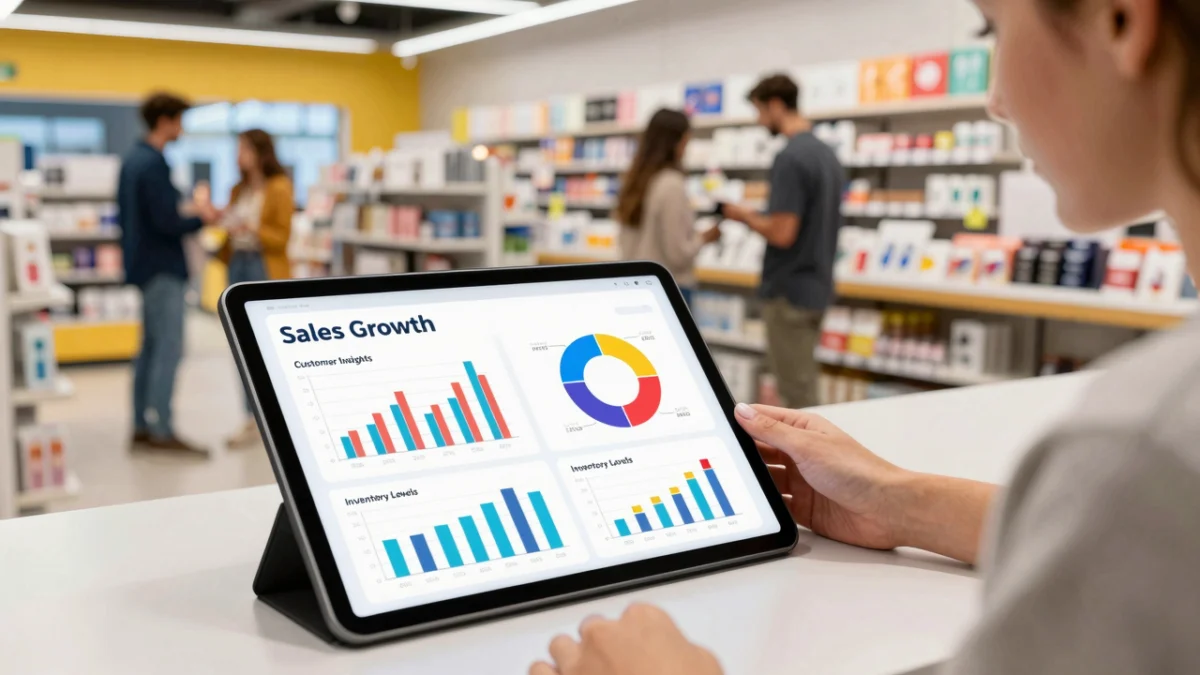
In the modern retail landscape, data is no longer just a byproduct of business transactions; it is the primary currency of growth. As we move through 2026, the divide between retailers who merely "keep the lights on" and those who dominate their market sectors is defined by the sophistication of their analytics infrastructure. From small boutiques to enterprise-level supply chains, the adoption of specialized retail analytics tools has shifted from an optional advantage to an operational necessity.
By transforming raw data from Point-of-Sale (POS) systems, e-commerce platforms, and fragmented supply chain logs into actionable intelligence, retailers are finally gaining the ability to predict the future rather than just reacting to the past.

Main Facts: The Power of Data-Driven Retail
The primary objective of implementing retail analytics is to convert massive, unstructured data sets into a coherent narrative of business health. Today’s software platforms act as a central nervous system for retail, providing visibility into:
- Demand Forecasting: Utilizing historical trends and seasonal shifts to anticipate inventory needs, thereby minimizing the twin losses of overstocking and stockouts.
- Customer Behavioral Analysis: Moving beyond basic demographics to understand the "why" behind purchasing decisions, allowing for hyper-personalized marketing.
- Operational Anomaly Detection: Using AI-driven monitoring to catch supply chain bottlenecks or sudden, unexplained dips in conversion rates before they impact the bottom line.
- Cross-Channel Synthesis: Providing a "single source of truth" that bridges the gap between brick-and-mortar sales and digital storefront performance.
The Chronology of Retail Intelligence
The evolution of retail analytics has been rapid and transformative. Understanding this progression is key to appreciating why the tools of 2026 are so powerful.

- The Era of Manual Spreadsheets (Pre-2015): Retailers relied on static, historical reporting. Insights were often weeks old by the time they were analyzed, rendering them useful only for post-mortem strategy.
- The Rise of Business Intelligence (2015–2020): Tools like Tableau and early versions of Power BI allowed for better visualization. However, they still required significant technical expertise (SQL) and manual data preparation.
- The Democratization Phase (2020–2024): The introduction of natural language processing (NLP) allowed non-technical managers to "ask" questions of their data. This period saw the integration of cloud-based data warehouses like Snowflake.
- The AI-First Paradigm (2025–Present): We are currently in the era of autonomous insights. Tools like Zenlytic and Databricks Genie don’t just wait to be queried; they proactively alert users to anomalies, forecast future demand with machine learning, and provide automated recommendations for inventory reordering.
Supporting Data: Why Platforms Matter
The efficacy of these tools is evidenced by the shift in operational efficiency across the sector. Businesses utilizing integrated retail analytics report a 15–20% increase in inventory turnover rates and a significant reduction in marketing acquisition costs due to better audience targeting.
Leading Tools at a Glance
| Tool | Core Strength | Ideal For |
|---|---|---|
| Zenlytic | AI-driven "Clarity Engine" | Mid-market retailers needing predictive forecasting |
| ThoughtSpot | Search-based AI interface | Teams requiring fast, visual answers to complex queries |
| Power BI | Microsoft ecosystem integration | Enterprises looking for cost-effective, scalable BI |
| Tableau | Deep, aesthetic data visualization | Advanced analysts requiring granular control |
| Databricks Genie | Large-scale data processing | Large firms with complex, multi-source data lakes |
Official Perspectives: Navigating the Analytics Landscape
Industry experts emphasize that the selection of a tool must align with the specific maturity level of the retail organization.

"It is not about choosing the tool with the most features; it is about choosing the tool that your team will actually use," says a leading retail technology analyst. "If a tool requires a data science degree to operate, it will fail in a fast-paced retail environment. The trend in 2026 is toward ‘Conversational Analytics’—if you can talk to your computer like you talk to a coworker, you have found the right platform."
Official documentation from leading providers like ThoughtSpot and Zenlytic reinforces this, noting that the removal of the "SQL barrier" is the most significant advancement in business intelligence in the last decade. By allowing staff to query data in plain English, companies are seeing a 40% increase in the frequency of data-backed decision-making among front-line store managers.

Implications: The Future of Competitive Advantage
The shift toward AI-enhanced analytics carries profound implications for the future of retail competition.
1. The Death of Guesswork
In previous decades, merchandising was largely an intuitive process. Today, that intuition is backed by predictive modeling. Retailers can now simulate the impact of price changes, promotional campaigns, or supply chain disruptions in a virtual environment before risking real capital.

2. Hyper-Personalization as Standard
Customer analytics platforms now track the entire lifecycle of a shopper. By understanding specific purchasing behaviors—such as the tendency to buy during mid-week sales or the preference for bundled products—retailers can deliver personalized offers that significantly increase Lifetime Value (LTV).
3. Proactive Rather than Reactive Management
Perhaps the most significant implication is the move toward "proactive retail." Automated anomaly detection means that a manager is notified the moment a sales trend deviates from the norm. If a product that usually moves 50 units a day suddenly drops to 10, the software can automatically cross-reference this with inventory levels and regional weather patterns to determine if it is a stock issue, a shipping delay, or a change in consumer demand.

4. Data Privacy and Governance
As retailers aggregate more data, the burden of security increases. Modern analytics tools must be built with privacy-first architectures. The integration of GDPR and CCPA-compliant protocols is now a standard requirement for any enterprise-grade analytics solution. Retailers must ensure that while their insights are deep, their storage of customer PII (Personally Identifiable Information) remains strictly protected through encryption and anonymization.
Implementation Strategy: A Roadmap for Success
For businesses looking to overhaul their analytics, the process should be methodical rather than rushed:

- Audit Current Data Sources: Identify where your data lives—POS, e-commerce, ERP, and CRM.
- Define Key Performance Indicators (KPIs): Don’t try to track everything at once. Focus on the metrics that drive profit, such as Gross Margin Return on Investment (GMROI) and Customer Acquisition Cost (CAC).
- Choose a Scalable Solution: Start with a tool that offers a low barrier to entry, such as Power BI or the user-friendly interface of Zenlytic, and scale as your data complexity grows.
- Invest in Training: Software is only as good as the human capability behind it. Conduct regular workshops to ensure your team is comfortable with the new interface.
- Iterate and Optimize: Use the feedback loops provided by your analytics software to refine your strategy quarterly.
Conclusion: The Path Forward
The tools of 2026—Zenlytic, ThoughtSpot, Power BI, and others—have effectively leveled the playing field. No longer is advanced data analysis the exclusive domain of global retail giants with massive IT departments. By embracing these AI-driven platforms, small and medium-sized retailers can now access the same high-level insights that once dictated the success of the world’s largest brands.
To survive and thrive in this increasingly complex marketplace, retailers must treat their data not as an archival record, but as a living, breathing guide to their next best move. The transition to an analytics-first mindset is the most important investment a retailer can make in the coming fiscal year. By fostering a culture of data literacy and deploying the right technological stack, you ensure that your business is not just surviving the competition, but leading it.