








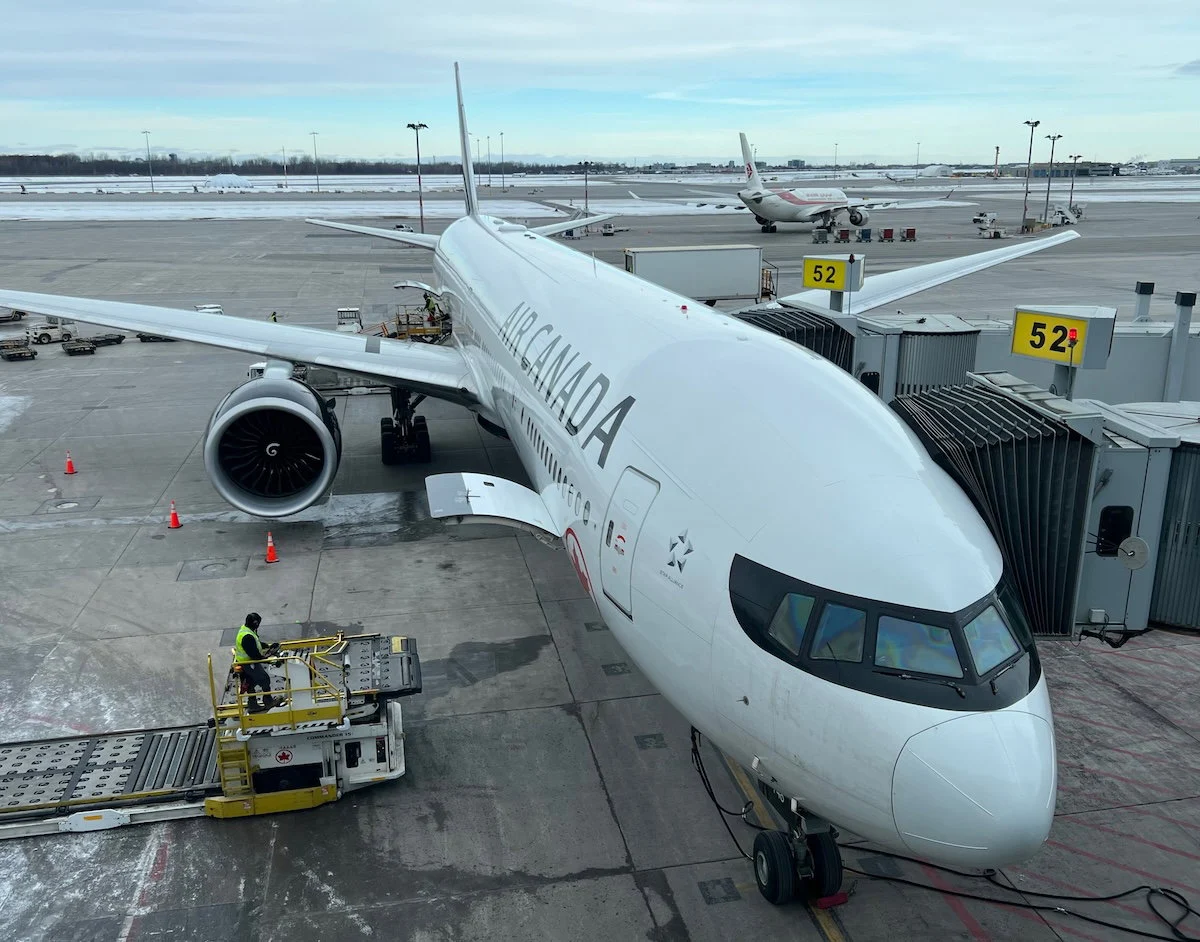
The Canadian aviation sector is currently navigating a period of profound uncertainty and structural recalibration. Following the recent departure of Michael Rousseau, whose tenure as CEO of Air Canada was marked by both operational challenges and significant public scrutiny, the airline finds itself at a critical crossroads. As the search for a successor intensifies, a surprising candidate has emerged as the frontrunner: Anko van der Werff, the current CEO of Scandinavian Airlines (SAS).
This potential appointment signifies a bold, albeit controversial, departure from traditional corporate succession planning. As the airline balances the need for a aggressive financial turnaround with the intense socio-political expectations of its Montreal headquarters, the industry is watching closely to see if the board prioritizes global transformation over local integration.
A Legacy of Turbulence: The Context of the Leadership Vacuum
The exit of Michael Rousseau was not a sudden event, but the culmination of mounting pressures. His leadership became increasingly precarious following a series of high-profile incidents, most notably a runway collision at LaGuardia Airport. However, the operational setbacks were only one facet of a multi-dimensional crisis.
Throughout his tenure, Rousseau faced persistent criticism regarding his inability to communicate in French. For a carrier that serves as Canada’s national flag bearer—and which is legally and culturally tethered to its Montreal headquarters—this was not merely a personal deficit; it was a perceived disregard for the airline’s identity and its commitments to Quebec’s linguistic landscape. The backlash in Quebec created a political firestorm that eventually made his position untenable.
Beyond the linguistic controversy, critics have argued that Rousseau’s leadership was characterized by a lack of visibility and a failure to steer the company through the post-pandemic recovery effectively. Observers have frequently noted that the airline’s recent stability—such as it is—has been largely maintained by the efforts of Chief Commercial Officer Mark Galardo and Chief Operating Officer Mark Nasr. With the "two Marks" providing the operational backbone of the carrier, the board’s search for a CEO has become a debate over whether the company needs a visionary outsider to shake up the status quo or a promotion from within to maintain stability.
The Frontrunner: Who is Anko van der Werff?
The emergence of Anko van der Werff as the lead candidate for the Air Canada top spot has surprised many industry analysts. van der Werff is a seasoned veteran of the global aviation circuit, possessing a curriculum vitae that reads like a map of the industry’s most complex challenges.
His current role at the helm of SAS has been a crucible for his leadership style. Under his stewardship, SAS underwent a massive, grueling transformation process, involving bankruptcy protection and a strategic pivot that saw Air France-KLM acquire a significant stake in the carrier. This experience is likely precisely what the Air Canada board finds attractive. Air Canada’s stock performance has been sluggish, lingering at roughly 50% of its pre-pandemic levels, and the suspension of financial guidance has left investors clamoring for a clear roadmap to profitability.
Before his time at SAS, van der Werff led Avianca through a three-year transformation. His resume also includes leadership roles at Aeromexico, Air France-KLM, and Qatar Airways. His background suggests a leader who is comfortable managing cross-border alliances, navigating complex debt restructurings, and operating within diverse cultural frameworks.
The Language Dilemma: A Recurring Friction Point
The most immediate hurdle facing van der Werff—should he accept the role—is the very same issue that precipitated his predecessor’s downfall: the French language.
When the board announced its search for a new leader, it explicitly stated that it would consider "the ability to communicate in French" as a key performance criterion, reinforcing the company’s pride in being "proudly headquartered in Montreal." van der Werff is a polyglot who speaks English, Dutch, and Spanish fluently, but his grasp of French is reportedly limited to a basic understanding.
This creates a paradox for the Air Canada board. By selecting a candidate who does not meet the established linguistic expectations, the board would be sending a clear signal that they value international turnaround expertise above domestic cultural alignment. While some might argue that a CEO’s primary mandate is fiscal health, the history of Air Canada suggests that the optics of linguistic fluency are inextricably linked to the company’s social license to operate in Canada.
Strategic Implications: Why an Outsider?
The decision to look outside the organization is always a gamble. For an airline, it can be a double-edged sword. On one hand, an outsider brings fresh perspectives, an objective eye for cost-cutting, and the ability to challenge entrenched bureaucracies. For a company like Air Canada, which has been accused of stagnation, an external disruptor could be the catalyst for the "radical changes" many analysts believe are necessary.
However, the internal implications cannot be ignored. Air Canada is home to a robust executive team, including the aforementioned Galardo and Nasr, who have successfully navigated the company through the most volatile period in modern aviation history. Promoting from within often bolsters morale and ensures institutional knowledge remains intact. Bringing in an outsider, especially one with a reputation for aggressive restructuring, could alienate the existing leadership team and lead to a "brain drain" of the very talent that has kept the airline afloat.
Furthermore, the nature of a "turnaround" in the airline industry often involves measures that are unpopular with customers: reduced service levels, tighter fare structures, or changes to loyalty programs. If van der Werff is hired, it is widely expected that his mandate will be to slash costs and boost margins. Whether this can be done without eroding the brand equity of a national carrier remains the core question.
The Road Ahead: A Period of Unprecedented Turnover
The potential appointment of van der Werff is occurring against the backdrop of a broader, global shift in airline leadership. Across the industry, legacy carriers are finding that the old playbooks—based on hub-and-spoke dominance and traditional revenue management—are failing to account for new competitive realities, such as the rise of low-cost long-haul carriers and changing consumer travel habits.
This era of executive turnover is not limited to Canada; it is a global phenomenon. From the struggles of American Airlines to the consolidation trends in Europe, the position of airline CEO has become one of the most difficult jobs in the corporate world. It requires a delicate balance of political savvy, operational genius, and the ability to manage the massive capital intensity of the business.
Conclusion: The Mandate for Change
As of now, no final decision has been formally announced. The reports from Bloomberg remain speculative, though they underscore the urgency felt by the Air Canada board. If Anko van der Werff does assume the role, he will be tasked with more than just a balance sheet correction. He will have to prove that he can bridge the gap between a global, performance-driven aviation strategy and the deeply ingrained, culturally sensitive expectations of the Canadian public.
The stakes could not be higher. Air Canada stands at a point where it must decide whether to continue down its current path of steady, if underwhelming, recovery, or to embrace a new, potentially volatile, chapter of restructuring. The choice of the next CEO will not just define the financial trajectory of the airline for the next decade—it will define what kind of company Air Canada wants to be in the eyes of its passengers, its employees, and the nation it serves.
For now, the aviation world waits. The question remains: can an outsider, no matter how talented, effectively navigate the unique, bilingual, and highly scrutinized landscape of Canada’s most important airline? Or will the search for a savior from abroad only exacerbate the disconnect between the board and the core mission of the company? The coming months will undoubtedly provide the answer.