








In a significant pivot for consumer privacy and IoT security, LG Electronics USA has announced a sweeping initiative to banish applications from its webOS platform that transform smart televisions into residential proxy nodes. This development comes on the heels of a damning investigation by the security firm Spur, which revealed that a staggering 42 percent of apps available on LG’s smart TV store were secretly routing third-party internet traffic through unsuspecting users’ home networks.
This industry-wide reckoning forces a necessary conversation about the "hidden costs" of free software, the lack of transparency in the Internet of Things (IoT) ecosystem, and the responsibility manufacturers hold over the software running on the devices in our living rooms.
The Anatomy of the Proxy Problem
To the average consumer, a smart TV is a portal for entertainment—a device to stream movies, play games, or display family photos. However, for a segment of developers and data brokers, these devices are valuable, high-bandwidth assets. By embedding a "Residential Proxy Software Development Kit" (SDK) into an application, developers can effectively rent out a user’s home IP address to third-party entities.
When a user downloads a "free" game or utility—often bundled with these SDKs—they are unknowingly turning their television into a gateway. The proxy network then routes traffic from unknown clients through the TV. While these networks are often marketed as tools for legitimate web scraping or market research, they effectively mask the true origin of internet traffic, allowing bad actors or corporate entities to bypass geographic restrictions or conduct automated activities that would otherwise be flagged as malicious or spammy.
The Findings: A Scale of Abuse
The research conducted by Spur and highlighted by KrebsOnSecurity paints a startling picture of how pervasive this practice has become. The investigation identified that:
- LG webOS: More than 42 percent of available apps contained these invasive proxy SDKs.
- Samsung Tizen OS: Approximately 25 percent of apps were found to contain similar components.
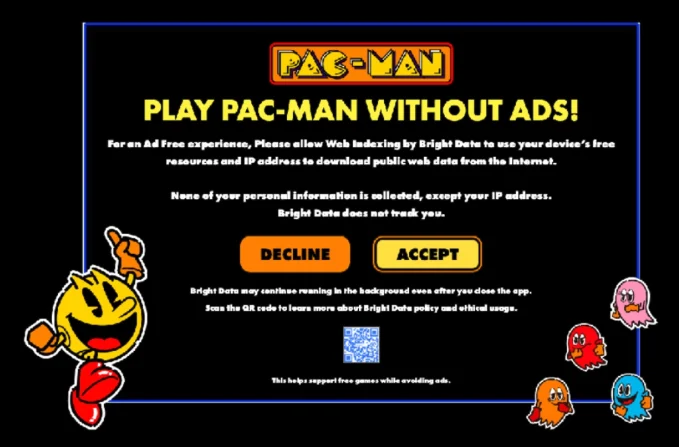
These are not obscure, "fly-by-night" apps. The report noted that the proxy functionality was bundled into everything from simple, family-friendly games like Pac-Man to essential file utilities and screensavers. In some cases, developers presented users with a choice: view advertisements or agree to allow their device to serve as a proxy node. This "choice" is often buried deep within opaque Terms of Service agreements or presented via a one-time, non-descript pop-up that the average consumer is ill-equipped to understand or audit.
Chronology of a Security Crisis
The path to this policy shift began in early July 2026, following a broader investigation into the infrastructure supporting global botnets.
- July 2, 2026: Researchers at Spur publish a comprehensive report on the prevalence of residential proxy SDKs. The report exposes the scale at which smart TV manufacturers had allowed their platforms to be exploited.
- July 2026: Following the public disclosure, international media outlets begin scrutinizing the implications for consumer data privacy, leading to pressure on major electronics manufacturers.
- Late July 2026: LG Electronics USA acknowledges the issue. Senior Vice President John Taylor issues a formal statement confirming that the company is actively reviewing its app ecosystem and initiating a purge of non-compliant software.
- Ongoing: LG begins a systematic audit of all developer-submitted apps to ensure no future software contains residential proxy SDKs.
Official Responses and the Corporate Stance
The response from LG Electronics represents a rare instance of a major hardware manufacturer taking direct ownership of the third-party software environment on their devices.
John Taylor, Senior Vice President of LG Electronics USA, provided a clear, if belated, directive to the developer community: "A residential proxy network is not an intended use for LG smart TVs, and LG Electronics is working with developers to remove the residential proxy option from their apps on the webOS platform."
Taylor’s statement emphasized that the company’s patience is limited. "If this option is not removed, these apps will be suspended," he asserted. Furthermore, he noted that LG is currently revamping its evaluation process to ensure that future app submissions are scrutinized for these SDKs before they ever reach the storefront.

In contrast, the companies providing the proxy infrastructure—most notably Bright Data, which was identified by Spur as the provider behind the majority of these proxy SDKs—have remained largely silent on the specific accusations regarding smart TVs. Historically, firms like Bright Data maintain that they employ "rigorous know-your-customer" (KYC) processes and implement technological safeguards to prevent proxy users from interacting with local network devices. However, security experts like Trevor Sutter of Spur remain skeptical, arguing that such "safeguards" are insufficient when the hardware in question is a consumer appliance rather than a managed workstation.
Implications: The Risks of "Free" Software
The implications of this incident extend far beyond the immediate removal of a few apps. They highlight the dangerous intersection of monetization and device security.
1. The Transparency Gap
The primary issue, as identified by Spur, is the lack of meaningful consent. A "one-time prompt" in a game menu is not a sufficient disclosure for a feature that turns a home network into a commercial proxy node. Furthermore, households often share devices; a child or a guest playing a game may accidentally provide consent for a feature that impacts the network security of every device in the home.
2. The Local Network Threat
While proxy providers claim to prevent lateral movement (the ability to control other devices on the same Wi-Fi), the reality is that the TV is now a node on the local network. By design, it is connected to the same internal gateway as laptops, phones, and smart home controllers. If the TV is compromised, the barrier to the rest of the network is significantly lowered.
3. The Manufacturer’s Duty
The incident also shines a spotlight on the broader quality control issues at LG. While the company is taking a commendable stand against proxy SDKs, their reputation has been simultaneously strained by other controversial software practices. Earlier in the same week, the tech channel Gamers Nexus revealed that certain high-end LG monitors were automatically installing software to promote paid McAfee antivirus subscriptions through Windows Update—without explicit user approval.
This juxtaposition of "cleaning up" the smart TV ecosystem while simultaneously pushing unwanted software onto monitor users suggests that LG, like many manufacturers, is struggling to balance consumer trust with the allure of secondary revenue streams.
Looking Ahead: A New Standard for IoT?
The move by LG to purge proxy SDKs may serve as a bellwether for the entire IoT industry. As smart TVs become more powerful and ubiquitous, they are increasingly targeted by data brokers and proxy networks looking for stable, residential IP addresses.
Consumers should be wary of the following red flags:
- Unexpected Network Activity: If a smart device appears to be consuming high amounts of upload bandwidth while idle, it may be functioning as a proxy node.
- "Free" Premium Features: Apps that offer "ad-free" experiences in exchange for "allowing the app to use your network resources" are almost always utilizing residential proxy SDKs.
- Opaque Permissions: During the installation of any smart TV app, users should look for language mentioning "network sharing," "proxy services," or "contributing to a data network."
For now, LG’s commitment to "strengthening the evaluation process" provides a glimmer of hope. However, the incident serves as a stark reminder that in the modern digital age, the device on your wall is not just a screen; it is an entry point, a node, and a participant in a global, often invisible, data economy. As manufacturers grapple with these challenges, the ultimate burden of vigilance remains, as it always has, with the consumer.