








In a recent op-ed for The Wall Street Journal, Stephen Miran, the former chair of the White House Council of Economic Advisers, proposed a provocative thesis: that the current administration’s aggressive tariff regime represents a net improvement for tax policy. Miran’s core argument centers on the interaction between trade barriers and domestic tax incentives—specifically, that "full expensing" effectively neutralizes the additional costs imposed by tariffs on imported business equipment and intermediate goods.
According to Miran, because businesses can deduct the cost of capital investments from their taxable income immediately, the "sticker shock" of a tariff is mitigated, rendering intermediate goods "largely untariffed." However, a rigorous analysis of tax theory and economic modeling suggests this conclusion is fundamentally flawed. When subjected to algebraic scrutiny, it becomes clear that tariffs represent a persistent, unavoidable burden on investment that cannot be offset by domestic tax policy.
The Evolution of 2025 Tax Policy: A Chronology of Conflict
To understand the current impasse, one must examine the timeline of fiscal policy as it unfolded in 2025. The economic landscape was defined by two competing, and ultimately contradictory, policy levers.
The Pro-Investment Pillar:
The centerpiece of the administration’s legislative agenda was the "One Big Beautiful Bill Act" (OBBBA). This sweeping reform package aimed to supercharge domestic capital formation by introducing:

- Permanent 100% Bonus Depreciation: Providing immediate tax relief for short-lived assets.
- R&D Expensing: Reintroducing full deductions for research and development expenditures, which had previously been subject to amortization.
- Manufacturing Incentives: Temporary bonus depreciation specifically targeted at manufacturing structures.
The intent of the OBBBA was to eliminate the income tax burden on new investment, thereby incentivizing firms to expand, modernize, and increase worker productivity.
The Protectionist Pillar:
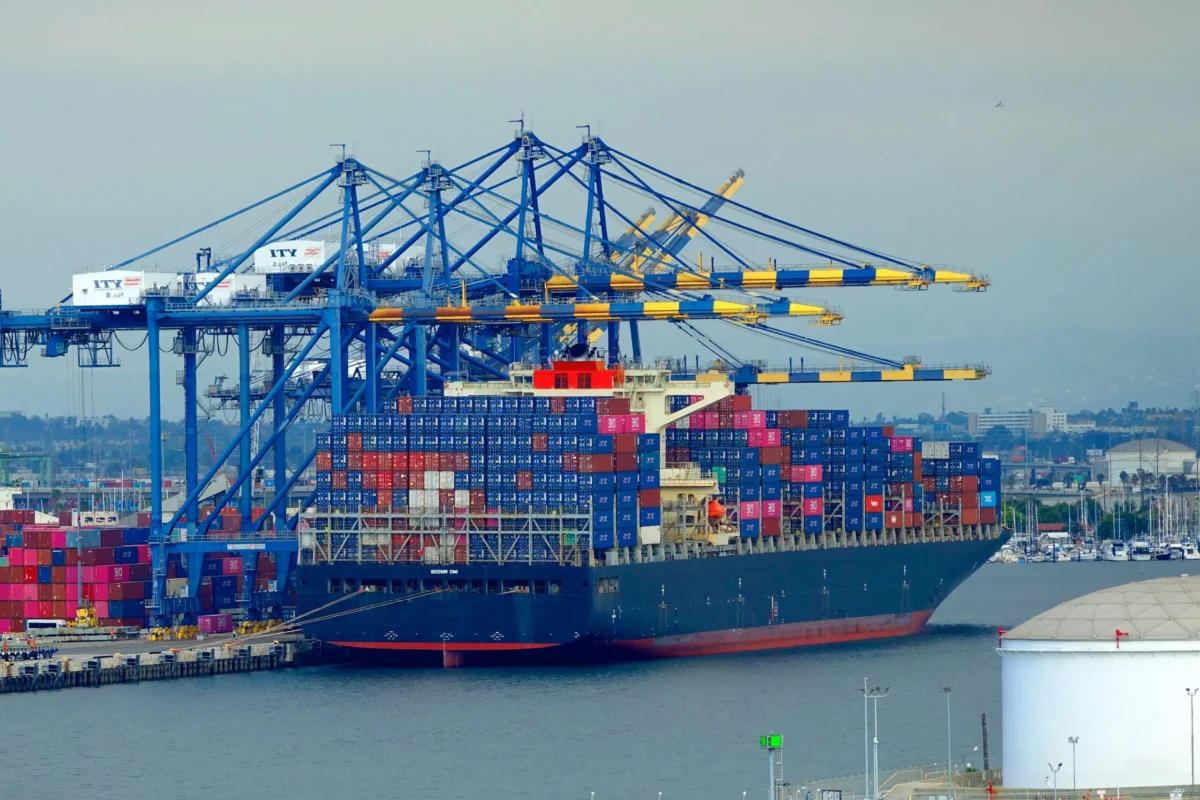
Simultaneously, the administration implemented broad-based, high-rate tariffs on a wide array of imported goods. These tariffs did not distinguish between finished consumer products and the "upstream" inputs—intermediate goods and capital machinery—that American firms rely upon to function. While the OBBBA was designed to lower the cost of capital, the tariffs were explicitly designed to raise the acquisition cost of that same capital.
The Mechanics of the Burden: An Algebraic Deconstruction
The tension between these policies can be measured using the "user cost of capital" formula, the standard economic metric for determining the minimum pre-tax return required for an investment to be viable after accounting for taxes, depreciation, and shareholder expectations.
The pre-tax return (c) is determined by the cost of replacing the asset and the returns demanded by investors, grossed up by the corporate tax rate (u). The acquisition cost is then adjusted for tax deductions and the impact of tariffs. Crucially, the presence of a tariff (t) raises the total acquisition price.

When we isolate the tariff variable in the model, the result is stark: the tariff term acts as a multiplier on the total cost of capital. Regardless of how generous the depreciation schedule (z) is—even in the scenario of "full expensing" where the tax burden is zero—the tariff remains.
Why Expensing Fails to Offset Tariffs
Miran’s argument assumes that because tariffs are part of the asset’s cost, they are "cushioned" by the ability to expense them. This view is mathematically incomplete. While the tax basis adjustment allows a firm to recover some of the cost of the tariff through tax deductions, it does not erase the initial increase in acquisition price.
If a 10 percent tariff is applied to a machine, the initial cost of that machine rises by 10 percent. Even if the firm is allowed to deduct that entire cost immediately, the firm is still out-of-pocket for that 10 percent increase upfront. The math reveals that the "basis adjustment" only ensures that the same share of returns is taxed; it does nothing to alleviate the higher capital outlay required to enter the market or expand operations.
Supporting Data: The Case of the 10% Tariff
To illustrate the magnitude of this burden, consider a firm with a 5 percent discount rate that imports a machine. Under the pre-OBBBA regime, the asset faced an effective tax rate of 21 percent. After the passage of the OBBBA, the introduction of full expensing would theoretically drop the effective tax rate on that investment to zero.

However, if we introduce a 10 percent tariff into this "expensing" environment, the effective tax rate on that investment spikes to 33.3 percent. This is a dramatic reversal of the administration’s goal. The tariff, despite being a "lower" statutory rate than the corporate income tax, creates a significantly higher effective tax burden because it is applied to the entire acquisition cost of the investment, whereas the corporate tax only applies to net profits.
| Metric | Prior Law | OBBBA (No Tariff) | OBBBA (With Tariff) |
|---|---|---|---|
| Statutory Corporate Rate | 21% | 21% | 21% |
| Statutory Tariff Rate | 0% | 0% | 10% |
| Depreciation (z) | 80% | 100% | 100% |
| Effective Tax Rate | 21% | 0% | 33.3% |
Source: Calculations based on standard user cost of capital modeling.
Implications for Industry and Construction
The negative impact of these tariffs extends well beyond the companies importing high-tech machinery. A significant portion of the capital stock—specifically non-manufacturing structures like residential housing—does not qualify for full expensing.
When tariffs are applied to raw materials such as lumber, steel, or aluminum, the cost of these intermediate goods rises. Because these inputs are used in the construction of buildings that cannot be "expensed" in the same way a machine might be, the tariff acts as a pure, unadulterated tax on development. There is no tax-code "cushion" here. The increased cost of materials flows directly into the price of housing, commercial office space, and infrastructure projects, slowing economic growth and reducing the housing supply.

Official Perspectives and the Path Forward
The administration has defended the tariffs as a necessary tool for industrial policy, arguing that the short-term cost increases are outweighed by the long-term benefit of "reshoring" production. However, economists from across the ideological spectrum have raised concerns that by taxing the inputs used by domestic manufacturers, the U.S. is inadvertently making its own finished goods less competitive on the global stage.
Miran’s attempt to reconcile these policies by pointing to full expensing is a compelling rhetorical strategy, but it fails the test of empirical reality. If the goal is to lower the cost of capital and stimulate growth, the evidence is clear: the administration cannot effectively cancel out the drag of trade barriers with tax incentives.
The most efficient path to increasing investment in the United States remains straightforward: combine the pro-growth elements of the OBBBA with a systematic repeal of the tariffs that currently act as a drag on domestic production. Relying on complex accounting maneuvers to "neutralize" the impact of tariffs is a poor substitute for a trade policy that aligns with, rather than contradicts, the goal of economic expansion.
In conclusion, while the promise of "full expensing" is a vital component of a competitive tax code, it is not a panacea. Tariffs represent a fundamental increase in the cost of doing business. By artificially raising the price of capital, the current administration is essentially taxing the very investments it is simultaneously trying to incentivize, leading to a net economic environment that is more burdensome than it was prior to these dual-track reforms.