








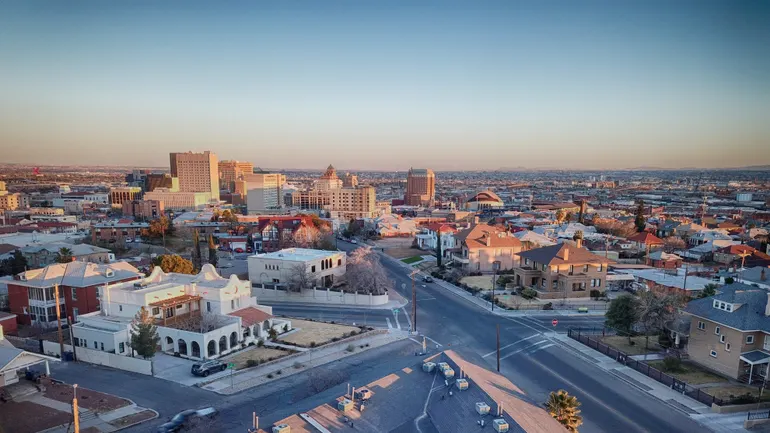
In a significant move to consolidate its regional presence, El Paso-based WestStar Bank has announced a definitive agreement to acquire Albuquerque-based Southwest Capital Bank. The strategic merger, which is slated to close in the first quarter of 2027, marks a major milestone in WestStar’s growth trajectory, shifting its footprint in New Mexico from a solitary branch in Las Cruces to a robust seven-branch network.
The transaction signals a new chapter for both institutions, promising to create a powerhouse community lender with approximately $3.8 billion in total assets, $3.3 billion in deposits, and $2.9 billion in loans. While the financial terms of the agreement remain undisclosed, the deal represents a calculated effort to strengthen regional banking services across the border of Texas and New Mexico.
The Strategic Shift: A New Chapter for Southwest Capital
For Southwest Capital Bank, the merger with WestStar serves as a definitive "landing spot" following a tumultuous period of uncertainty. In 2024, the Albuquerque-based bank entered into a high-profile agreement to be acquired by U.S. Eagle Federal Credit Union. However, that deal collapsed in mid-2025 following a series of regulatory hurdles and internal financial instability within the credit union.
The collapse of the U.S. Eagle deal was characterized by public friction. Chez Steel, CEO of Southwest Capital Bank, publicly contrasted the fiscal health of his institution against that of the credit union, telling the Albuquerque Journal in July 2025, “Southwest Capital Bank is very profitable. [U.S. Eagle is] not. They’re having trouble.”
U.S. Eagle’s struggle was well-documented, with the institution posting a $20.5 million loss during the second quarter of 2024. Former CEO Marsha Majors, who retired in January 2025, attributed the financial strain to the lingering economic after-effects of the COVID-19 pandemic, specifically citing an underperforming business lending portfolio. Ultimately, the lack of regulatory approval spelled the end of the U.S. Eagle partnership, leaving Southwest Capital to seek a more stable, traditional banking partner.
Chronology of Consolidation: From Uncertainty to Growth
The path to this merger reflects the evolving landscape of regional banking in the American Southwest.
- 2024: Southwest Capital Bank enters a merger agreement with U.S. Eagle Federal Credit Union, aiming for expansion through credit union acquisition.
- Early 2025: Marsha Majors retires as CEO of U.S. Eagle after four decades of service; the credit union faces mounting financial pressures and regulatory scrutiny.
- July 2025: The U.S. Eagle/Southwest Capital acquisition officially terminates after failing to receive necessary regulatory approvals.
- Late 2025 – Early 2026: Southwest Capital pivots, seeking a partner that aligns with its traditional commercial banking roots.
- Mid-2026: Discussions between WestStar Bank and Southwest Capital Bank formalize, focusing on shared values and market synergies.
- Late 2026: The official announcement of the acquisition is made, with plans to integrate operations by Q1 2027.
Supporting Data and Market Impact
The merger is expected to provide a significant boost to WestStar’s operational capacity. By absorbing Southwest Capital, WestStar will add roughly $500 million in assets to its balance sheet. More importantly, it gains a foothold in Albuquerque—New Mexico’s largest city and a primary economic engine for the region.
The combined entity will command a strong market position, characterized by:
- Total Assets: $3.8 Billion
- Total Deposits: $3.3 Billion
- Total Loans: $2.9 Billion
- Branch Network: Expansion from one branch (Las Cruces) to seven across key New Mexico markets.
This scale allows WestStar to offer an enhanced suite of services to its new clientele, including advanced commercial banking, treasury management, wealth management, and expanded digital banking solutions. The integration of these services is designed to ensure that Southwest Capital’s customers experience a seamless transition while gaining access to the technological infrastructure and capital depth of a larger, more diversified institution.
Official Responses and Corporate Philosophy
The leadership of both banks has emphasized that this merger is built on cultural alignment rather than mere asset accumulation. Rick Francis, executive chair of WestStar Bank, expressed confidence in the union, noting that the institutions share “remarkably similar values.”
“Both institutions were shaped by generations of bankers, business owners and families who believed their communities deserved a bank that understood them,” Francis said in a statement. “Just as important, we share a vision for the future and a belief that locally guided community banks continue to play a vital role in helping businesses, families and communities thrive.”
Chez Steel, who will transition to the role of New Mexico President for the combined entity, echoed these sentiments, framing the partnership as an ideal resolution for his bank’s stakeholders. “As we considered how best to position our clients, team members and communities for the future, it was important to find a partner that respected our history, shared our values and was committed to relationship banking,” Steel stated. “We found that partner in WestStar.”
Implications for the Regional Banking Landscape
The acquisition carries several implications for the regional banking sector:
Preservation of Local Leadership
A key pillar of the agreement is the commitment to maintain local decision-making power. In an era where bank mergers often result in the centralization of authority in distant headquarters, the promise to preserve Southwest Capital’s leadership team is a strategic choice designed to maintain client trust and continuity. This approach recognizes that in community banking, the "human element"—long-standing relationships between local loan officers and business owners—is a primary asset.
Increased Competitive Pressure
By expanding into Albuquerque, WestStar is positioning itself as a serious competitor to both large national banks and smaller local lenders in New Mexico. The influx of $500 million in assets and a broader branch network provides WestStar with the liquidity to pursue larger commercial loans and more sophisticated wealth management projects that may have previously been out of reach for smaller, localized institutions.
The End of the Credit Union-Bank Merger Era?
The failure of the U.S. Eagle deal and the subsequent successful merger with a peer commercial bank highlight a broader trend in the industry: the preference for "like-with-like" acquisitions. While credit unions have increasingly sought to acquire community banks to gain scale, they often face significant regulatory hurdles and tax-status friction. The WestStar-Southwest Capital deal serves as a case study for how traditional banks can effectively consolidate to build a more resilient business model without the complications associated with cross-industry acquisitions.
Customer Experience and Integration
The banks have been proactive in addressing potential concerns regarding the transition. The companies noted that “clients and team members will receive information well in advance of any changes that affect them.” The focus on integrating “expanded capabilities” suggests that the primary goal of the merger is to increase the value proposition for the end-user rather than simply cutting costs through branch closures or staff reductions.
Future Outlook
As the financial industry continues to navigate the post-pandemic economic landscape—characterized by interest rate volatility and the ongoing digital transformation of banking services—WestStar Bank’s expansion represents a bet on the enduring value of community-based relationship banking.
The transition period between now and the first quarter of 2027 will be critical. The successful integration of systems, staff, and culture will determine if the optimism voiced by Rick Francis and Chez Steel translates into long-term growth. For the people of New Mexico, the merger promises a new, well-capitalized banking alternative that purports to balance the agility of a local lender with the reach and resources of a multi-state institution.
In the final analysis, the WestStar-Southwest Capital deal is not merely a business transaction; it is a realignment of regional power. By anchoring itself in Albuquerque while maintaining its El Paso roots, WestStar is effectively bridging the financial markets of the I-10 and I-25 corridors, creating a cohesive economic footprint that may serve as a template for other regional banks looking to scale in an increasingly competitive environment.