








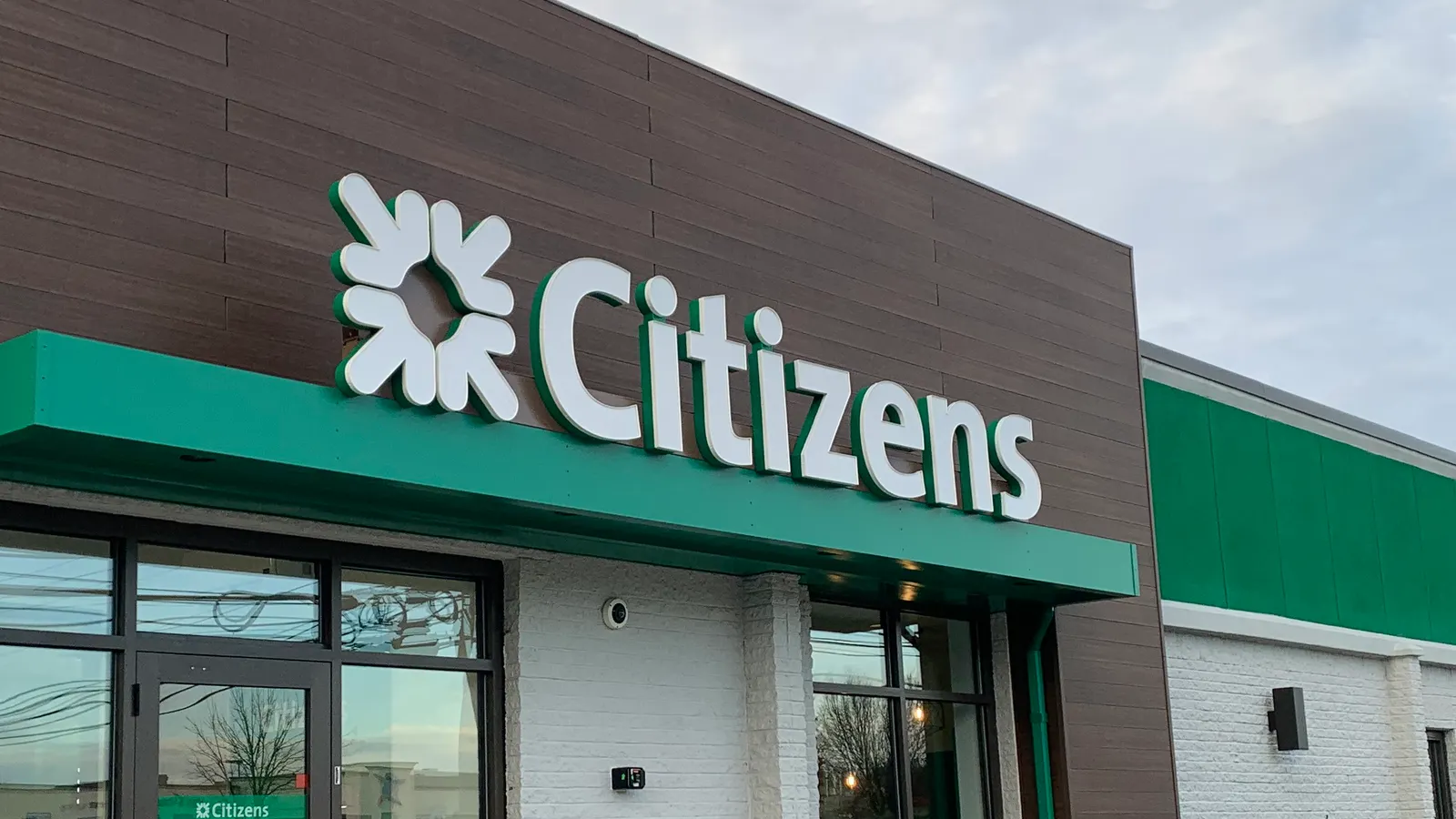
Citizens Financial Group has officially signaled a transformative shift in its retail banking strategy, moving away from the high-volume, low-friction environment of grocery store branches toward a more sophisticated, advisory-focused model. In its second-quarter earnings presentation released on Thursday, the Providence, Rhode Island-based lender announced plans to shutter between 100 and 120 of its supermarket-based locations. In their place, the bank intends to launch 50 to 60 "stand-alone" branches situated in nearby, high-traffic corridors.
This strategic realignment marks a significant departure from the traditional retail banking philosophy that prioritized physical "points of presence" and foot traffic over specialized service. The move is designed to capture a larger share of the "mass-affluent" market, focusing on private banking, wealth management, and specialized services for small businesses.
Main Facts: A Quality-Over-Quantity Reconfiguration
The core of the announcement lies in a net reduction of physical locations, but a substantial increase in the "quality" and "purpose" of the remaining footprint. By closing up to 120 supermarket branches and opening roughly half that number of standalone centers, Citizens is effectively trading convenience-based transaction hubs for high-value advisory centers.
Key highlights of the plan include:
- The Transition: Closing 100–120 in-store locations (typically found in grocery chains like Stop & Shop or Giant) and replacing them with 50–60 new, modern standalone branches.
- The Target Demographic: A renewed focus on "mass-affluent" customers—those with significant investable assets—and small business owners who require more complex financial solutions than a supermarket kiosk can provide.
- Branch Evolution: A move from 7,000-square-foot legacy branches to more efficient 2,000- to 3,000-square-foot "boutique" spaces designed for private consultations rather than teller-line transactions.
- Financial Objectives: The bank maintains its goal of reaching a 16% to 18% return on tangible common equity (ROTCE) by the end of 2027, bolstered by this efficiency play.
Chronology of the Transformation: A Deliberate Strategic Rollout
The announcement made during the second-quarter earnings call is the culmination of a strategy that has been articulated by Citizens’ top leadership over the past several months.
In March 2024, Citizens President Brendan Coughlin provided the first hints of this "surgical" approach to legacy markets. Speaking to industry analysts, Coughlin noted that particularly in the bank’s stronghold of New England, the institution intended to perform "surgery" on its branch network. He emphasized that the goal was to make branches "more impressive," ensuring they were located on the "right corner" with the "right staffing" to attract high-net-worth clientele.
By April 2025, Nuno Dos Santos, Citizens’ head of branch distribution, took an "aggressive" stance on reinvesting in the transformation of existing locations. He highlighted that the bank was no longer interested in maintaining a sprawling, underutilized network, but rather a streamlined fleet of high-performing assets.
In May 2025, Matt Boss, head of Citizens’ consumer bank, reinforced the bank’s commitment to its current 14-state footprint. While other regional banks were looking to Texas or the Southeast for growth through acquisitions, Boss asserted that the existing Citizens territory offered "more than enough opportunity" if the bank could successfully pivot its service model toward the consumer banking needs of the future.
This timeline culminated in Thursday’s Q2 earnings report, where CEO Bruce Van Saun provided the definitive numbers for the branch closures and the financial rationale behind the "careful investment" in physical locations.
Supporting Data: Q2 Financial Performance and Efficiency Metrics
The strategic pivot comes at a time of financial strength for Citizens. The bank’s second-quarter earnings report showed robust growth, providing the capital necessary to fund this physical transformation without straining the balance sheet.
Quarterly Financial Highlights:
- Net Profit: Citizens reported a profit of $587 million for the second quarter, representing a staggering 35% increase year-over-year.
- Total Revenue: Revenue rose by 12% year-over-year, reaching $2.3 billion.
- ROTCE: The Return on Tangible Common Equity stood at 13.9%, a notable improvement from the 12.2% reported just three months prior.
- The 2027 Goal: Management reiterated its confidence in hitting an ROTCE of 16% to 18% by late 2027, citing the branch retooling as a key driver of this efficiency.
The Changing Anatomy of the Branch:
The data provided by Citizens also illustrates a physical downsizing that reflects changing consumer habits. Legacy branches, which often spanned 7,000 square feet to accommodate large teller lines and back-office storage, are being phased out. The new model, ranging from 2,000 to 3,000 square feet, represents a 50% to 60% reduction in square footage per location.
However, the internal allocation of that space is shifting. While traditional branches dedicated the majority of their floor plan to transactions (tellers and ATMs), the new "advice centers" dedicate nearly 80% of their space to private offices and meeting rooms for wealth managers and small business bankers.
Official Responses: Leadership Perspectives on the Pivot
The leadership at Citizens has been vocal about why this shift is necessary in a post-digital banking world. CEO Bruce Van Saun emphasized that the goal is to improve the "deposit trajectory" without the massive capital expenditure required to enter entirely new markets.
“This type of careful investment in physical locations and in people, if executed well, should create a nice lift in the deposit trajectory without taking on the risk and significant capital expenditure of opening a whole bunch of de novos outside of the footprint,” Van Saun stated during the conference call.
Brendan Coughlin, the bank’s president, has been equally clear about the target audience. He noted that the "mass-affluent" segment is the most underserved portion of the retail banking market. These customers are too large for basic retail services but often feel ignored by elite private banks. By placing "impressive" branches on the right corners, Citizens aims to capture this middle-ground wealth.
Matt Boss, head of the consumer bank, dismissed the idea that the bank needed to follow competitors into the Sunbelt to find growth. “The 14 states we operate in today offer more than enough opportunity when it comes to the consumer bank,” Boss said, suggesting that deepening relationships with existing customers in the Northeast and Mid-Atlantic is more profitable than chasing new customers in Texas.
Implications: The End of the Grocery Store Banking Era?
The decision by Citizens to exit the supermarket space is part of a broader industry trend that signals the end of an era. In the 1990s and early 2000s, in-store branches were seen as the future of retail banking—a way to meet customers where they already were. However, several factors have rendered this model obsolete:
1. The Digital Revolution
Basic transactions—depositing checks, transferring funds, and checking balances—are now done almost exclusively via mobile apps. The primary reason people visited supermarket branches was for these quick, "on-the-go" transactions. As those tasks moved to smartphones, the foot traffic in grocery store branches plummeted.
2. The Need for Privacy in Advisory Services
You cannot discuss a $2 million retirement portfolio or a $500,000 small business loan in the middle of a busy grocery store aisle. As banks pivot toward wealth management, the need for soundproof, private, and professional office spaces has become paramount. Standalone branches offer a "prestige" factor that a kiosk next to the deli counter simply cannot match.
3. Competitive Alignment
Citizens is not alone in this realization. The bank’s move mirrors actions taken by other major players:
- Huntington Bank: After acquiring TCF in 2021, Huntington closed nearly 100 branches located inside Meijer grocery stores.
- M&T Bank: Following its acquisition of People’s United, M&T shuttered 140 branches located inside Stop & Shop stores.
- PNC and U.S. Bank: Both institutions have significantly reduced their reliance on third-party retail locations in favor of "high-concept" standalone flagship stores.
4. Strategic Differentiation
While regional peers like Huntington and Fifth Third have pursued growth through geographic expansion—specifically targeting the Texas market through acquisitions—Citizens is doubling down on "vertical" growth within its existing geography. This strategy carries less integration risk but places a higher premium on the bank’s ability to "upsell" existing customers into wealth management and private banking products.
Conclusion
Citizens Financial Group’s "surgical" approach to its branch network is a calculated bet on the future of physical banking. By sacrificing the sheer number of locations and the convenience of supermarket kiosks, the bank is positioning itself as a premium advisory institution.
If successful, this strategy will allow Citizens to capture the high-margin business of the mass-affluent and small business sectors while maintaining a leaner, more efficient physical footprint. As the bank moves toward its 2027 ROTCE goals, the industry will be watching closely to see if "less is truly more" in the evolving landscape of American retail banking.