








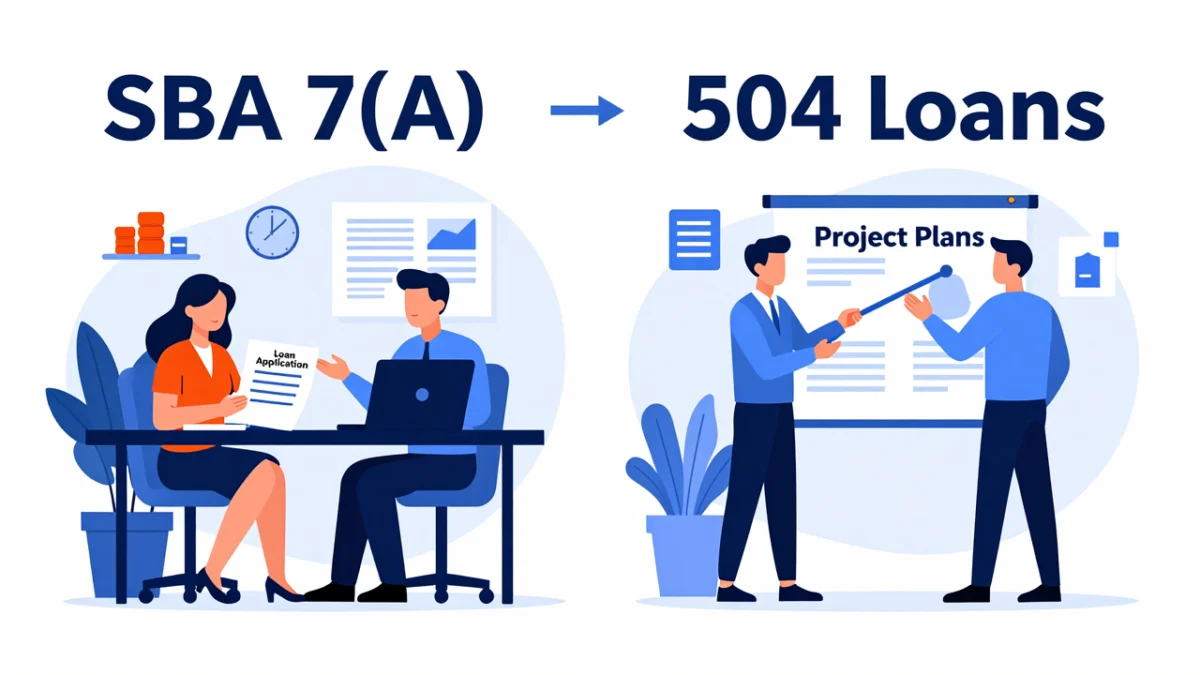
For small business owners, securing capital is often the most significant hurdle in the pursuit of growth. Among the various financing avenues available, the U.S. Small Business Administration (SBA) loan programs—specifically the 7(a) and 504 loans—stand out as the gold standard. However, the complexity of these programs often leaves entrepreneurs paralyzed by choice. Understanding the nuanced differences between these two vehicles is not merely an administrative exercise; it is a fundamental pillar of strategic financial planning.
Whether you are looking to purchase commercial real estate, modernize your manufacturing facility, or simply ensure you have the working capital to weather a seasonal slump, choosing the wrong loan can lead to unnecessary interest expenses, rigid repayment structures, or, in the worst cases, outright rejection.
The Core Distinction: Understanding the SBA Mandate
At their most basic level, the SBA 7(a) and 504 loans serve distinct roles in the small business ecosystem. The 7(a) loan is the SBA’s primary program, prized for its immense versatility. It functions as a general-purpose loan designed to help businesses cover a wide array of operational costs.

Conversely, the 504 loan is a highly specialized instrument. It is engineered specifically for economic development, focusing on the acquisition of long-term, fixed assets. If your goal is to grow your physical footprint or upgrade your machinery, the 504 is often the preferred choice. If your goal is to manage cash flow or buy out a partner, the 7(a) is your primary option.
Chronology of the Application Process
One of the most critical factors for any business owner is the timeline of capital deployment. The "time-to-funding" can vary significantly based on which program you choose.
The SBA 7(a) Timeline
The 7(a) process is relatively streamlined because it involves a direct relationship between the borrower and a participating lender. Once you submit your application, underwriting typically takes 30 to 60 days. Because the lender handles the bulk of the approval process within their own internal systems—backed by the SBA guarantee—the path from application to funding is generally more linear.

The SBA 504 Timeline
The 504 process is more complex, involving a three-party structure: a conventional lender (first mortgage), a Certified Development Company (CDC) (second mortgage), and the borrower (equity). Because of the multi-layered coordination required between the bank, the CDC, and the SBA, the process is inherently slower. Borrowers should anticipate a timeline of 60 to 90 days. This additional time is the "price" paid for the more favorable, long-term, fixed-rate financing that characterizes the 504 program.
Supporting Data: Structure and Loan Limits
Understanding the mechanical structure of these loans reveals why they behave so differently in the marketplace.
The 7(a) Structure
The 7(a) loan is designed for flexibility. It can be used for working capital, inventory, business acquisitions, and equipment. Because the SBA guarantees up to 75% of the loan (for loans over $150,000), banks are more willing to take on the risk associated with less tangible business needs.

- Maximum Amount: Up to $5 million.
- Repayment: Terms vary based on use of proceeds, typically 10 years for working capital and up to 25 years for real estate.
The 504 Structure
The 504 structure is a model of risk mitigation. The borrower contributes 10% equity, the CDC provides 40% (funded by debentures), and a private lender covers the remaining 50%. This structure shields the private lender, which is why 504 loans often feature lower down payments and more attractive interest rates than conventional loans.
- Maximum Amount: Standard projects cap at $5 million, but energy-efficient or manufacturing projects can reach up to $5.5 million per project.
- Total Project Costs: With multiple 504 loans, businesses can sometimes see total project financing exceed $20 million, making this the superior choice for massive capital expansion.
Official Guidelines on Interest Rates
Interest rate environments are volatile, and understanding how your loan is priced is essential to long-term profitability.
7(a) Rate Dynamics
7(a) loans are often tied to the Prime Rate plus a spread negotiated with the lender. These can be fixed or variable. Because they are designed for immediate needs, these rates may fluctuate, requiring owners to account for potential interest rate risk in their cash flow projections.

504 Rate Dynamics
504 loans offer the security of fixed interest rates for the CDC portion of the loan. This is a significant advantage for businesses planning for the next 20 years. Knowing exactly what your debt service will be in 2035 allows for much more accurate long-term financial modeling.
Eligibility and Qualifications: Meeting the SBA Standard
Both loans require that the business be for-profit, operate in the U.S., and meet the SBA’s size standards. However, the "soft" requirements differ.
- 504 Requirements: The SBA focuses on "public policy goals." They want to see that your project will create jobs or contribute to specific economic outcomes. They also look at net worth (under $20 million) and net income (under $6.5 million).
- 7(a) Requirements: The lender is looking primarily at the "repayment ability" of the business. You must demonstrate that you have tried to obtain credit elsewhere and failed, and that you have the cash flow to support the debt service.
The Personal Guarantee: In both cases, any owner with 20% or more equity in the business must provide a personal guarantee. This is a non-negotiable aspect of SBA lending. It ensures that the borrower has "skin in the game" and protects the taxpayers in the event of default.

Implications: Making the Strategic Choice
When choosing between these two, consider the implications for your business lifecycle.
When to choose 7(a):
- Immediate Cash Needs: If you are experiencing a temporary cash crunch or need to restock inventory, the 7(a) is the only viable SBA option.
- Acquisitions: If you are buying an existing business, the 7(a) is specifically designed to facilitate the transfer of ownership.
- Speed: If you have a time-sensitive opportunity that requires capital within two months, the 7(a) is your best bet.
When to choose 504:
- Physical Expansion: If your business has outgrown its current location and you need to build or renovate a warehouse, office, or retail space.
- Equipment Longevity: If you need heavy machinery that will serve your business for decades, the 504’s long-term fixed rate is unbeatable.
- Capital Preservation: Because the down payment is often lower than a conventional commercial loan, you can keep more cash on hand for day-to-day operations.
Conclusion: The Path Forward
The choice between an SBA 7(a) and a 504 loan is a choice about the future trajectory of your business. Are you looking to stabilize your current operations, or are you looking to build a monument to your company’s growth?
While the 7(a) loan provides the agility required to handle the daily demands of a growing enterprise, the 504 loan provides the bedrock stability required for long-term infrastructure investment. By carefully evaluating your capital requirements, your tolerance for variable interest rates, and your timeline for growth, you can leverage these federal programs to build a resilient and thriving business.

Before proceeding, consult with an SBA-preferred lender or a financial advisor who specializes in small business lending. Because these loans are heavily regulated and carry significant legal weight, professional guidance is not just recommended—it is an essential part of the due diligence process. Remember, the goal is not just to get the loan; the goal is to get the right loan that supports your vision without compromising your operational freedom.