








The global aviation landscape is characterized by a high degree of standardization, yet some carriers continue to offer an experience that defies traditional industry norms. Turkmenistan Airlines, the national carrier of the Central Asian nation, has long been a subject of curiosity for aviation enthusiasts. Following a recent journey from Ashgabat (ASB) to Delhi (DEL) aboard the airline’s Boeing 737-800, a clearer, albeit more perplexing, picture has emerged regarding the carrier’s operational philosophy and passenger experience.
Main Facts: A Study in Operational Peculiarity
The 3-hour and 5-minute flight from Ashgabat to Delhi serves as a vital corridor for regional connectivity. However, the experience aboard the Boeing 737-800 business class cabin is distinct from what a traveler might expect on a legacy carrier.

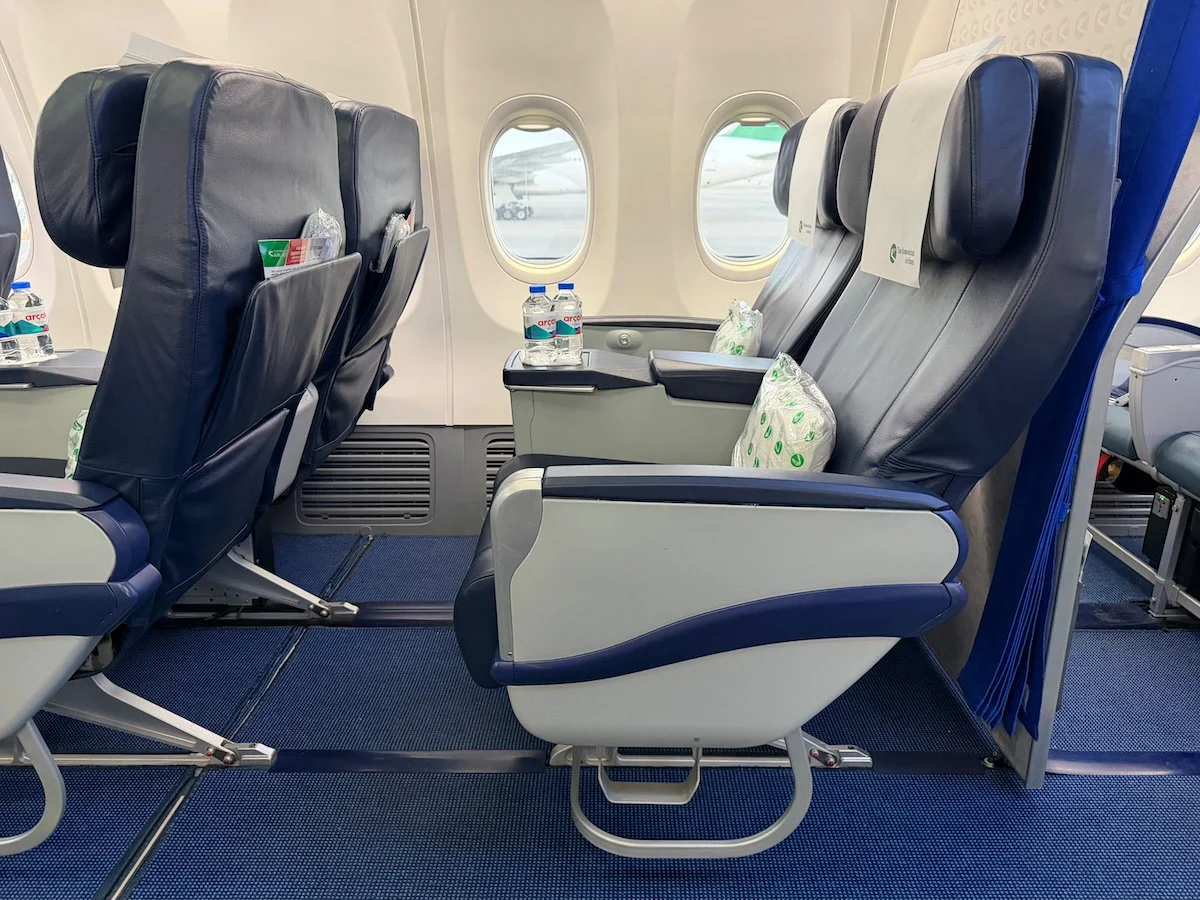
The business class configuration features a 2-2 layout with recliner seats, offering generous pitch and width that arguably surpasses many domestic first-class products found in the United States. Despite the physical comfort of the seating, the cabin lacks modern amenities such as high-speed Wi-Fi, relying instead on a limited streaming entertainment system.
The most striking aspect of the flight was the atmosphere. While aviation safety protocols are universal, the internal culture of Turkmenistan Airlines is notably guarded. The enforcement of a "no photography" policy was immediate and strict, signaling a rigid approach to passenger interaction that stands in stark contrast to the customer-centric ethos of modern global airlines.

Chronology: A Flight of Anomalies
The flight, departing at 06:40 AM, was marked by a series of events that would baffle a seasoned frequent flyer.
Boarding and the "Ghost Cabin"
Upon boarding, the business class cabin was entirely vacant. This state of emptiness persisted for approximately 30 minutes, creating a surreal environment. Then, in a synchronized, last-minute influx, the remaining 15 seats were filled simultaneously. Whether this was the result of operational overselling in the economy cabin, a preference for late boarding among local premium passengers, or an internal logistical quirk remains unclear.

The Mid-Air Course Correction
Shortly after reaching cruising altitude, the aircraft performed a sharp 180-degree turn, heading back toward Ashgabat. The maneuver triggered immediate concerns regarding potential mechanical issues or airspace restrictions. However, after a brief period, the aircraft resumed its original heading. It appears the aircraft was placed into an unusually wide holding pattern, potentially due to the complexities of regional air traffic control or the specific transit requirements of the airspace over Turkmenistan and Afghanistan.
The Protracted Meal Service
The service delivery was perhaps the most inefficient aspect of the journey. With only one flight attendant assigned to the business class cabin, the meal service was characterized by a slow, staggered rollout. It took approximately 10 minutes to serve each individual passenger, resulting in a process so protracted that the flight attendant was clearing the trays of early diners while others had yet to receive their first course.

Supporting Data: The "Lunch at Breakfast" Paradox
The culinary experience on this flight presented a confusing mix of timing and presentation. Despite the early morning departure, the menu offerings—and the cabin crew’s insistence—pointed toward a "lunch" service rather than breakfast.
When queried about the specific nature of the protein served alongside pancakes, the flight attendant clarified that the airline prioritizes a lunch-style menu regardless of the departure time. The result was a beef stroganoff dish presented on a tray so over-saturated with components that it lacked the physical space for standard dining. The tray included an excessive quantity of packaged snacks, including three distinct bundles of nuts and dried fruits, alongside the main entrée. While the volume of food was impressive, the culinary quality remained firmly in the "mid-tier" category, suggesting a focus on quantity over gastronomic refinement.

Official Responses and Safety Protocols
While Turkmenistan Airlines does not maintain a public-facing PR apparatus that readily engages with individual passenger feedback, the rigidity of their cabin crew regarding photography and documentation is telling. In many Central Asian jurisdictions, transport hubs and national carriers are treated as sensitive infrastructure. The flight attendant’s assertive "photos are not allowed" command upon boarding is reflective of a broader, state-level sensitivity toward documentation within Turkmenistan.
From a safety perspective, the flight operations appeared to follow standard procedures, despite the irregular holding pattern. The aircraft itself was well-maintained, and the physical cabin environment was clean and functional, suggesting that while the "soft product" (service and catering) is eccentric, the "hard product" (aircraft maintenance and safety) remains aligned with basic international standards.

Implications for the Modern Traveler
What does the Turkmenistan Airlines experience imply for the future of aviation? For the casual traveler, the airline represents a "been there, done that" milestone. It is not an experience built for comfort, efficiency, or luxury, but rather for those who seek to understand the idiosyncrasies of a carrier that operates largely in isolation from the competitive pressures of the global aviation market.
Value vs. Experience
The primary implication for prospective passengers is a matter of expectations. Turkmenistan Airlines offers significant value in terms of pricing, particularly for those flying between Central Asia and the Indian subcontinent. However, the trade-off is an environment that is "bare bones" in its service delivery and rigid in its behavioral expectations.

The Future of Regional Niche Carriers
As aviation becomes increasingly homogenized, niche carriers like Turkmenistan Airlines provide a window into a different era of air travel. The strange service flow, the mysterious flight path, and the culinary confusion are not necessarily "failures" in the traditional sense; rather, they are reflections of an airline that has not yet—or chooses not to—adopt the globalized service standards of the Star Alliance or Oneworld networks.
Ultimately, the Turkmenistan Airlines Boeing 737 experience is a reminder that the skies are still filled with variance. For the enthusiast, the "strangeness" of the meal service or the abruptness of the crew is exactly the draw. For the corporate traveler, however, the lack of reliability in service and the unpredictable operational timing make it a challenging proposition.

As Turkmenistan continues to navigate its role on the global stage, its national airline remains a perfect microcosm of the nation itself: proud, guarded, occasionally baffling, and entirely unique. Whether the carrier will eventually move toward a more standardized, passenger-friendly model remains to be seen. Until then, those who board a Turkmenistan Airlines flight should prepare for an experience that is as much about the journey’s oddities as it is about the destination.