








Executive Summary: A Breach of Trust and Security
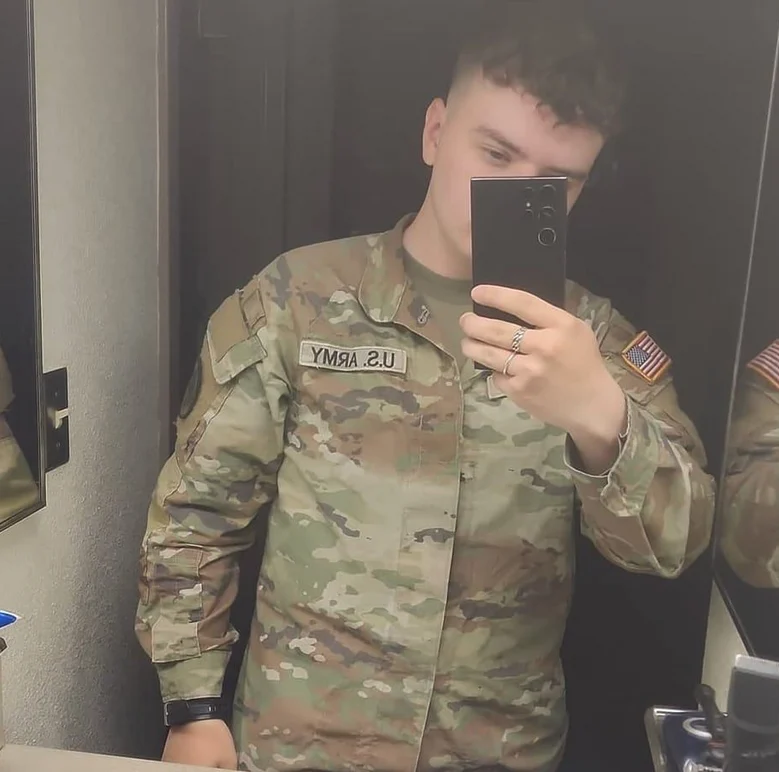
In a high-stakes sentencing hearing in Seattle, federal authorities closed the chapter on one of the most audacious cyber-extortion cases in recent memory. Cameron John Wagenius, a 22-year-old U.S. Army soldier, was sentenced to 70 months in federal prison and ordered to pay $294,978 in restitution. His crimes—targeting massive telecommunications providers and attempting to hold national security secrets for ransom—represented a catastrophic failure of internal security protocols.
Operating under the digital pseudonym "Kiberphant0m," Wagenius leveraged his position as an active-duty soldier stationed in South Korea to execute a series of breaches that compromised the metadata of over 100 million AT&T customers. His actions, which involved exploiting inadequately secured cloud storage accounts, triggered a massive multi-agency response, highlighting the vulnerabilities inherent in the digital architecture of modern corporate and military infrastructure.
Chronology of the Digital Siege
The Rise of Kiberphant0m
The saga began in 2024, when Wagenius, utilizing a network of alleged co-conspirators, identified security lapses at several major clients of the cloud storage provider Snowflake. Because these clients failed to enforce multi-factor authentication (MFA), Wagenius was able to harvest credentials and exfiltrate sensitive data.
By October 2024, the scope of his activity became public. Boasting on underground cybercrime forums, Kiberphant0m claimed responsibility for accessing the call and text metadata—including timestamps, durations, and source/destination numbers—of tens of millions of AT&T customers. His ambition was global; he soon claimed to have breached more than a dozen telecommunications firms, including Verizon’s specialized "Push-to-Talk" network.
Detection and Downfall
The trail of breadcrumbs led back to the U.S. military. In November 2024, investigative reporting by KrebsOnSecurity identified a strong correlation between the digital fingerprints of Kiberphant0m and an active-duty soldier stationed in South Korea. The federal government mobilized quickly, involving the FBI, the U.S. Secret Service, the Army Criminal Investigative Division (CID), and the Defense Criminal Investigative Service (DCIS).
Wagenius was arrested in late 2024 and faced two separate federal indictments. Despite the gravity of his crimes, he opted to cooperate, pleading guilty to all counts. However, his post-arrest behavior revealed an incorrigible nature, as he continued to probe the limits of computer systems while in federal custody.
The Co-Conspirators and Global Reach
Wagenius did not act in a vacuum. His operation was supported by a network of experienced cyber-actors:
- Kenneth Schuchman: A 28-year-old from Vancouver, Washington, with a storied criminal past. Schuchman is best known for his 2019 conviction for operating the "Satori" botnet, which hijacked thousands of IoT devices to launch massive DDoS attacks.
- Conor Riley Moucka (a.k.a. "Judische"): Based in Kitchener, Ontario, Moucka was arrested in 2024 and pleaded guilty in August 2026 for his role in the Snowflake-related data thefts.
- John Erin Binns: An American expatriate currently residing in Turkey. Binns is a notorious figure in the cybersecurity community, previously linked to the 2021 T-Mobile breach that exposed the personal data of 76 million individuals.
Together, this group attempted to pivot from simple data theft to aggressive extortion, targeting corporations for seven-figure sums in Bitcoin.
Escalation: Threatening National Security
Perhaps the most alarming turn in the case occurred when the extortion group began targeting the highest levels of the U.S. government. Following the arrest of co-conspirator Moucka—and after AT&T had already funneled a $370,000 ransom payment to the hackers—Kiberphant0m retaliated.
In a move that shocked investigators, the hacker posted what he alleged were the call logs for then-President-elect Donald Trump and Vice President Kamala Harris. Furthermore, he claimed to possess schematics and classified information stolen from the National Security Agency (NSA). This shift from corporate extortion to the trafficking of sensitive government data transformed the investigation from a white-collar crime matter into a major national security priority.
Official Responses and Investigative Challenges
Paul Russell, a resident agent in charge at the Defense Criminal Investigative Service (DCIS), underscored the sheer panic that permeated the intelligence community once the suspect was identified.
"We don’t often get leads where there’s an active duty soldier with a secret clearance who’s creating hacking tools and trafficking in data," Russell remarked. "That doesn’t happen every day. It was very serious from jump street because it was an insider threat, and we weren’t sure what we were dealing with."
The unique nature of the threat forced an unprecedented level of collaboration between military and civilian agencies. For the Department of Defense, the primary objective was to determine the extent of the compromised secret clearance and to ascertain whether national security had been permanently damaged.
Implications: The "Inmate Hacker" Phenomenon
Even while awaiting sentencing, Wagenius remained a digital threat. A sentencing memo filed by federal prosecutors in September 2025 revealed that Wagenius exploited Bureau of Prisons (BOP) email systems to solicit information from AI models.
Using a technique known as "prompt injection," he attempted to bypass AI safety filters to gain:
- Technical details on Windows 10 privilege escalation and vulnerability exploits.
- Step-by-step instructions for exploiting specific networking hardware (CVE-2023-45208).
- Tactical advice on constructing radio antennas and even planning a prison escape.
Wagenius attempted to mask these requests by claiming he was conducting research for a book. While the government found no evidence that he successfully deployed these exploits within the prison network, the incident serves as a chilling reminder of the capabilities of modern cyber-criminals, even behind bars.
Conclusion: Lessons from the Kiberphant0m Case
Despite the magnitude of the data breached and the potential for chaos, the financial reality of the case was underwhelming for the perpetrator. Prosecutors noted that Wagenius made only about $1,500 from the sale of stolen data, a stark contrast to the millions in damages and the massive restitution he now owes.
The case serves as a multi-layered cautionary tale. For the corporate sector, the lesson is the non-negotiable necessity of multi-factor authentication; the Snowflake breaches were almost entirely preventable. For the military, the case highlights the dangers of the "insider threat," where individuals with authorized access and technical acumen can bypass traditional perimeter defenses.
As Wagenius begins his 70-month sentence, the global cybersecurity community is left to grapple with the ease with which a single motivated actor can hold major corporations and government entities hostage. The "Kiberphant0m" case is not merely a story of a soldier gone rogue—it is a blueprint of how modern digital infrastructure remains precariously balanced on the shoulders of those who, given the right motivation, can tip it into the abyss.
Statistical Summary
- Victims (AT&T): 100 million+ customers.
- Sentencing: 70 months (approx. 6 years).
- Restitution: $294,978.
- Total Direct Profit: ~$1,500.
- Key Security Flaw: Lack of enforced multi-factor authentication (MFA) in cloud storage.
- Primary Agencies Involved: FBI, DCIS, U.S. Secret Service, Army CID.