







In a chilling development for digital privacy and national security, a sophisticated identity theft operation dubbed "Nexus" has surfaced on the dark web, offering for sale a staggering database of over 153 million drivers’ licenses. The breach, which appears to have originated from a Louisiana-based identity verification firm, has compromised the sensitive personal data of millions of U.S. and Canadian citizens, including high-ranking government officials. The scale and nature of the data suggest a systemic failure in the third-party infrastructure that underpins modern identity verification.
The Discovery of Nexus
On Monday, August 31, security researcher Brian Krebs was alerted to a new service operating on the Russian cybercrime forum Exploit. The proprietor of the service, operating under the name "Nexus," claimed to hold an unprecedented trove of digital identity documents. To validate the claim, the operator provided a "free sample" of data—which included a scan of Krebs’ own Virginia driver’s license.
The sheer volume of the cache is alarming. A preliminary investigation of the Nexus portal revealed roughly 11.5 million pages of search results, with each page containing 15 records. This confirms the service’s claim of hosting more than 153 million driver’s licenses, alongside 10 million identification cards, three million international travel documents, and over 579,000 medical cards. The repository is not static; the operator boasted of continuously exfiltrating data for over a year, with approximately 400,000 new records being uploaded within a single 24-hour window.

Chronology of a Digital Heist
The investigation into the source of this data reveals a pattern of digital "footprinting" that links the stolen scans to common consumer activities. By interviewing multiple individuals whose records were found within the Nexus database, researchers identified a recurring theme: the timestamps on the digital image files—which include standard, infrared, and ultraviolet scans—correlated precisely with dates and times when these individuals presented their licenses for verification at various businesses.
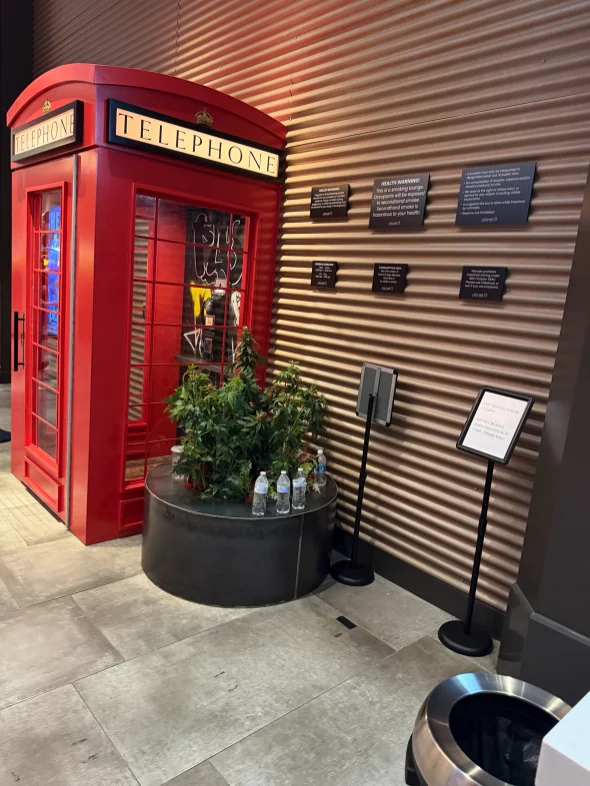
- June 2025: Several individuals, including the author, found their licenses in the database with timestamps corresponding to travel or car rental events. Notably, users who rented cars through Hertz found their data compromised, as did others who visited high-traffic locations such as the Planet13 marijuana dispensary chain in Las Vegas.
- Late August 2026: The Nexus service officially launches on the Exploit forum, immediately offering millions of records for sale.
- September 2026: Following inquiries by journalists and researchers, the Federal Bureau of Investigation (FBI) launched an official inquiry.
- Post-Publication: Shortly after the initial reporting on the breach, the Nexus portal abruptly vanished from the dark web, displaying a message stating the service was "no longer available."
The "Idscan.net" Connection
The trail of evidence points directly to idscan.net, a Louisiana-based company that provides identity verification technology to over 20,000 locations globally, including major Fortune 500 companies. The company’s own promotional materials emphasize its ability to process more than 21 million verifications monthly, utilizing advanced hardware that captures high-resolution infrared and ultraviolet images of identification documents.
The "trust" page of idscan.net previously listed a "who’s who" of American commerce, including Hertz, Target, FedEx, Motorola Solutions, and Caesars Entertainment. While some of these companies have since distanced themselves from the vendor, the incident highlights the fragility of modern identity security: when a single vendor is breached, the fallout is not limited to one company but extends to every entity that relies on that vendor’s "trusted" infrastructure.

In a brief notice published on September 8, idscan.net confirmed that an unauthorized third party had accessed and copied customer information, including full names and government-issued identification numbers. The company has since initiated notification protocols for affected individuals.
Official Responses and Regulatory Scrutiny
The FBI has treated this breach as a matter of national security. During a conference call with senior leaders from the agency’s cyber division, it was confirmed that the New Orleans field office had opened a formal investigation into the idscan.net incident. The gravity of the situation was underscored by the presence of high-ranking U.S. government officials’ licenses within the database, including that of Defense Secretary Pete Hegseth.
Corporate partners have been quick to react to the potential reputational damage. A spokesperson for Caesars Entertainment, for instance, stated that the company had not utilized idscan.net services since February 2025 and did not authorize the retention of its customer data. As investigations continue, federal authorities are likely to focus on whether idscan.net adhered to industry-standard data retention and encryption policies, or if the company’s "continuous exfiltration" claim by the hackers suggests a long-term, unaddressed vulnerability in their internal network.

Broader Implications for Privacy
The Nexus breach represents a paradigm shift in the threat landscape. For years, cybersecurity experts have warned about the "over-collection" of sensitive data. Companies, under the guise of "security" or "age verification," now routinely demand digital scans of driver’s licenses for services ranging from renting a car to entering a dispensary or accessing a hotel room.
The Risks of Centralized Databases
The primary danger lies in the centralization of these high-resolution, multi-spectrum images. Unlike a password, which can be changed, a driver’s license is a permanent, government-issued identifier. Once a high-resolution, infrared-scanned copy of a license is leaked, it can be used to facilitate synthetic identity theft, bypass "know-your-customer" (KYC) protocols at banks, and commit fraud on an industrial scale.
Vulnerable Populations
Security researcher Larry Baldwin, principal intelligence researcher at Cybera, emphasizes that this breach is particularly catastrophic for vulnerable populations. For individuals in the witness protection program or those fleeing domestic violence, the ability to disappear is a matter of life and death. Modern AI-based image matching tools make it nearly impossible for these individuals to hide if their primary identification documents are searchable on the dark web.

The "Security vs. Privacy" Paradox
The Nexus incident validates the concerns of privacy advocates who argue that requiring driver’s licenses for minor transactions creates a "honeypot" for cybercriminals. Every time a consumer hands over their license to a third-party vendor, they are implicitly trusting that vendor’s entire security stack. As Zach Edwards, founder of DecryptAds, noted, "These systems are putting sensitive data into more and more third-party vendors, and we don’t have nearly the oversight to ensure they are safe."
Conclusion: A Wake-Up Call
The disappearance of the Nexus website from the dark web does not end the threat. The data has been exfiltrated and is likely already circulating in private circles of cybercriminals. The breach of 153 million records is not just a statistical anomaly; it is a profound failure of the "verify-everything" culture that has become the default for North American commerce.
As the FBI investigation continues, the focus must shift toward accountability. If companies are to be entrusted with the most sensitive identifiers of the citizenry, they must be held to rigorous, transparent, and enforceable security standards. Until then, the Nexus incident serves as a stark reminder that in the digital age, the most dangerous place for your identity is in the hands of someone else.