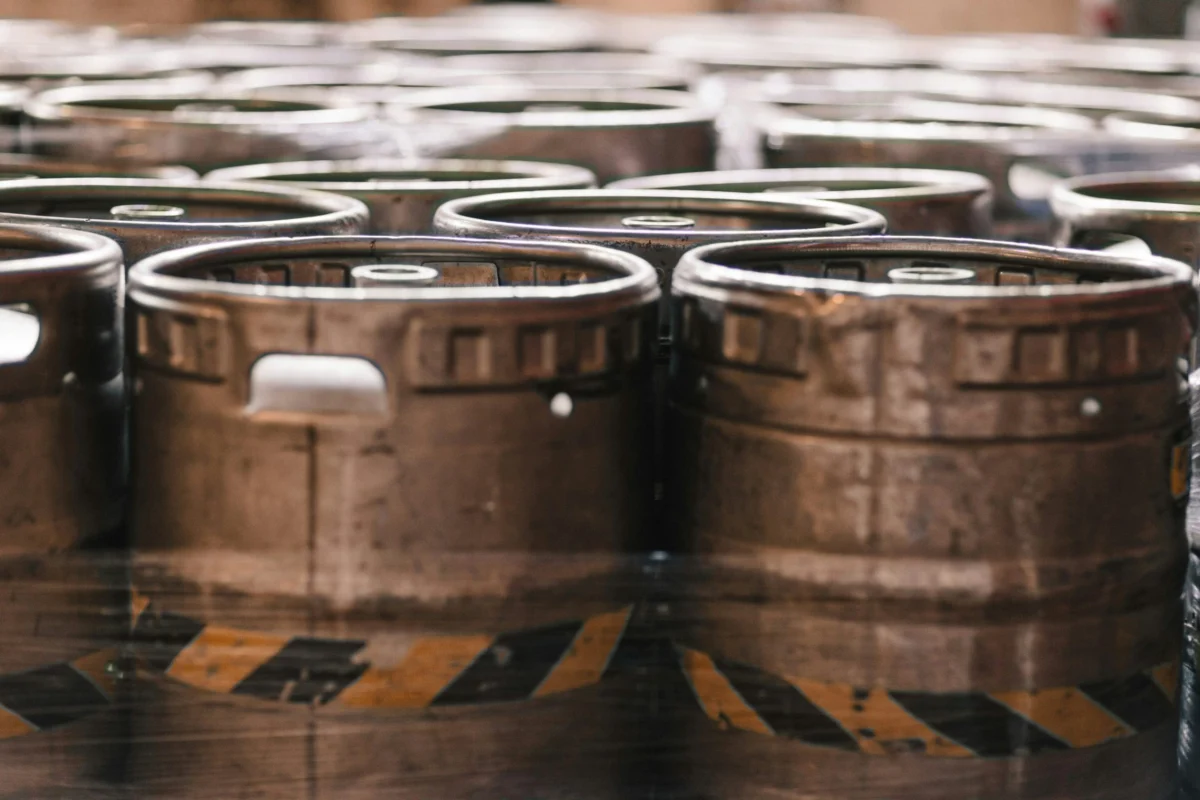
WASHINGTON — To the average consumer, the question "How many gallons are in a barrel?" appears to be a straightforward mathematical inquiry with a fixed answer. Yet, in the labyrinth of American state taxation, the true response is a frustrating and bureaucratic "it depends."
While federal statutes and centuries of industrial precedent have long established clear, uniform definitions for standard liquid volumes, a rogue faction of U.S. states continue to march to the beat of their own unconventional drums. By redefining the volume of a "barrel" for taxation, regulatory, and inspection purposes, these jurisdictions have cultivated a patchwork of non-harmonious units that impose unnecessary compliance costs on interstate commerce, distort energy data, and arguably step outside their constitutional authority.
Main Facts: The Anatomy of a Bureaucratic Disconnect
At the heart of the issue is the fundamental friction between state tax policy and physical standardization. Across the United States, numerous state governments levy taxes and inspection fees on bulk liquids—most notably petroleum and alcohol—on a per-barrel basis. However, six states deliberately diverge from federally recognized standard volumes in their state statutes.
Under the Code of Federal Regulations, a standard barrel of crude oil and petroleum products is definitively set at 42 gallons. For the brewing industry, the Code of Federal Regulations establishes a standard beer barrel at 31 gallons. These standardized measurements were originally adopted to streamline accounting, eliminate trade friction, and foster a predictable marketplace.
Despite these federal benchmarks:
- Indiana, Kansas, and Missouri define a barrel of oil or petroleum products as 50 gallons within specific statutes, usually tied to petroleum inspection fees.
- Arkansas, Connecticut, and Virginia employ idiosyncratic, non-standard definitions for barrels of beer, creating unique tax liabilities that complicate national distribution.
This lack of uniformity transforms what should be a simple mathematical calculation into a complex multi-state compliance puzzle. Businesses operating across state lines must constantly audit their accounting software to ensure they are remitting the correct tax per local gallon equivalents, driving up administrative overhead and increasing the risk of costly miscalculations.
Chronology: A History of Standardization and Divergence
To understand why these discrepancies persist, one must look back to the origins of industrial measurement in the United States—an era when inconsistency reigned supreme before producers forced a market-driven consensus.
The 19th Century: The Birth of the 42-Gallon Oil Barrel
In the nascent days of the American petroleum industry in northwestern Pennsylvania, container sizes were entirely unregulated. Producers shipped oil in whatever wooden vessels were readily available—whiskey barrels, molasses casks, and random-sized drums—causing massive accounting nightmares and intense disputes over shipping volumes.
Recognizing that this wild-west approach was stunting commercial growth, petroleum producers in the Pennsylvania oil region gathered in August 1866 to forge an agreement. They settled on a standard volume of 42 gallons for an oil barrel. This specific capacity struck an ideal balance: it was compact enough for a single worker to manually handle, yet large enough to make bulk transport economically viable. By 1872, the Petroleum Producers’ Association officially adopted the standard, and it has remained the federal benchmark ever since.
The Standardization of Beer
The alcohol industry underwent a parallel evolution. The United States issued its first federal tax stamps for beer in September 1866, though alcohol duties had existed long before. Initially, these stamps accommodated an assortment of haphazard barrel sizes.
As the brewing industry matured, pressures mounted to harmonize these units to simplify both interstate trade and federal excise tax collection. Eventually, the federal government codified the standard U.S. beer barrel at 31 gallons—a measurement that remains enshrined in Title 27 of the Code of Federal Regulations.
The Modern Fracture
While federal definitions successfully anchored national commerce, a handful of state legislatures carved out exceptions. Rather than aligning with the 42-gallon oil standard or the 31-gallon beer standard, these states instituted localized definitions—often to capture specific inspection fee revenues or adapt legacy agricultural statutes—creating the modern landscape of nonconformity that persists today.
Supporting Data: Examining the Six Non-Conforming States
The real-world manifestations of state barrel nonconformity range from the mildly inconvenient to the absurdly granular. A closer look at the six states that buck national standards reveals the depth of the regulatory headache.
The 50-Gallon Oil States: Indiana, Kansas, and Missouri
While the federal government and most states recognize an oil barrel as 42 gallons, Indiana, Kansas, and Missouri have codified 50-gallon barrels for specific state assessments.
In Indiana, for instance, the state applies a 42-gallon definition for its petroleum severance tax, yet flips to a 50-gallon definition for its petroleum products inspection fee. Under this inspection regime, gasoline is taxed at $0.50 per 50-gallon "Kansas-style" barrel—effectively working out to 1 cent per gallon, but wrapped in a layer of unnecessary translational math. Kansas and Missouri employ similarly divergent inspection fees anchored to the 50-gallon volume, forcing petroleum distributors to maintain dual-tracking accounting systems just to satisfy local bureaucratic preferences.
Arkansas: The Millionth-Decimal-Place Tax
Arkansas levies beer taxes using a statutory definition of 32 gallons per barrel—deviating slightly from the standard 31-gallon federal volume. Compounding the confusion, other sections of Arkansas state law correctly define a beer barrel as 31 gallons.
This internal contradiction manifests in unexpected ways. For example, unregistered or unlicensed beer provided at state beer festivals faces a specialized tax rate of $7.507808 per 31-gallon barrel. The existence of a tax rate calculated out to the millionth decimal place stands as a stark monument to regulatory overcomplication.
Connecticut: The Sliding Scale
Connecticut takes a different approach, levying beer taxes per barrel while defining that barrel as a sliding range: any container holding "at least 28 but not more than 31 gallons."
While this flexibility might seem accommodating to niche brewers using smaller-than-normal containers, it forces manufacturers to shoulder a heavier tax burden per gallon if they utilize vessels at the lower end of the statutory spectrum. Meanwhile, breweries utilizing standard 31-gallon units must navigate the state’s idiosyncratic compliance brackets.
Virginia: The "Per Gallon Per Barrel" Labyrinth
Virginia’s statutory code defines any container with a volume greater than 43 ounces (roughly 0.336 gallons) as a barrel, while anything smaller is categorized as a bottle. Because these definitions diverge so sharply from common commercial usage, Virginia’s tax code resorts to levying duties "per gallon per barrel," alongside complex tiered rates "per bottle" for smaller volumes and "per ounce per bottle" for containers exceeding 12 ounces.
Ultimately, Virginia’s convoluted framework functions effectively as a per-gallon tax, rendering its bizarre "barrel" definition practically meaningless for direct excise collections. However, the state’s annual brewery license fees are still calculated based on the total number of "barrels" a facility produces per year, ensuring that compliance officers must continue wrestling with obsolete terminology.
Official Responses and Data Distortion
The complications spawned by non-standard barrels extend far beyond corporate boardrooms; they actively undermine the integrity of public data.
Federal agencies tasked with tracking national energy trends have found themselves directly tripped up by state-level idiosyncrasies. Last year, the U.S. Energy Information Administration (EIA)—the premier federal entity responsible for collecting, analyzing, and disseminating independent energy information—was forced to formally revise previously published state fuel tax figures. The culprit? Kansas’s insistence on levying its petroleum inspection fee per a localized 50-gallon "barrel" rather than the standard 42-gallon measure.
When a federal agency dedicated to macroeconomic energy analysis struggles to reconcile state-level reporting anomalies, the burden placed on private enterprises becomes glaringly apparent. For interstate businesses, these friction points translate directly into higher labor hours, custom ERP software modifications, and elevated audit risks.
Implications: Constitutional Questions and the Path Forward
Beyond the economic drag on businesses and the administrative headaches for federal statisticians, legal scholars suggest that states defining non-standard volumes may be acting outside their constitutional boundaries.
The Constitutional Argument
When the American states ratified the U.S. Constitution, they deliberately delegated a specific, limited set of powers to the federal Congress. Among these enumerated powers, Article I, Section 8 explicitly grants Congress the authority to "fix the Standard of Weights and Measures."
The federal government has fully exercised this authority by formally establishing standard measurements for commercial commodities, including the 42-gallon oil barrel and the 31-gallon beer barrel. Legal analysts argue that because the power to standardize weights and measures resides exclusively with the federal legislature, states possess neither the necessity nor the constitutional authority to invent localized, non-standard definitions for federally recognized units.
A Modern Parallel to Mathematical Absurdity
Some policy observers have likened state barrel nonconformity to historical legislative blunders. Most famously, the Indiana General Assembly came dangerously close in 1897 to passing a bill—known infamously as the Indiana Pi Bill—that would have statutorily redefined the mathematical constant $pi$ to equal 3.2. While that mathematical absurdity was ultimately thwarted before becoming law, contemporary state barrel definitions persist as real-world monuments to legislative overreach in technical standardization.
Conclusion
The solution to this regulatory friction is remarkably simple. States that maintain non-standard definitions for oil and beer barrels should repeal their idiosyncratic statutes and fully conform to federal measurements.
Eliminating these arbitrary discrepancies will reduce unnecessary compliance costs, protect interstate commerce from needless friction, ensure accurate economic data reporting, and restore constitutional harmony to weights and measures. Until then, the simple question—"How many gallons are in a barrel?"—will remain a trap for the unwary, dependent entirely on which side of a state line a shipment happens to land.