








After months of speculation and a shifting timeline, Frontier Airlines has finally crystallized its strategy for entering the premium cabin market. The ultra-low-cost carrier (ULCC), long known for its “bare-bones” business model and aggressive unbundling of services, is set to introduce a formal First Class product. However, the move is proving to be a stark departure from traditional premium offerings, raising questions about whether the airline is truly elevating its service or merely rebranding extra legroom.
The Core Facts: What to Expect in March 2027
Frontier Airlines has officially confirmed that its long-discussed First Class product will be available for purchase for travel beginning March 5, 2027. This launch serves as a cornerstone of the airline’s broader initiative to capture a larger share of the premium traveler demographic and enhance its loyalty proposition.
The physical hardware of this new offering will consist of eight seats at the front of each aircraft, arranged in a 2-2 configuration. The airline has selected the Geven Comoda seating platform for this rollout. Contrary to the standard industry expectation of a "premium" experience, these seats will be "pre-reclined." In practical terms, this means the seats will not offer a mechanical recline function, a detail that has surprised many industry analysts who viewed early promotional renderings as suggesting a more traditional, adjustable seat.
Perhaps most significantly, the "soft product"—the service elements that define a premium experience—will remain largely identical to the standard economy cabin. Frontier has explicitly stated that complimentary food and beverages will not be included for First Class passengers. Instead, those seated at the front will have the same access to the airline’s buy-on-board menu as those in the standard rows.
Chronology: From Vision to Implementation
The journey to this launch has been far from linear.
- Early 2025: Frontier Airlines publicly unveiled its intention to introduce a First Class cabin, signaling a major strategic pivot for the Denver-based carrier. Initial expectations were that the product would hit the skies by late 2025.
- Late 2025 – 2026: As the airline navigated operational challenges and internal restructuring, the initial 2025 timeline became unattainable. Silence from the airline regarding specific details fueled speculation about the project’s viability.
- October 2026: Frontier is scheduled to begin the physical reconfiguration of its fleet. Because the airline is maintaining the standard economy configuration for the remainder of the cabin, the process is expected to be rapid, allowing for a fleet-wide transition in a relatively short window.
- March 5, 2027: This date marks the official commercial launch, where the product will be fully integrated into the booking system and available for revenue travel across the network.
Supporting Data and Technical Specifications
To understand why this product is being positioned the way it is, one must look at the technical constraints and the market positioning Frontier is attempting to occupy.
The selection of the Geven Comoda seat is a deliberate choice for an airline that prides itself on aircraft efficiency and low maintenance costs. By avoiding complex recline mechanisms, the airline keeps the seat weight low—a critical metric for fuel efficiency—and minimizes the "down-time" required for seat repairs.
Beyond the seat itself, the broader cabin environment will see two major technological upgrades. The first is the introduction of in-seat power, a long-requested feature that has been conspicuously absent from Frontier’s fleet. This addition finally brings the airline in line with modern passenger expectations, particularly for business travelers.
The second major pillar is the integration of Starlink Wi-Fi, which is slated for a broader rollout starting in mid-2027. This high-speed connectivity is arguably a more significant "premium" amenity than the seat itself, as it allows for streaming and productivity at altitudes where traditional satellite Wi-Fi often struggles.
Official Stance and Market Rationale
Frontier’s official documentation regarding the new product is remarkably transparent, bordering on blunt. The airline’s FAQ section notes:
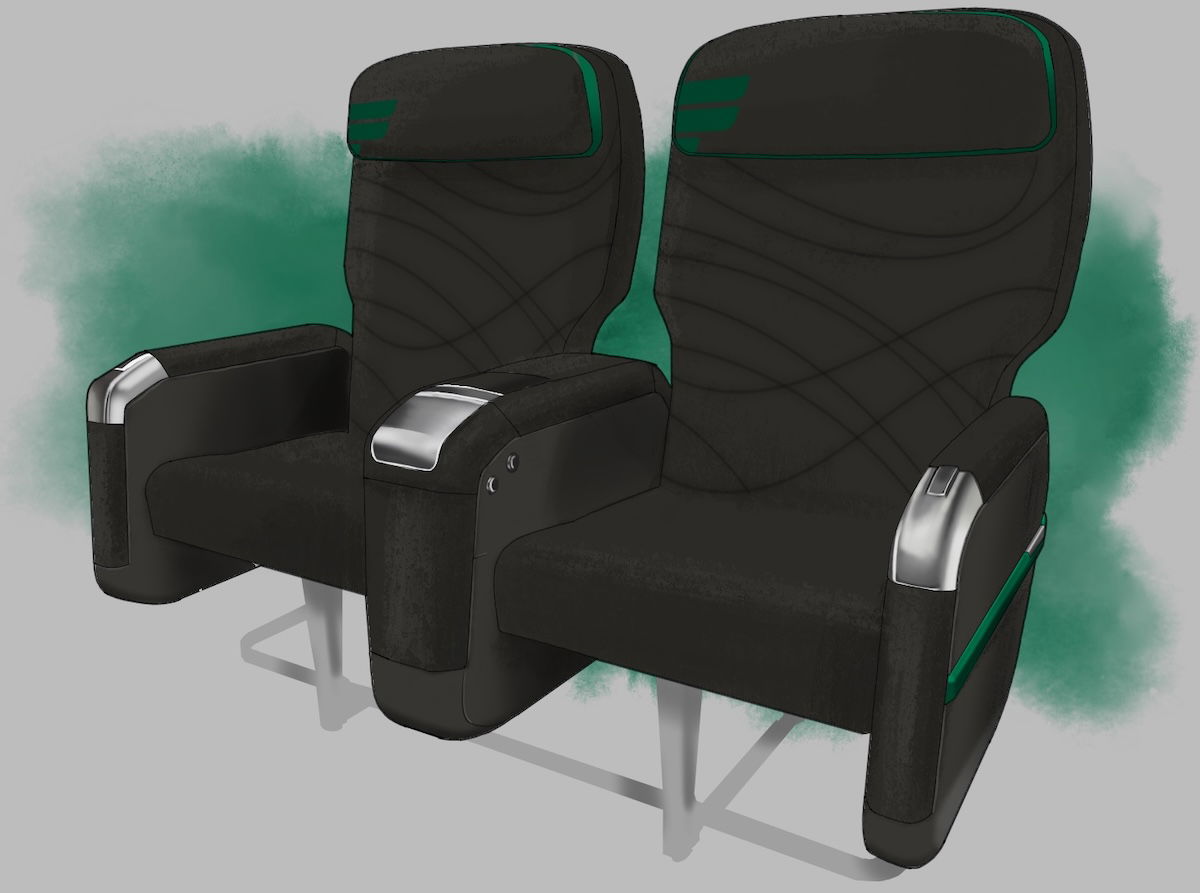
"First Class seats offer our most spacious seating experience, providing exceptional comfort and additional personal space at the front of the aircraft. These seats are pre-reclined and do not convert into lie-flat beds."
By managing expectations upfront, Frontier is clearly defining its "First Class" not as a luxury hospitality experience, but as a space-optimization product.
Industry experts suggest that this strategy is a response to the "Big Front Seat" model pioneered by Spirit Airlines. For years, travelers have been willing to pay a premium for the extra space of the front row on low-cost carriers, despite the lack of meal service or extra amenities. Frontier is essentially formalizing this demand, turning an "extra legroom" product into a distinct, bookable cabin class.
The Implications: Is It Truly "First Class"?
The decision to avoid a differentiated soft product—specifically the lack of complimentary snacks or alcohol—is a gamble. From a psychological standpoint, premium travelers often associate the "First Class" label with a sense of exclusivity and service. By stripping away these elements, Frontier risks alienating travelers who expect a standard "domestic first" experience similar to what is offered by Delta, United, or American.
However, there is a counter-argument. If Frontier prices these seats at a significant discount compared to the major legacy carriers, they may capture a new market segment: the "value-premium" traveler. These are individuals who prioritize physical space and power outlets over the prospect of a lukewarm meal or a plastic cup of wine.
If the price point is correct, this product could be highly profitable. The incremental cost to the airline of providing the seat is fixed, and because there is no service component (like hot meals or dedicated flight attendant time), the operating margin on these seats could be significantly higher than the margin on a standard economy seat.
The Competitive Landscape
The launch of this product comes at a time when the aviation industry is experiencing a "premiumization" trend. JetBlue, for instance, has been rolling out its own new cabin concepts, though even they have faced criticism for scaling back on hot meal service.
By contrast, Frontier is choosing to lean into its identity as a budget carrier. The danger, however, is brand confusion. By using the term "First Class," the airline invites direct comparison to its larger competitors. If a customer pays for "First Class" and receives an experience that feels exactly like a slightly larger economy seat, the potential for negative reviews and brand erosion is significant.
Conclusion: A High-Stakes Bet
Frontier Airlines is attempting to thread a needle: it wants to attract higher-spending customers without abandoning the lean, ultra-low-cost operational model that keeps its base fares low. The inclusion of Starlink Wi-Fi and in-seat power are tangible wins that will undoubtedly improve the passenger experience. However, the "pre-reclined" nature of the seat and the lack of a traditional soft product mean this is effectively a "premium economy" product wearing a "first class" badge.
As of March 2027, the market will decide if the Frontier passenger is looking for a luxury experience or simply a bit more room to breathe. The success of this initiative will not be measured by how many people consider it a "true" first class, but by how many are willing to pay the premium for that extra space. For a carrier that has built its reputation on the lowest possible price, this represents the most significant shift in its business strategy to date.