






For years, headlines have painted a dire picture of the American economy, citing a record-breaking $18.8 trillion in household debt as evidence of a nation on the brink of a systemic financial collapse. The narrative is consistent: high inflation, climbing interest rates, and stagnant household budgets are supposedly driving consumers toward an inevitable cliff of default and insolvency.
However, a new, comprehensive survey of 1,028 U.S. adults conducted by Lexington Law reveals a reality that is far more nuanced—and perhaps more frustrating—than the macro-level data suggests. While Americans are indeed saddled with massive debt, they are not necessarily failing to manage it. Instead, they are caught in a "stagnation trap," where the traditional metrics of financial responsibility—paying bills on time, avoiding defaults, and maintaining good credit—are no longer enough to reduce the principal balance of their debts.
The Reality of Household Debt: A Universal Burden
The survey data indicates that debt in the United States is nearly universal, with 75% of households currently managing at least one form of liability. Credit cards remain the primary source of financial strain, held by 43% of respondents, followed by mortgages (27%), auto loans (22%), and personal loans (19%).
The hierarchy of this debt is significant. While mortgages are secured by real property, the prevalence of credit cards and personal loans—which are largely unsecured—presents a structural risk. These instruments carry significantly higher interest rates and lack the protective equity buffers of home ownership. Consequently, when households face a financial squeeze, they are often juggling high-interest debt that refuses to shrink despite their best efforts.

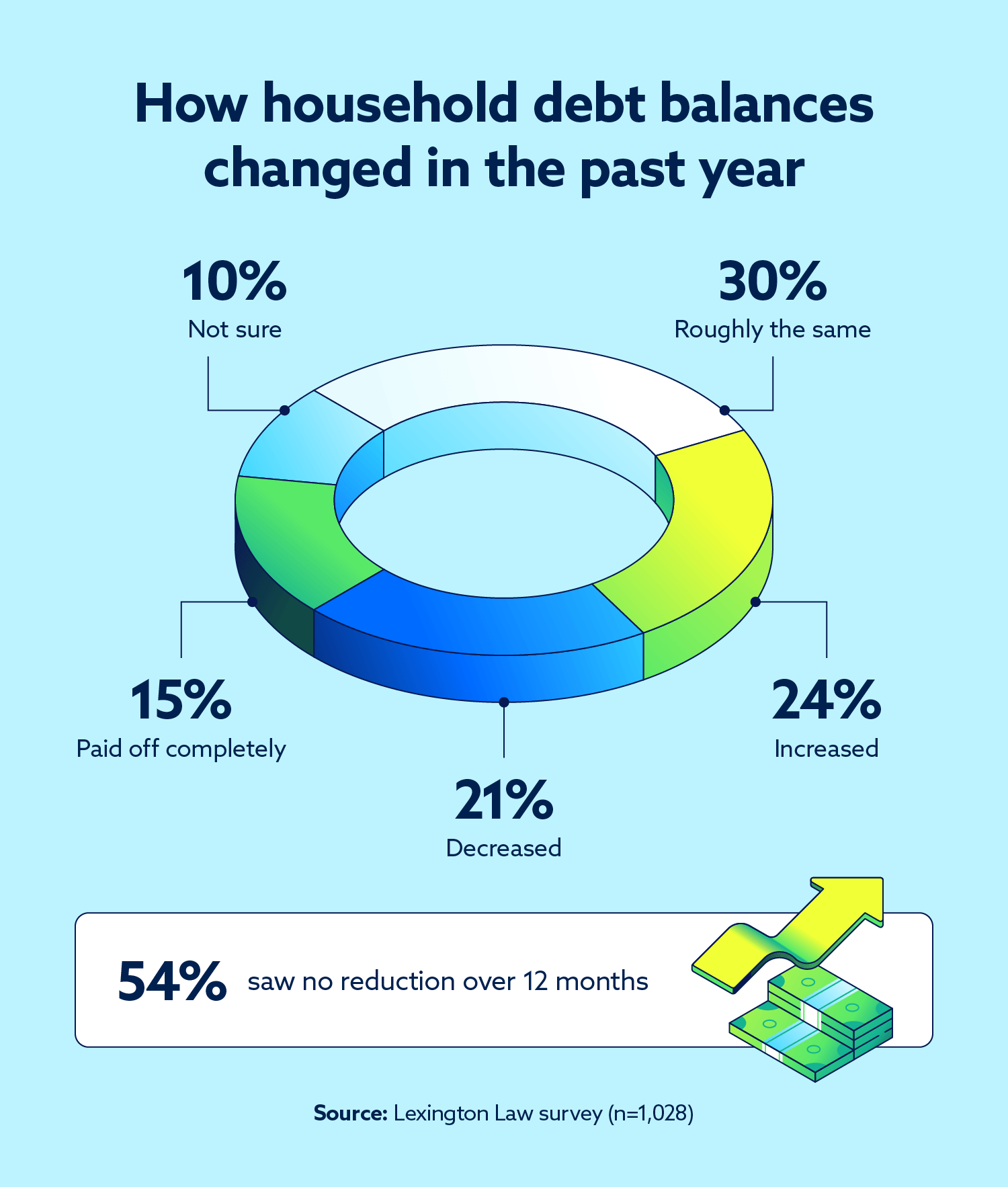
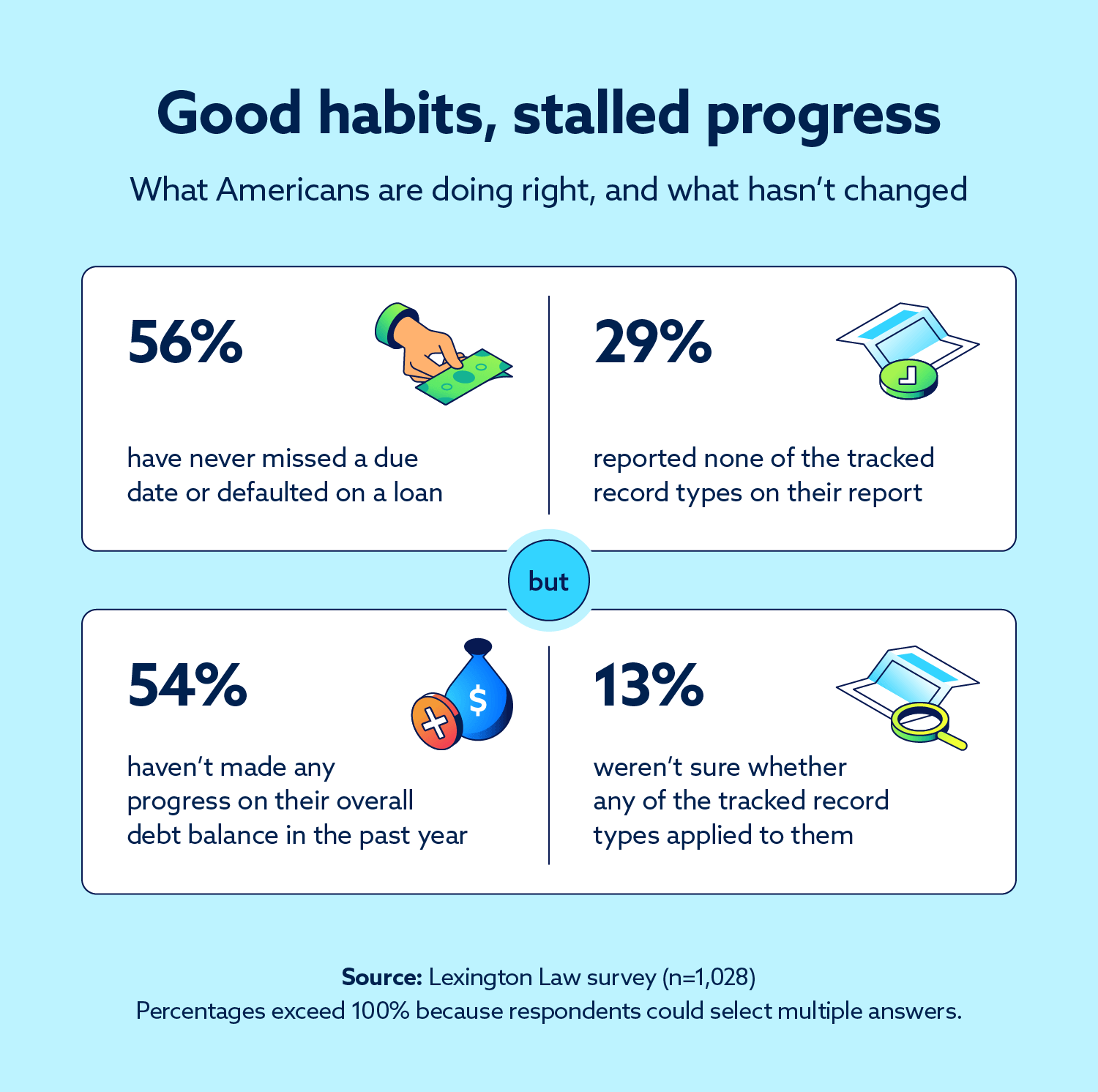
The survey found that 41% of Americans carry at least $10,000 in non-mortgage debt. Perhaps most telling is the lack of movement on these balances. Over the past 12 months, 54% of respondents reported that their overall debt balance has remained static or increased. Only 21% saw their balance shrink, and a mere 15% managed to pay their debt off entirely.
Chronology of a Financial Squeeze
To understand how we reached this point of stagnation, one must look at the last few years of economic volatility.
- The Inflationary Surge: Beginning in 2022 and accelerating through 2024, the purchasing power of the average household was eroded by persistent inflation in essential goods, including groceries, utilities, and insurance.
- The Interest Rate Environment: As the Federal Reserve raised benchmark interest rates to combat inflation, the cost of servicing variable-rate debt—specifically credit cards—skyrocketed. For many, the interest portion of their monthly payment began to consume a larger share of their budget, effectively neutralizing the impact of their principal repayments.
- The Behavioral Shift: Faced with rising costs, households initially tightened their belts. The survey data shows that the majority of Americans did not abandon their financial responsibilities. They continued to make monthly payments, often sacrificing savings or discretionary spending to maintain their status as "current" on their loans.
- The Current Stagnation: We are now in a phase where consumers are "keeping up" but not "getting ahead." The data shows that 56% of respondents have never missed a due date or defaulted on a loan, proving that the American consumer is remarkably resilient. Yet, that resilience is currently hitting a wall where their debt remains locked in place.
Supporting Data: Good Habits, No Results
The most startling takeaway from the research is the disconnect between payment behavior and debt reduction. One might expect that a population with a high rate of on-time payments would be successfully whittling down their debt. However, the data suggests that financial discipline is no longer the sole variable in the equation.
Nearly 3 in 10 respondents reported that their credit reports were free of any negative indicators—no missed payments, no collections, and no bankruptcies. This cohort represents the "model consumers," yet many of them are among the 54% who have seen no reduction in their debt balances over the past year.

The implication is clear: even with perfect payment habits, the current interest rate environment makes it mathematically difficult to pay down debt if the household is also forced to rely on credit for basic necessities. The "minimum payment" trap has become the primary mechanism of debt longevity, as interest charges continually reset the balance at the end of each billing cycle.
The Cost of Falling Behind
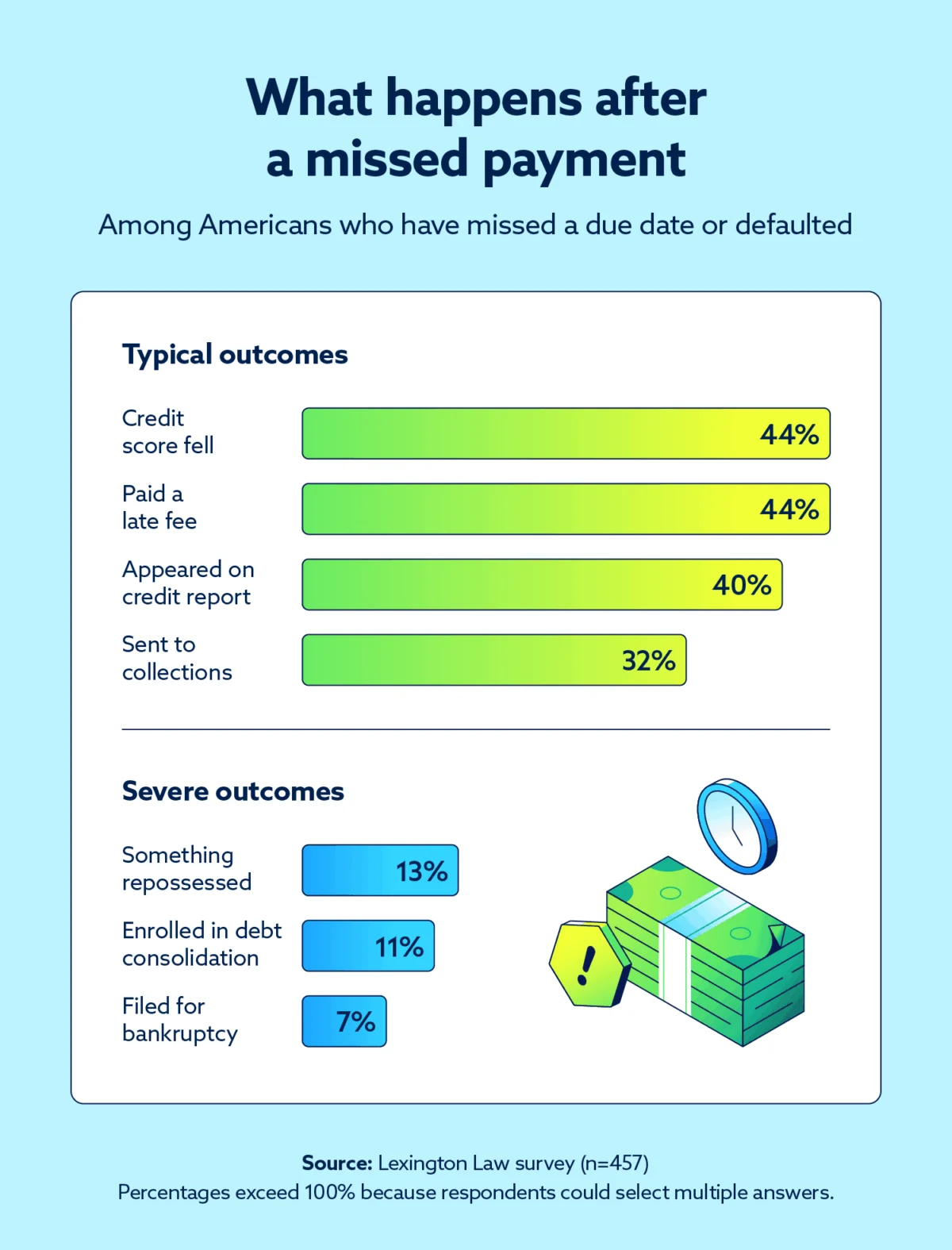
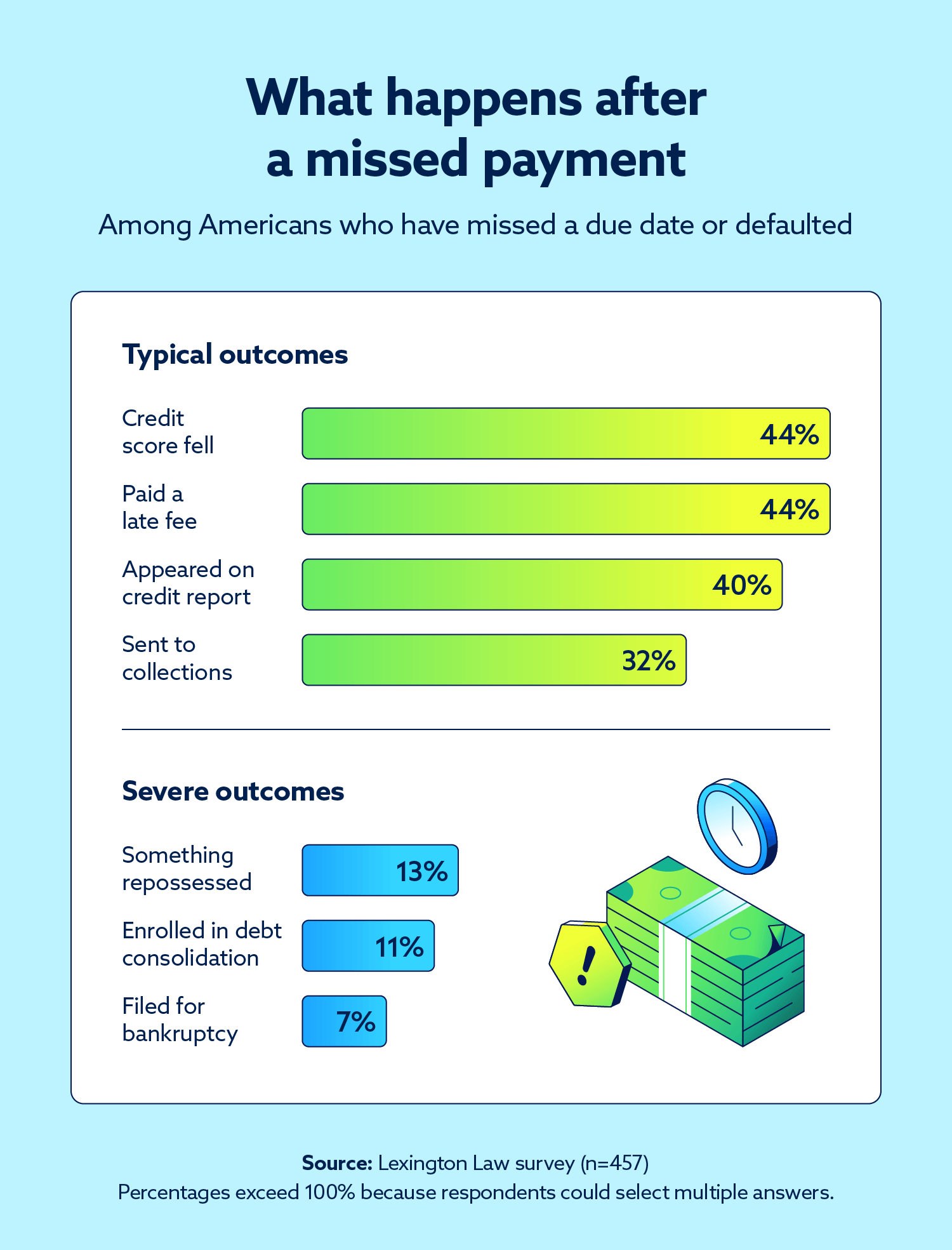
While the majority are keeping up, a significant minority—45% of respondents—have experienced at least one instance of a missed payment or default. The consequences for this group are severe and, often, long-lasting.
When a consumer misses a payment, the fallout is swift and predictable:
- 44% saw an immediate drop in their credit score.
- 44% were hit with late fees, further exacerbating their financial stress.
- 40% saw the delinquency reflected on their credit report.
- 32% had their accounts turned over to collections.
These events are rarely isolated. The survey highlights a "cascade effect" where one missed payment leads to a cycle of debt. Of those who stumbled, 13% faced repossession of assets, 11% had to seek professional debt consolidation, and 7% were forced into bankruptcy.
Critically, the survey reveals a lack of proactive advocacy among consumers. Only 17% of those who missed a payment attempted to negotiate with their lender. This highlights a massive gap in consumer literacy; many people do not realize that lenders are often willing to work with borrowers to prevent a full default, or that erroneous marks on a credit report can be disputed and removed.
Implications: The Middle-Income "Blind Spot"
Perhaps the most counterintuitive finding of the research is who feels the most financial anxiety. It is not the lowest earners, who often have little access to credit, nor the highest earners, who have the greatest buffers. It is the middle-income earners—those making between $50,000 and $99,999—who report the highest levels of concern.
This demographic, often described as the "squeezed middle," has enough credit access to accumulate significant debt but not enough financial margin to absorb an unexpected emergency. They are the group most likely to hold "fair" credit scores, and they are the ones most likely to see their balances stall.
For this group, the "blind spot" regarding their own credit reports is dangerous. Thirteen percent of all respondents admitted they were unsure if they had derogatory marks on their credit reports. In an era where credit score algorithms are increasingly sensitive to even minor fluctuations, not knowing what is on one’s report is a critical vulnerability.
Professional Perspective: The Power of Advocacy
We reached out to Moriah Beaver, an associate attorney at Lexington Law, to understand how consumers can navigate this environment of stagnation.
"The most important step for any consumer is to stop assuming that their credit report is accurate or that they are powerless against the data reported by creditors," says Beaver. "Under the Fair Credit Reporting Act, consumers have the legal right to challenge any information they believe is inaccurate, incomplete, or unsubstantiated."
Beaver emphasizes that the process of repairing credit is not merely about paying off debt—it is about ensuring the credit reporting agencies (CRAs) are reflecting the consumer’s history fairly. She suggests a systematic approach:
- Regular Monitoring: Pull credit reports weekly via official channels like AnnualCreditReport.com.
- Document Everything: Before filing a dispute, compile the account history, specific dates of alleged delinquency, and all communication with the lender.
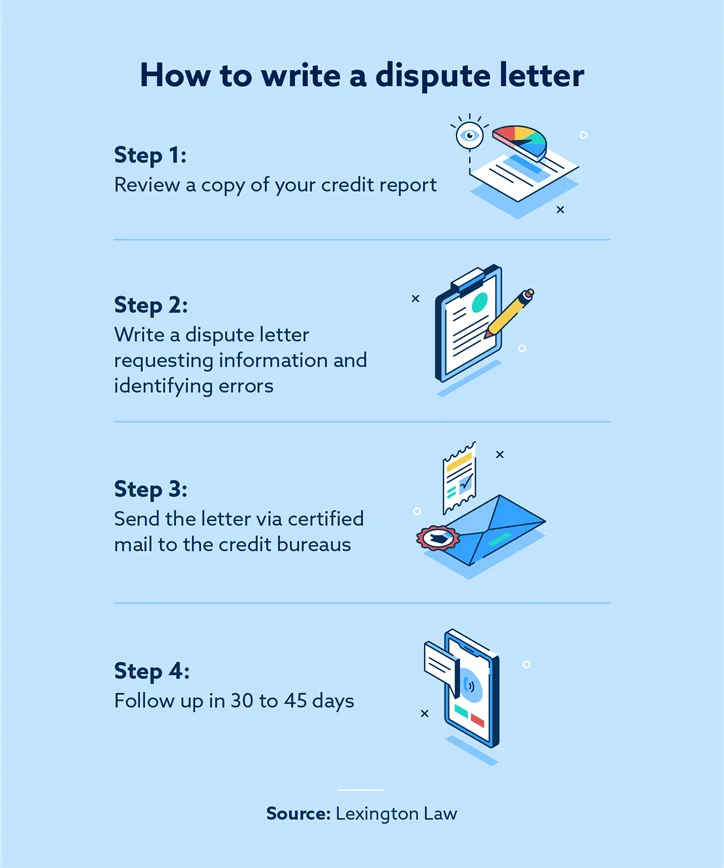
- Strategic Disputing: If a report contains errors—such as a late payment that was actually paid on time or a debt that has been settled but remains "open"—the consumer should file a formal dispute with both the creditor and the CRA.
- Professional Oversight: Because the process is time-consuming and legally complex, many consumers find success in using attorney-led services to navigate the dispute process, ensuring that the burden of proof is properly placed on the institutions reporting the data.
Conclusion: A Call for Proactivity
The state of American debt is not necessarily a crisis of character or a failure of effort. It is, largely, a structural challenge where the cost of living and the cost of debt service have outpaced the ability of the average household to make headway.
However, the survey makes it clear that "keeping up" is no longer enough. The millions of Americans who are dutifully making payments while their balances remain frozen are missing an opportunity to audit their financial health. By transitioning from a passive state of "making payments" to an active state of "managing their report," consumers can regain a sense of agency.
Financial health is not just about the money you pay out; it is about the story your credit report tells about you. In a landscape of stagnation, ensuring that story is accurate is the most effective way to begin moving forward.