








By PYMNTS
September 14, 2026
Main Facts
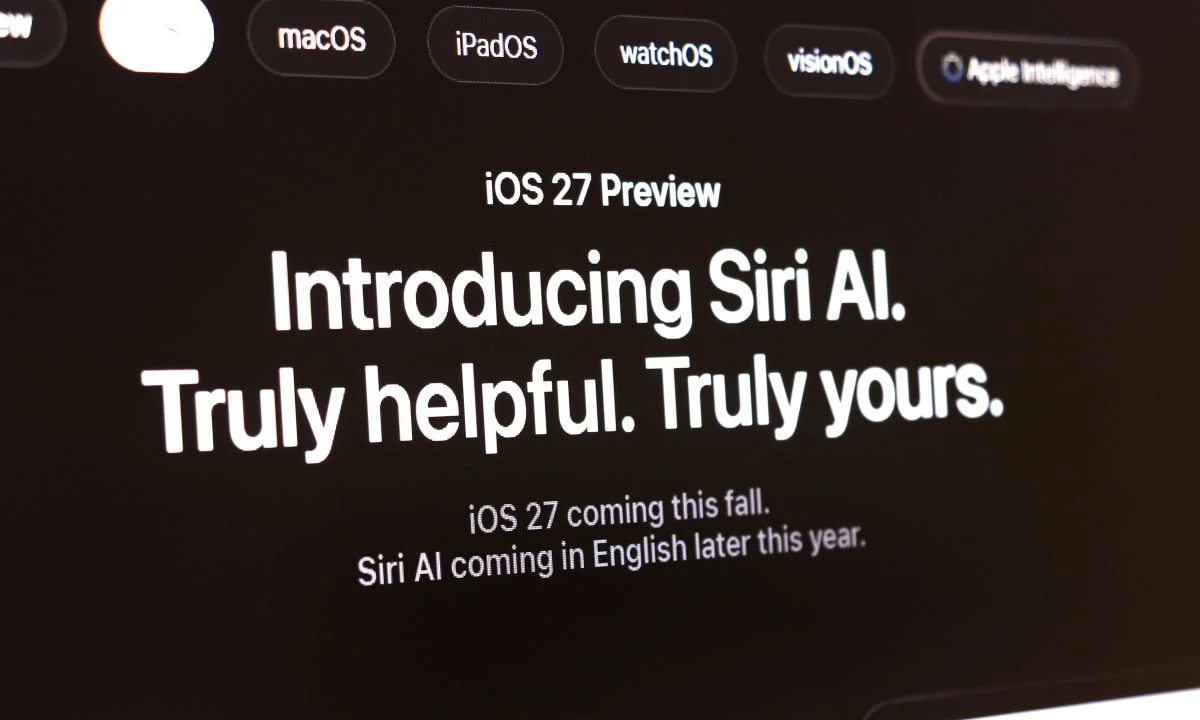
Apple officially launched its highly anticipated, artificial intelligence-powered Siri AI on Monday, September 14, 2026. Built entirely on the foundational architecture of Apple Intelligence, the tech giant’s latest digital assistant represents a monumental shift in consumer technology. According to an official press release issued by Apple, the newly reimagined assistant delivers a profoundly more capable, context-aware, and personal user experience.
The core upgrade centers on Siri’s deep integration with personal context understanding, expansive world knowledge, real-time onscreen awareness, and expanded systemwide app actions. Rather than acting as a static, command-based query tool, the new Siri AI functions as an active participant across a user’s entire digital ecosystem. It seamlessly bridges gaps between disparate applications, parsing data from emails, messages, photos, and web searches to deliver actionable insights in real time.
Initially rolling out in beta for English-speaking users, Apple has mapped out a rapid international expansion strategy. The company confirmed that support for French, Japanese, Korean, Portuguese, and Spanish will be introduced as early as October.
However, the global rollout is not without friction. Apple also disclosed that Siri AI and its associated Apple Intelligence features will not be available at launch in the European Union (EU) or China. In the EU, the delay stems from ongoing regulatory disputes regarding data sharing and platform interoperability, while the Chinese rollout remains paused as Apple navigates local compliance and regulatory requirements.
Chronology
To understand how Apple arrived at this milestone, it is necessary to examine the timeline of development, regulatory standoffs, and strategic positioning leading up to the September 2026 release.
- June 2024 (The Vision): Apple first formally introduces its vision for generative AI integrated into its operating systems at the Worldwide Developers Conference (WWDC), outlining the framework that would eventually become known as Apple Intelligence.
- June 2025 (The Regulatory Warning): Early warning signs emerge regarding international deployments. Apple publicly signals that regulatory hurdles in the European Union—specifically concerning the Digital Markets Act (DMA)—may delay the rollout of advanced AI features due to strict compliance interpretations that conflict with Apple’s end-to-end privacy frameworks.
- September 2025 (The Consumer Expectation Build): Following months of intense industry hype and speculation, tech analysts project that Apple’s hardware-software synergy will redefine how consumers interact with mobile AI.
- September 9, 2026 (The Strategic Positioning): Just days prior to launch, industry reports highlight Apple’s core argument: because the company vertically integrates hardware, operating systems, and device-level data, it is uniquely positioned to deliver secure, highly personalized AI without compromising user privacy.
- September 14, 2026 (The Official Release): Apple officially releases the Siri AI beta in English, accompanied by sweeping ecosystem updates including intelligent Safari browsing tools, enhanced photo-editing capabilities, and the brand-new Image Playground for generating photorealistic imagery. Simultaneously, Apple confirms the regulatory blackouts in the EU and China.
- October 2026 (Upcoming Expansion): Apple plans to scale the Siri AI beta to support French, Japanese, Korean, Portuguese, and Spanish-speaking markets.
Supporting Data and Technical Capabilities
The reimagined Siri AI is built upon a hybrid architecture that combines on-device processing with private cloud computing, ensuring that user data remains strictly confidential. The technical feature set announced by Apple includes several advanced capabilities:
1. Cross-App Actions and Onscreen Awareness
Unlike older iterations of Siri, which were largely confined to individual applications or basic device controls, Siri AI possesses onscreen awareness. It can recognize what is currently displayed on the user’s screen and execute contextually relevant actions. For instance, if a friend sends an address via a messaging app, Siri can extract that information, cross-reference it with calendar availability, and map out travel times without requiring manual copy-pasting.
2. Deep Personal Data Integration
Siri AI acts as an intelligent indexer for a user’s personal digital footprint. It can securely comb through personal messages, emails, and photos to answer complex, multi-layered queries. Examples provided by Apple include questions like, "What time did my flight land last Tuesday based on my confirmation email?" or "Show me photos of Sarah from our trip to Boston last fall."
3. Enhanced Web Knowledge and Follow-Up Handling
Leveraging expanded world knowledge, Siri can answer open-ended questions on virtually any topic while maintaining conversational context. Users can ask follow-up questions naturally, as the assistant remembers the trajectory of the conversation. Furthermore, dictated text is captured and polished with significantly greater precision, utilizing advanced natural language processing.
4. Broader Apple Intelligence Ecosystem
Siri AI does not operate in a vacuum; it is the conversational front-end for a suite of Apple Intelligence tools. These include:
- Photos: Advanced editing capabilities that allow users to effortlessly remove objects or touch up images using natural language prompts.
- Safari: Intelligent browsing tools that automatically summarize long-form articles, extract key takeaways, and highlight essential data points.
- Image Playground: A dedicated creative suite enabling users to generate customized, photorealistic, and stylized imagery directly on their devices.
Official Responses and Industry Context
Apple’s official statements emphasize its unique competitive advantage: the tight integration of hardware, software, and proprietary silicon.
“Siri AI can help users find what they need in the moment, from answering questions on virtually any topic to surfacing relevant information from a user’s messages, emails, photos, and more,” Apple stated in its official press release. “And Apple Intelligence makes everyday experiences across Apple products more personal and helpful…”
Industry analysts note that Apple has spent the past two years playing catch-up in the public perception of generative AI, particularly against competitors like OpenAI, Google, and Microsoft. However, Apple’s strategy has deliberately bypassed the raw computational race in favor of trust, utility, and data minimization. By processing the vast majority of requests directly on the device using Apple’s custom neural engines, the company has sought to position itself as the safe alternative in an era plagued by data privacy scandals and cloud-scraping concerns.
This hardware-centric approach was underscored in reports leading up to the launch, where Apple asserted that controlling the entire stack—from the iPhone processor to the operating system—allows it to offer a level of context-aware intelligence that third-party cloud-based apps simply cannot replicate safely.
Implications
The launch of Siri AI carries profound implications for the consumer technology landscape, software developers, and global regulatory compliance frameworks.
The Impact on Consumer Expectations
With Siri AI now natively woven into iOS, iPadOS, and WatchOS, consumer expectations for digital assistants have permanently shifted. Simple voice commands for setting timers or checking weather forecasts are no longer sufficient. Users now expect their devices to understand personal context, anticipate needs, and execute complex workflows autonomously across multiple applications. This puts pressure on rival ecosystems—such as Google’s Android and Microsoft’s Windows ecosystem—to accelerate their own on-device context-matching capabilities.
The Regulatory Standoff in Europe and China
The exclusion of Siri AI from the European Union and China highlights an escalating clash between big tech innovation and regional regulatory mandates.
- In the European Union: Apple’s hesitation to launch Siri AI stems from stringent requirements under the Digital Markets Act (DMA), which mandates interoperability with third-party services and platforms. Apple maintains that opening up the deeply integrated Apple Intelligence architecture to external competitors without compromising end-to-end encryption and user privacy is a technical and legal tightrope. In the press release, Apple noted that it is "working hard to find a path forward that preserves its users’ privacy and security." Until a compromise is struck, millions of Apple users in Europe will be cut off from the company’s flagship software upgrade.
- In China: Similar hurdles exist regarding local data governance, content moderation, and algorithmic approval processes. Apple must navigate strict state regulations governing AI model training and data handling before Siri AI can be cleared for Chinese consumers.
Developer and App Ecosystem Shifts
For third-party developers, the release of Siri AI marks a fundamental change in how applications interact with operating systems. By opening up systemwide app actions and deep-context APIs, Apple is inviting developers to make their apps "AI-ready." Apps that fail to integrate with Apple Intelligence risk being sidelined as consumers increasingly rely on Siri to perform cross-app tasks autonomously.
Conclusion
Apple’s rollout of Siri AI on September 14, 2026, marks a watershed moment for personal computing. By successfully merging deep personal context with powerful on-device artificial intelligence, Apple has redefined what a digital assistant can achieve. Yet, as the company scales this technology globally, its immediate future will be defined not just by computational breakthroughs, but by its ability to resolve complex regulatory disputes across the globe.