








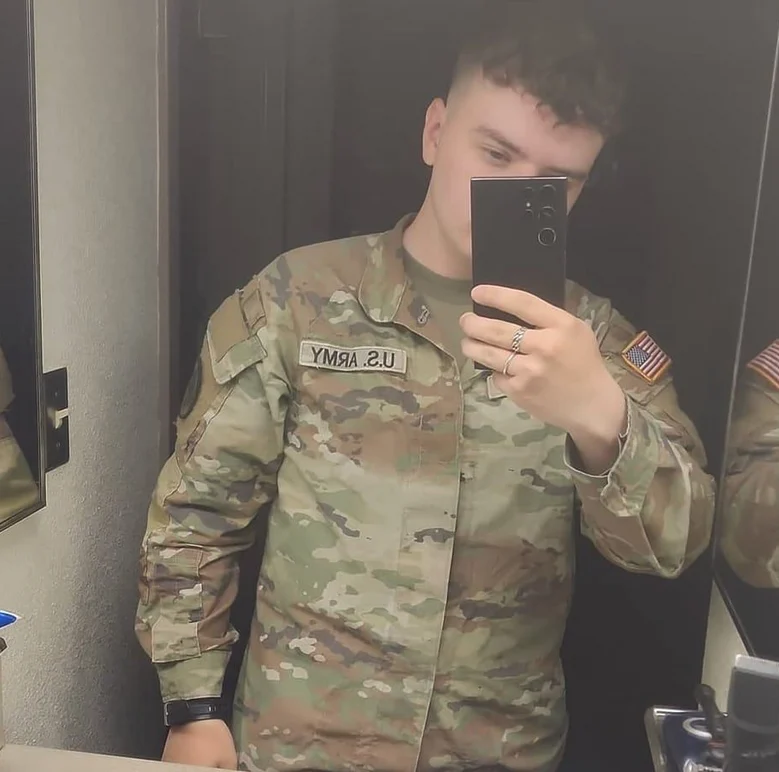
A 22-year-old U.S. Army soldier who traded his military oath for a life of digital sabotage has been sentenced to 70 months in federal prison. Cameron John Wagenius, known in the darkest corners of the internet by the alias “Kiberphant0m,” was handed down the sentence in a Seattle courtroom today, marking the conclusion of a sprawling investigation into a series of massive data breaches that shook the global telecommunications industry.
Wagenius, who was stationed in South Korea at the height of his criminal activities, pleaded guilty to charges related to the theft of metadata for more than 100 million AT&T customers. Beyond the prison term, he has been ordered to pay $294,978 in restitution—a figure that underscores the severe operational and reputational damage inflicted upon the victimized corporations.
The Anatomy of the Breaches: A Failure of Digital Hygiene
The saga of “Kiberphant0m” serves as a sobering case study in the dangers of poor credential management. The breaches were not the result of sophisticated, state-sponsored cyber-warfare, but rather the exploitation of basic security oversights.
Working with a small cadre of co-conspirators, Wagenius targeted organizations utilizing the Snowflake cloud data storage platform. The attackers identified large corporate clients who had failed to enforce multi-factor authentication (MFA) and possessed exposed, valid login credentials. By gaining access to these accounts, the group harvested vast tranches of sensitive data.
The stolen information included call and text metadata for tens of millions of AT&T customers—data that tracks the “who, when, and where” of communication, including source and destination numbers, timestamps, and call durations. While the content of these messages remained encrypted, the metadata alone provided a roadmap of private associations, movements, and habits that posed significant privacy risks to the general public.
Chronology of a Cyber-Criminal Career
The rise of Kiberphant0m was marked by a blend of technical audacity and reckless hubris.
- Late 2024: Wagenius begins his campaign, bragging on underground cybercrime forums about his successful penetration of major telecommunications companies, including Verizon’s Push-to-Talk infrastructure. He utilizes these breaches to publicly extort the companies, threatening the public release of the stolen data if his demands are not met.
- November 2025: Security researcher Brian Krebs publishes a report suggesting that the individual behind the Kiberphant0m moniker is likely a U.S. soldier stationed in South Korea.
- December 2025: Following the investigation by federal authorities, Wagenius is apprehended. He is hit with two separate federal indictments, to which he eventually pleads guilty.
- August 2026: Conor Riley Moucka, an alleged co-conspirator, pleads guilty in Canada for his role in the Snowflake extortion ring.
- September 2026: Federal prosecutors file a sentencing memo detailing that even while incarcerated and awaiting his fate, Wagenius continued to attempt to exploit computer systems, this time targeting the Bureau of Prisons (BOP).
The Cast of Characters: A Network of Digital Outlaws
Wagenius did not act alone. His criminal enterprise involved a cohort of experienced digital agitators, each with their own history of notoriety:
- Kenneth Schuchman: A 28-year-old from Vancouver, Washington, who previously gained infamy in 2019 for his role in the Satori botnet. The Satori botnet was a massive, self-propagating force that hijacked thousands of Internet-of-Things (IoT) devices to launch devastating Distributed Denial-of-Service (DDoS) attacks.
- Conor Riley Moucka (a.k.a. “Judische”): A resident of Kitchener, Ontario, who played a central role in the Snowflake data thefts.
- John Erin Binns: An American expatriate living in Turkey. Binns is also a person of interest in the massive 2021 T-Mobile data breach that compromised the personal details of at least 76 million individuals.
The National Security Nightmare
Perhaps the most alarming aspect of Wagenius’s career occurred after his primary extortion schemes began to crumble. When the extortion group did not receive the full compliance they demanded—or when their members began to face arrest—Kiberphant0m escalated his tactics.
Following the arrest of his associate, Moucka, Wagenius leaked what he claimed were the call logs for then-President-elect Donald Trump and then-Vice President Kamala Harris. He further claimed to possess schematics stolen from the U.S. National Security Agency (NSA). This shift from corporate extortion to the potential compromise of national security figures and intelligence assets transformed the case from a standard cybercrime investigation into a high-priority national security matter.
Official Responses and the "Insider Threat"
Paul Russell, a resident agent in charge at the Defense Criminal Investigative Service (DCIS), expressed the shock that permeated the intelligence and law enforcement communities when the identity of Kiberphant0m was confirmed.
“We don’t often get leads where there’s an active duty soldier with a secret clearance who’s creating hacking tools and trafficking in data,” Russell remarked. “That doesn’t happen every day. It was very serious from jump street, just because it was unique, it was an insider threat, and we weren’t sure what we were dealing with.”
The investigation was a collaborative effort involving the FBI, the Army Criminal Investigative Division (CID), and the U.S. Secret Service, highlighting the government’s shift toward a more aggressive, unified response to the intersection of military personnel and domestic cyber-terrorism.
The Incarcerated Hacker: Old Habits Die Hard
Even while in custody, Wagenius demonstrated an irrepressible desire to exploit system vulnerabilities. Federal prosecutors highlighted in their sentencing memo that the defendant utilized the email accounts of fellow inmates to solicit AI tools for instructions on exploiting Windows 10, crafting antennas for radio signal interception within prison walls, and researching methods for escape.
Wagenius attempted to use “prompt injection”—a method of bypassing the safety filters of commercial AI tools—by framing his requests as research for a book he claimed to be writing. When confronted, he argued that he was merely looking for vulnerabilities to report them to the Bureau of Prisons—a claim the government treated with extreme skepticism.
Implications: The Reality of Modern Extortion
The irony of the Kiberphant0m case lies in the disparity between the scale of the theft and the financial gain. Despite breaching the data of over 100 million people, prosecutors revealed that Wagenius netted only about $1,500 from the sale of stolen information.
However, the lack of monetary success does not mitigate the danger. The case underscores three critical implications for the modern digital age:
1. The Proliferation of AI in Cyber-Crime
The sentencing memo provides a chilling look at how easily AI tools can be weaponized. Even a prisoner with limited access to technology can leverage AI to provide complex code and exploit paths for known vulnerabilities (CVEs), effectively lowering the barrier to entry for cyber-attacks.
2. The Vulnerability of Cloud Infrastructure
The Snowflake breaches proved that even the most robust cloud platforms are only as secure as the weakest client configuration. The mandate that all accounts must now utilize multi-factor authentication is a direct response to the vulnerability exposed by Wagenius and his team.
3. The New "Insider Threat" Paradigm
The fact that an active-duty soldier with a secret clearance could operate an international extortion ring highlights a massive gap in military counter-intelligence and oversight. The military and defense sectors must now grapple with how to monitor the digital footprints of service members to ensure that those entrusted with national secrets are not simultaneously engaged in the systematic dismantling of civilian data privacy.
As Cameron Wagenius begins his 70-month sentence, the digital world is left to contend with the wreckage of his actions. His case remains a potent reminder that in an interconnected world, the most dangerous threats may not be foreign adversaries, but the individuals already inside the wire, fueled by ego, technical curiosity, and a complete disregard for the consequences of their digital footprint.