







In the annals of modern aviation, few occurrences are as disconcerting as those that defy standard operating procedures during the most critical phases of flight. On August 15, 2026, a Vietnam Airlines Boeing 787-9 Dreamliner experienced a harrowing takeoff roll at Munich Airport (MUC), resulting in a runway overrun, damage to ground infrastructure, and significant structural harm to the aircraft itself. While the 287 passengers and crew members miraculously escaped injury, the incident has left the global aviation community searching for answers.
A newly released preliminary report from the German Federal Bureau of Aircraft Accident Investigation (BFU) has finally broken the silence surrounding the event. However, rather than providing immediate clarity, the findings have introduced a layer of complexity that has experts and investigators questioning the very mechanics of the takeoff roll.
The Core Findings: Unintended Braking Inputs
The central revelation of the BFU’s preliminary report is the confirmation of anomalous inputs at the captain’s station. Flight data recorders have determined that, throughout the takeoff roll, there were repeated and sustained brake pedal inputs originating from the pilot’s seat.
In a standard takeoff procedure, the rudder pedals serve a dual purpose: they control the aircraft’s nose-wheel steering and rudder movement, and they house the braking mechanism. To activate the brakes, a pilot must depress the top portion of the pedals—a distinct physical action from the forward-and-aft movement required for steering. The BFU’s discovery that these brakes were activated while the engines were operating at takeoff thrust explains the lack of acceleration, but it raises the uncomfortable question of how such a critical error—or malfunction—occurred at the hands of a senior flight officer.
Chronology of a Failed Departure
The incident began as a routine departure. The Boeing 787-9 was cleared for takeoff on one of Munich’s primary runways—a massive stretch of pavement measuring over 13,000 feet. Under normal circumstances, this runway length provides an immense safety buffer for the Dreamliner, even at maximum takeoff weight.
- Initiation of Roll: The aircraft began its takeoff roll normally, with engines reaching the required power settings.
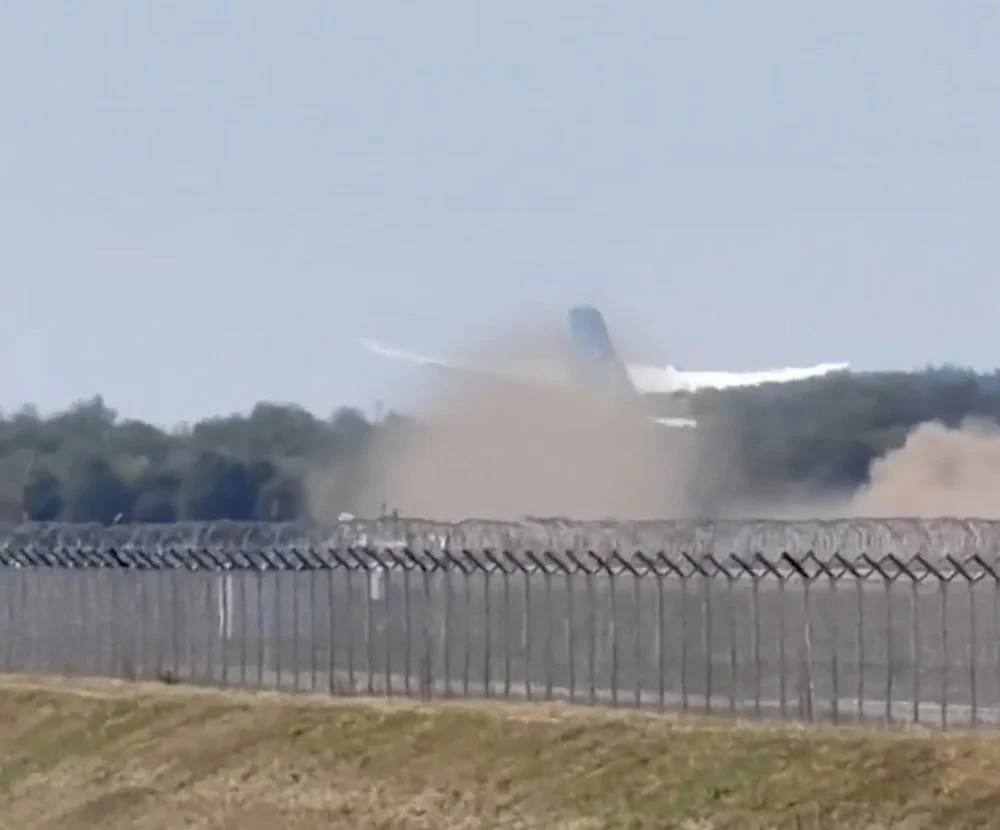
- Lack of Acceleration: As the aircraft proceeded down the runway, it failed to reach rotation speed (Vr) within the expected distance. Eyewitness accounts and video footage from the scene suggest the aircraft remained in a "rolling" state far longer than standard safety margins permit.
- Runway Overrun: Unable to achieve the lift-off speed required to clear the airport perimeter, the aircraft overran the end of the paved runway. In doing so, it struck several runway lighting arrays and other navigational aids.
- The "Miracle" Lift: Despite the damage sustained to the landing gear and fuselage, the aircraft eventually achieved enough airspeed to become airborne.
- The Aftermath: Following the departure, the flight crew identified the anomalies and entered a holding pattern to burn fuel, eventually performing an emergency landing back at Munich.
Analyzing the "Why": Technical Malfunction vs. Human Factor
The aviation industry is now grappling with the primary question: Why were the brakes applied during a high-speed takeoff roll?
The Case for Mechanical Failure
While pilot error is often the first area of scrutiny, investigators are not ruling out a mechanical or electronic glitch. The 787 utilizes a sophisticated fly-by-wire system. If a fault were to occur within the brake control unit or the pedal transducers, it is theoretically possible that the aircraft’s computer system "perceived" brake inputs that the pilot did not intend to make. However, if such a failure occurred, standard pilot training dictates that the crew should have immediately recognized the lack of acceleration and aborted the takeoff.
The Case for Human Factor/Ergonomics
The fact that these inputs originated from the captain’s seat adds a layer of professional scrutiny. The captain, presumably the most experienced individual in the cockpit, is trained to maintain a "clean" foot position during takeoff. Is it possible that, due to seat positioning or an ergonomic obstruction, the pilot inadvertently rested their feet in a way that depressed the brake toe-pads? Or, in a moment of cognitive overload, did the pilot experience a spatial disorientation event?

The Question of Intent
Perhaps the most sensitive aspect of the investigation is the possibility of an intentional act. Given the proximity of this incident to previous high-profile aviation events—such as the Air India Boeing 787 incident where power was manually reduced—investigators are mandated to examine the possibility of an "insider threat" or a deliberate, non-standard intervention. While there is no evidence at this stage to suggest malice, the BFU must conduct a thorough review of the cockpit voice recorder (CVR) to determine the state of communication between the captain and the first officer during the rollout.
Comparative Context: Learning from History
Aviation safety is built on the foundation of learning from the past. The industry is currently drawing parallels to other incidents where the Boeing 787’s systems and human interface have been at the center of investigations.
When analyzing the "why," safety experts point to the "startle effect." If the aircraft began to decelerate, why did the crew not immediately initiate a Rejected Takeoff (RTO)? The decision to continue a takeoff roll after a performance deficit is usually catastrophic. The fact that the crew continued suggests that they may not have realized the brakes were engaged, or they were operating under the false assumption that the aircraft would eventually reach the necessary speed.
Official Responses and Next Steps
Vietnam Airlines has issued a brief statement confirming their full cooperation with the BFU and the relevant aviation authorities in Germany. The airline has pledged to support the ongoing investigation, including the internal review of their training protocols and pilot certification standards.
The BFU, meanwhile, has moved to the next phase of the investigation:
- Simulator Replication: Engineers are using flight simulators to attempt to replicate the specific brake inputs recorded in the data to see if the same result occurs under controlled conditions.
- Component Testing: The actual brake assemblies and pedal sensors from the aircraft are being subjected to forensic examination to rule out hardware failures.
- Personnel Review: The flight crew’s history, medical fitness, and recent training cycles are being audited to determine if there were any underlying issues that could have contributed to the incident.
Implications for the Aviation Industry
This incident serves as a stark reminder of the complexities inherent in modern flight decks. As aircraft become more automated, the relationship between the pilot and the machine becomes increasingly nuanced. The "human-in-the-loop" factor remains the final safety barrier in aviation, and when that barrier is compromised—whether through technical error, physical oversight, or human lapse—the results can be devastating.
The global aviation community awaits the final report with anticipation. If this incident was caused by a system interaction that the pilots did not anticipate, it may necessitate a change in how Boeing designs pedal sensitivity or how airlines train pilots to monitor acceleration performance. If it is found to be a human error, it may spark a renewed debate on the ergonomics of the 787 flight deck and the necessity for more robust "braking-during-takeoff" warnings.
For now, the passengers who walked away from the Munich incident remain a testament to the resilience of the aircraft’s design, even as the mystery of the "brakes that shouldn’t have been" remains a haunting question for the aviation industry at large. As we look toward the final findings, the primary goal remains clear: ensuring that such a scenario never repeats itself on a runway anywhere in the world.