









On July 1, 2026, the landscape of higher education financing in the United States will undergo its most significant transformation in decades. The federal government is effectively shuttering the Grad PLUS loan program for new borrowers, replacing the current "cost of attendance" borrowing model with rigid, fixed annual and lifetime caps. For thousands of graduate and professional students, this shift represents a fundamental change in the affordability of advanced degrees.
As the deadline approaches, students, financial aid officers, and university administrators are bracing for a transition that threatens to reshape not just individual debt trajectories, but the viability of entire degree programs.
Main Facts: The New Federal Borrowing Limits
The core of the policy change lies in the replacement of open-ended Grad PLUS loans with specific, non-negotiable caps. Under the current system, students can borrow up to the total "cost of attendance"—which includes tuition, fees, room, board, and books—as determined by their university. After July 1, 2026, that flexibility disappears.
The New Cap Structure
- Graduate Students: Capped at $20,500 per year, with a lifetime aggregate limit of $100,000.
- Professional Students: Capped at $50,000 per year, with a lifetime aggregate limit of $200,000.
- Combined Lifetime Federal Limit: For all federal student loans (including undergraduate), the absolute cap is $257,500.
The distinction between "graduate" and "professional" is critical. While fields like medicine, dentistry, law, veterinary medicine, and chiropractic qualify for the $50,000 professional cap, other high-cost clinical degrees—including nurse practitioners, physician assistants, and physical therapists—are classified as standard graduate programs. These students face a significantly tighter $20,500 annual limit, creating a potential financial crisis for those in programs where tuition alone often exceeds that amount.
Chronology: The Road to the 2026 Shift
The transition to these caps is not happening overnight, but the window for preparation is closing rapidly.
- Pre-July 2026: The current status quo remains. Students may continue to borrow up to the full cost of attendance via Grad PLUS loans, provided they meet standard eligibility criteria.
- July 1, 2026 (The "Hard Stop"): New borrowers—those who have not taken out a federal loan for their current program prior to this date—will be subject to the new caps immediately.
- The Three-Year Grandfathering Window: Students who have already received a Direct Loan for their current program before the July 2026 deadline are permitted to remain under the "legacy rules." They may continue to access Grad PLUS loans for up to three academic years or until graduation, whichever comes first.
- The Continuous Enrollment Requirement: To maintain "grandfathered" status, students must remain in the same program without interruption. Any withdrawal or leave of absence occurring after July 2026 will immediately terminate access to legacy borrowing, forcing the student to adhere to the new, lower federal caps upon their return.
Supporting Data: Why the Caps Create a Funding Gap
The math behind these changes reveals a stark reality. Many professional programs, particularly in medicine and dentistry, often command tuition rates exceeding $60,000–$80,000 annually, excluding living expenses.
If a dental student is capped at $50,000 per year, they face an immediate annual shortfall. For a student in a physical therapy program capped at $20,500, the gap is even more severe. With federal aid insufficient to cover the cost of attendance, the burden of financing these degrees will shift toward the private student loan market.
The Private Lending Frontier
The private lending sector is currently ill-equipped to handle this volume. Historically, 90% of private student loans were issued to undergraduates with a parental cosigner. Professional students, however, possess different risk profiles—they have high future earning potential but carry massive existing debt.
Because underwriting models have not yet adjusted to this influx of "high-balance, high-earning" borrowers, we can expect significant volatility in interest rates and lending requirements during the first 12 to 24 months. Some lenders may adopt aggressive tactics to capture this market, while others may retreat, leading to a fragmented and unpredictable borrowing environment for students.
Implications: The Pressure on Higher Education
The economic shockwave of these caps will extend far beyond the student’s wallet; it will likely force a structural reckoning for universities.
Institutional Viability
For years, many professional programs have relied on the availability of unlimited federal loans to justify rising tuition costs. With the "federal backstop" removed, programs with high costs and mediocre employment outcomes may face a "market correction."
Experts anticipate that mid-tier institutions, particularly those without substantial state funding or endowment support, may be forced to:
- Cut Tuition: Reduce program costs to fit within the new federal borrowing limits.
- Increase Institutional Aid: Use internal scholarships to cover the gap left by federal caps.
- Restructure Programs: Pivot from expensive, long-duration doctoral degrees back to shorter master’s-level formats.
- Closure: Programs unable to remain competitive or affordable without easy federal money may cease operations entirely.
The Repayment Reality
For those who do borrow, the financial strategy changes. Under the new regime, the Repayment Assistance Plan (RAP) will serve as the primary income-driven repayment vehicle, offering forgiveness after 30 years. For a high-debt professional, this creates a decades-long commitment. The strategy for these borrowers must shift from "getting through graduation" to "long-term debt management."
Official Perspective and Preparation
The government’s intent with these caps is to curtail the inflationary effect of easy federal credit on tuition prices. However, the immediate impact on students remains a source of significant concern.
How Should Students Prepare?
Preparation is highly dependent on a student’s current year in school:
- If you are a final-year student: You will likely graduate before the full brunt of the changes hits, but you must ensure your enrollment remains continuous to avoid any technicality that could trigger a loss of eligibility.
- If you are a mid-program student: You are in the "grandfathered" group. Guard your enrollment status carefully. Do not take a leave of absence without speaking to your financial aid office, as a break could strip you of your ability to borrow the funds necessary to finish your degree.
- If you are an incoming student: You must treat your financing like a business acquisition. Assume you will reach your federal cap and begin researching private loan options, but do so with extreme caution. Compare lenders not just on rates, but on deferral options during residency and the necessity of a cosigner.
Frequently Asked Questions (FAQ)
Q: If I drop out and return later, do I keep my grandfathered status?
A: No. Any break in enrollment after July 2026 voids your legacy access. You will return to school under the new, restricted caps.
Q: Does Public Service Loan Forgiveness (PSLF) still exist?
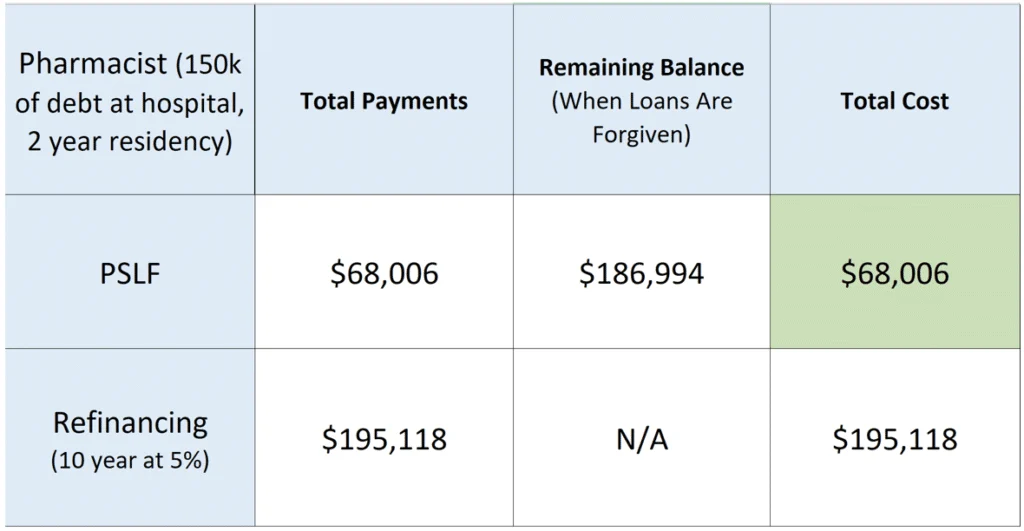
A: Yes. PSLF remains an option for those in qualifying roles, providing forgiveness in 10 years. However, with lower federal caps, borrowers may find themselves with a mix of federal and private debt. Private debt is generally ineligible for federal forgiveness programs, which adds a layer of complexity to repayment planning.
Q: How do I know if my degree is considered "Professional"?
A: Generally, this is limited to fields requiring specific clinical licensure, such as medicine, law, and dentistry. Always verify your program’s specific classification with your university’s financial aid office, as the definitions are strict and administrative errors can have long-term financial consequences.
Final Thoughts
The 2026 overhaul is a wake-up call for the higher education sector. It signals a shift away from a "degree at any cost" mentality toward one of fiscal scrutiny. Students must act as their own financial stewards, carefully vetting the ROI of their programs and preparing for a future where federal support is no longer a blank check. Before signing your next Master Promissory Note, ensure you have a plan that extends far beyond the graduation stage.