






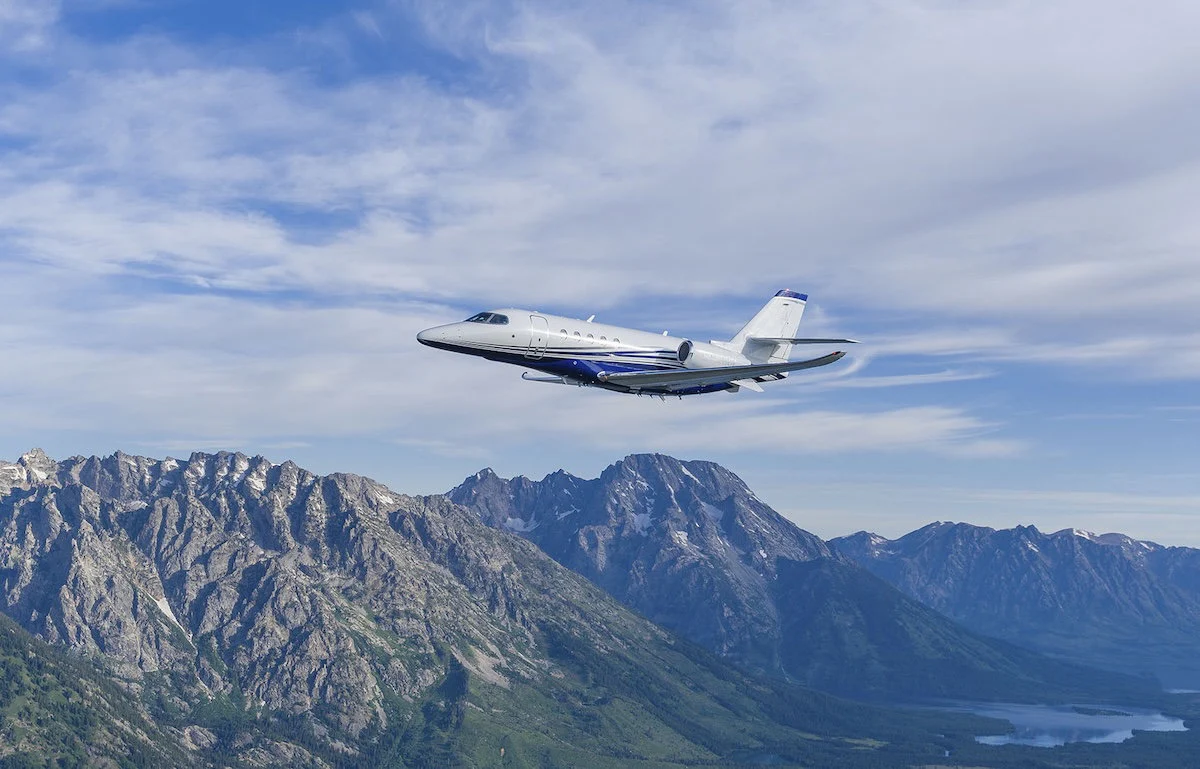
In the high-pressure environment of commercial aviation, the dialogue between Air Traffic Control (ATC) and flight crews is governed by rigid protocols designed to prioritize safety above all else. When an instruction to "go around"—a maneuver where an approaching aircraft aborts its landing to climb back to a safe altitude—is issued, it is generally treated as an imperative command. However, on June 24, 2026, a NetJets Cessna Citation Latitude flying under the callsign Execjet 659 challenged this hierarchy, rejecting an ATC command to abort its landing at Las Vegas Harry Reid International Airport (LAS). The justification provided by the pilots—a sudden claim of low fuel—has ignited a firestorm of debate within the aviation community, raising serious questions about communication protocols, fuel management, and the potential manipulation of air traffic flow.
The Core Incident: A Breach of Protocol
The incident, which has since been visualized and analyzed by the aviation media outlet VASAviation, began during a routine approach to Runway 8R. Execjet 659 was conducting a flight from Albuquerque (ABQ) when it was slotted into the arrival sequence at Las Vegas.
The primary point of contention lies in the unexpected rejection of a safety-critical instruction. When the tower controller ordered the NetJets flight to abandon its landing, the pilots responded with the phrase, "Unable for fuel, sir." In the aviation world, citing fuel as a reason to refuse a go-around is an extraordinary escalation. It essentially declares that the aircraft lacks the reserves to perform a climb-out, circle the airport, and re-approach, effectively forcing the controller’s hand.
What makes this response particularly irregular is that the crew had not previously declared a "minimum fuel" or "emergency fuel" status. Under Federal Aviation Administration (FAA) regulations, pilots are mandated to communicate fuel concerns well in advance of a critical phase of flight. The suddenness of the declaration left the controller visibly—and audibly—flustered, forcing an immediate re-clearance to land to avoid a potential mid-air or runway safety hazard.
Chronology of the Event
The timeline of the event reveals a breakdown in situational awareness and traffic management.
- 14:45 Local Time: Execjet 659 is established on its approach to Runway 8R. The flight sequence is tight, with an Alaska Airlines Airbus A330 (AS806) following closely behind.
- 14:48 Local Time: As the NetJets flight approaches the final stages of its descent, the controller detects a conflict on the runway surface.
- 14:49:05 Local Time: The tower issues a direct instruction: "Execjet 659, go around, I’ve got traffic on the runway. Climb and maintain 7,000, fly runway heading."
- 14:49:10 Local Time: The NetJets crew responds: "Unable for fuel, sir."
- 14:49:15 Local Time: Caught off-guard, the controller rescinds the go-around order: "Roger that. Execjet 659, runway 8R, you’re cleared to land."
- 14:49:30 Local Time: The controller immediately shifts focus to the trailing Alaska Airlines flight: "Alaska 806 heavy, traffic’s not gonna clear the runway. Go around, cancel approach clearance, climb and maintain 7,000, fly runway heading."
The sequence suggests a controller attempting to manage a congested airspace, while the flight crew—perhaps feeling their landing was safe—invoked a "fuel emergency" to bypass the go-around requirement.
Supporting Data and Traffic Analysis
The skepticism surrounding the incident stems from the controller’s own contradictory actions. If there was truly traffic on the runway that necessitated an immediate go-around for the NetJets flight, why was the landing clearance immediately reinstated upon the claim of low fuel?
Furthermore, the subsequent instruction for the Alaska Airlines flight to go around suggests that the "traffic" mentioned was either not yet on the runway or was expected to clear it in time. This creates a logical inconsistency: if the NetJets flight was forced to land despite the traffic, the controller essentially prioritized the potentially fuel-critical aircraft over the safety buffer normally required for runway separation.
Some aviation analysts have posited that the controller may have been attempting to favor the Alaska Airlines heavy jet, potentially due to poor spacing management. By sending the NetJets flight around, the controller would have created a larger gap for the A330. When the NetJets pilot refused, the controller was left with no choice but to send the Alaska flight around, thereby admitting that the runway was, in fact, not clear for the sequence originally intended.
The "Janet" Factor and Secretive Operations
Adding to the complexity of the afternoon at LAS, the frequency was reportedly shared with callsign "Janet 48." Janet Airlines is the colloquial name for the semi-secret government-contracted carrier that transports personnel to the Nevada Test and Training Range, including Area 51. While there is no direct evidence that the presence of a Janet flight impacted the controller’s decision-making, the high-security and high-priority nature of these flights often creates an atmosphere of increased tension and workload for controllers at Las Vegas. The presence of such traffic often forces controllers to be overly cautious, which may explain the initial, perhaps hasty, order for the NetJets flight to go around.
Implications for Aviation Safety
The implications of this incident are significant, touching upon both pilot authority and air traffic management transparency.
1. The Ethics of "Bluffing"
If the NetJets crew was indeed "bluffing" about their fuel state to avoid the inconvenience or workload of a go-around, they have committed a serious breach of professional ethics. Fuel status is a non-negotiable metric. Using it as a tactical tool to avoid an ATC instruction undermines the entire safety system. If the pilots had enough fuel to circle, they were obligated to follow the instruction. If they truly were at minimum fuel, they should have declared an emergency much earlier, which would have triggered a different set of priority responses from ATC.
2. ATC Accountability
Conversely, if the controller was providing inaccurate information regarding the runway status to prioritize the Alaska Airlines flight, the incident highlights a lapse in professional transparency. Controllers are expected to provide accurate, truthful justifications for instructions. If the controller used a "fake" go-around order to manage spacing, they are guilty of manipulating the system in a way that creates confusion rather than safety.
3. The Need for Investigation
The absence of a "pilot deviation" investigation in the immediate aftermath is perhaps the most surprising element of this story. Typically, when a pilot refuses an instruction from the tower, the FAA initiates a formal inquiry. The fact that this was treated as a routine landing suggests either a failure in the reporting chain or an acknowledgment by both parties that the situation was, at the very least, professionally ambiguous.
Conclusion: A Dangerous Precedent?
The interaction between Execjet 659 and the Las Vegas tower serves as a cautionary tale for modern aviation. As airport congestion increases and the pressure to maintain "on-time" performance grows, the margin for error narrows. The NetJets incident demonstrates the friction that occurs when pilot autonomy clashes with ATC command.
Whether the pilots were legitimately low on fuel or simply unwilling to follow an order they deemed unnecessary, the lack of transparency in the exchange is concerning. For the aviation industry, the lesson is clear: safety depends on the absolute, verifiable accuracy of communication. When the lines between "safety-critical instruction" and "traffic management preference" become blurred, the integrity of the entire system is called into question. Future flight training may well use this audio as a case study in how not to communicate during critical phases of flight, emphasizing that clear, honest, and timely reporting of aircraft status is the only way to ensure the safety of all parties in the sky.