








Introduction: A New Battleground for Consumer Protection
In a move that highlights a growing rift between state-level consumer advocates and federal financial oversight, a bipartisan coalition of 20 state attorneys general has formally requested that federal regulators block two significant acquisitions. The deals involve high-cost, nonbank fintech lenders seeking to purchase traditional banking institutions—a move the attorneys general argue is a "brazen" attempt to bypass state-level interest rate caps and embed predatory lending practices into the heart of the national financial system.
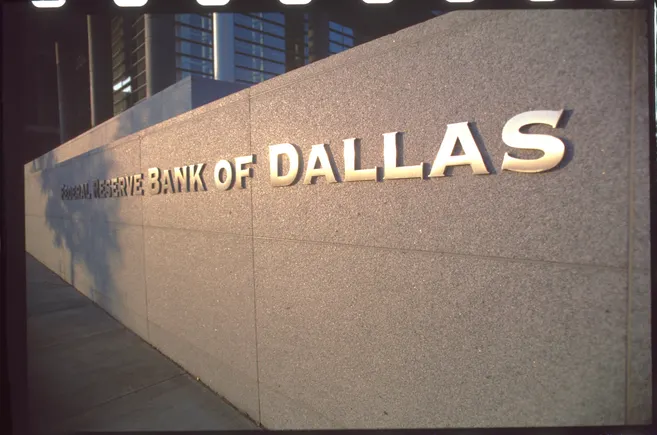
The coalition, led by Illinois Attorney General Kwame Raoul, sent a sternly worded letter to the heads of the Office of the Comptroller of the Currency (OCC), the Federal Deposit Insurance Corporation (FDIC), and the Board of Governors of the Federal Reserve System. At the center of the controversy are two specific transactions: Opportunity Financial’s (OppFi) $130 million acquisition of an Arizona-based bank and Enova International’s $369 million purchase of Grasshopper Bank.
The attorneys general argue that allowing these "predatory" entities to operate under the umbrella of a national bank charter would effectively grant them a "get out of jail free" card regarding state usury laws. This, they claim, poses a systemic risk to vulnerable consumers and undermines the sovereignty of states to protect their residents from debt traps.
Chronology: The Evolution of the Conflict
The current tension is the culmination of years of legal maneuvering between the fintech industry and state regulators. Traditionally, "nonbank" lenders—online firms that provide personal loans—must adhere to the interest rate caps of the state where the borrower resides. However, federally chartered banks and certain state-chartered banks have the legal authority to "export" the interest rates allowed in their home state to borrowers across the country, regardless of the borrower’s local laws.
The Rise of the "Rent-a-Charter" Model
For the past decade, firms like OppFi and Enova have utilized "rent-a-bank" schemes. In these arrangements, the fintech firm partners with a bank located in a state with no interest rate caps (such as Utah or Nevada). The bank technically "originates" the loan, allowing the fintech to charge interest rates that would otherwise be illegal in the borrower’s home state.
Recent Acquisitions
The conflict escalated recently when these fintech firms moved from "renting" charters to seeking to "own" them:
- Enova’s Move: Enova, a major player in the subprime lending space, announced its intent to acquire Grasshopper Bank, a digital commercial bank, for $369 million.
- OppFi’s Move: OppFi announced a $130 million deal to acquire a bank in Arizona, seeking to transition from a service provider to a fully regulated banking entity.
The July 15 Letter
On July 15, the 20 attorneys general issued their formal warning. Drawing a direct parallel to the 2008 financial crisis, the AGs noted that state officials were among the first to warn about the dangers of subprime mortgages before the global economy collapsed. "Now, we sound the alarm again," they wrote, signaling that these acquisitions could represent the next wave of systemic financial instability.
Main Facts: The Core Arguments Against the Mergers
The primary concern of the attorneys general is the potential for "regulatory arbitrage." By acquiring a bank charter, high-cost lenders can claim federal preemption, a legal doctrine that allows federal law to take precedence over state law.
1. Evasion of State Usury Laws
Nearly every state in the U.S. has established some form of interest rate cap. Many states, including Illinois, have a 36% APR cap for small loans, reflecting a broad consensus that rates above this threshold are inherently predatory. The AGs argue that OppFi and Enova specifically target consumers in "desperate need of money" and charge rates that can soar into the triple digits.
2. The "True Lender" Dispute
The letter highlights a long-standing legal battle over who the "true lender" is in these transactions. If a fintech company performs all the marketing, underwriting, and servicing of a loan, many states argue the fintech—not the partner bank—is the true lender and must follow state law. By owning the bank themselves, Enova and OppFi hope to permanently settle this dispute in their favor, effectively immunizing their business models from state interference.
3. Risk to the Financial System
The AGs contend that the business models of these high-cost lenders are fundamentally at odds with the "safety and soundness" requirements of the banking system. They argue that embedding high-default, high-interest lending into the FDIC-insured banking fabric could eventually lead to bank failures that taxpayers would be forced to subsidize.
Supporting Data: The High Cost of Nonbank Lending
The scale of the lending in question is significant. Nonbank lenders often cater to "credit-challenged" individuals who cannot qualify for traditional bank loans. While these firms argue they are providing essential liquidity to the "underbanked," the data provided by consumer advocacy groups paints a different picture.
- Interest Rate Disparities: While a standard credit card may have an APR of 18% to 24%, loans from firms like OppFi and Enova frequently carry APRs exceeding 100%, and in some cases, reaching up to 160% or higher.
- Default Rates: Because the interest rates are so high, a significant portion of the principal is paid off quickly, but the high monthly payments often lead to a cycle of re-borrowing. This "churn" is a primary driver of profit for high-cost lenders.
- Public Sentiment: The AGs pointed out that the existence of interest rate caps in almost every state—supported by voters across the political spectrum—is a clear indication of the public’s desire for protection against unaffordable lending.
The letter also touched upon the expansion of the banking system to include cryptocurrency firms. The AGs criticized the granting of national trust charters to crypto entities, arguing that this "race to the bottom" in regulatory standards increases the risk of contagion, where volatility in the crypto market could spill over into the traditional banking sector.
Official Responses: The Defense from the Industry
Spokespeople for Enova and OppFi have pushed back vigorously against the characterization of their business models as predatory. They argue that becoming a regulated bank will actually increase oversight and benefit consumers.
OppFi’s Position
An OppFi spokesperson stated that the company already operates a "highly compliant" and "consumer-friendly" product. The company argues that by moving into a regulated banking infrastructure, they will be subject to extensive federal oversight from the OCC and FDIC, which will ensure even greater transparency and fairness. They view the acquisition as a natural evolution toward becoming a more stable, mature financial institution.
Enova’s Defense and the Legal Split
Enova’s Chief Strategy Officer, Kirk Chartier, pointed to a significant legal divide among state officials. He noted that while 20 AGs signed the letter of opposition, a different group of 21 state attorneys general recently filed an amicus brief in federal court defending the right of state banks to export interest rates.
Chartier emphasized that as a national bank, Enova would operate under the full supervision of federal agencies and would be required to comply with rigorous federal lending guidelines, which he argues are more than sufficient to protect consumers.
The Federal Perspective
The federal regulators have a complex task. On one hand, they must ensure the safety of the banking system; on the other, they are often hesitant to stifle innovation. Jonathan Gould, Senior Deputy Comptroller for Bank Supervision Policy at the OCC, has previously suggested that it is better to have these activities occur within the regulated banking system rather than in the "shadows."
In an October interview, Gould referred to the "ostrich approach"—putting one’s head in the sand and ignoring fintech activity—as a dangerous strategy. He argued that if these activities are legally permissible, bringing them under federal monitoring allows regulators to see and mitigate risks before they become systemic.
Implications: The Future of the American Banking Landscape
The outcome of these two deals will set a major precedent for the future of the American financial services industry. If the OCC and FDIC approve the acquisitions, it could trigger a wave of similar deals, where payday lenders, title loan companies, and other high-cost fintechs seek to buy small, struggling banks to gain national lending powers.
1. The Erosion of State Sovereignty
If federal preemption is used to shield high-cost lenders, the power of state legislatures to set interest rate caps will be effectively neutralized. This could lead to a "patchwork" system where federal regulators become the sole arbiters of what constitutes "fair" lending, potentially ignoring the specific economic needs and protections enacted by individual states.
2. A New Era of Fintech-Bank Convergence
The line between "tech company" and "bank" is blurring. While this convergence can lead to more efficient services and better digital interfaces for consumers, it also introduces "tech-speed" risks into a banking system designed for stability and slow growth.
3. The Political Stakes
The divide between the two groups of attorneys general—one group fighting for state-level caps and the other fighting for the "exportation" of rates—suggests that banking regulation will remain a highly politicized issue. The Biden administration’s regulators, who have generally signaled a more consumer-centric approach, now face a litmus test: will they prioritize the "inclusion" arguments of fintechs or the "protection" arguments of the state AGs?
As the OCC, FDIC, and Federal Reserve deliberate on the OppFi and Enova deals, the financial industry is watching closely. The decision will determine whether the national bank charter remains a hallmark of stability or becomes a vehicle for the very high-cost lending models that state officials have spent decades trying to curb. For now, the "alarm" has been sounded; whether federal regulators choose to answer the call remains to be seen.